The March Fly Box for Catskills Trout
By My Custom FlyBox Team
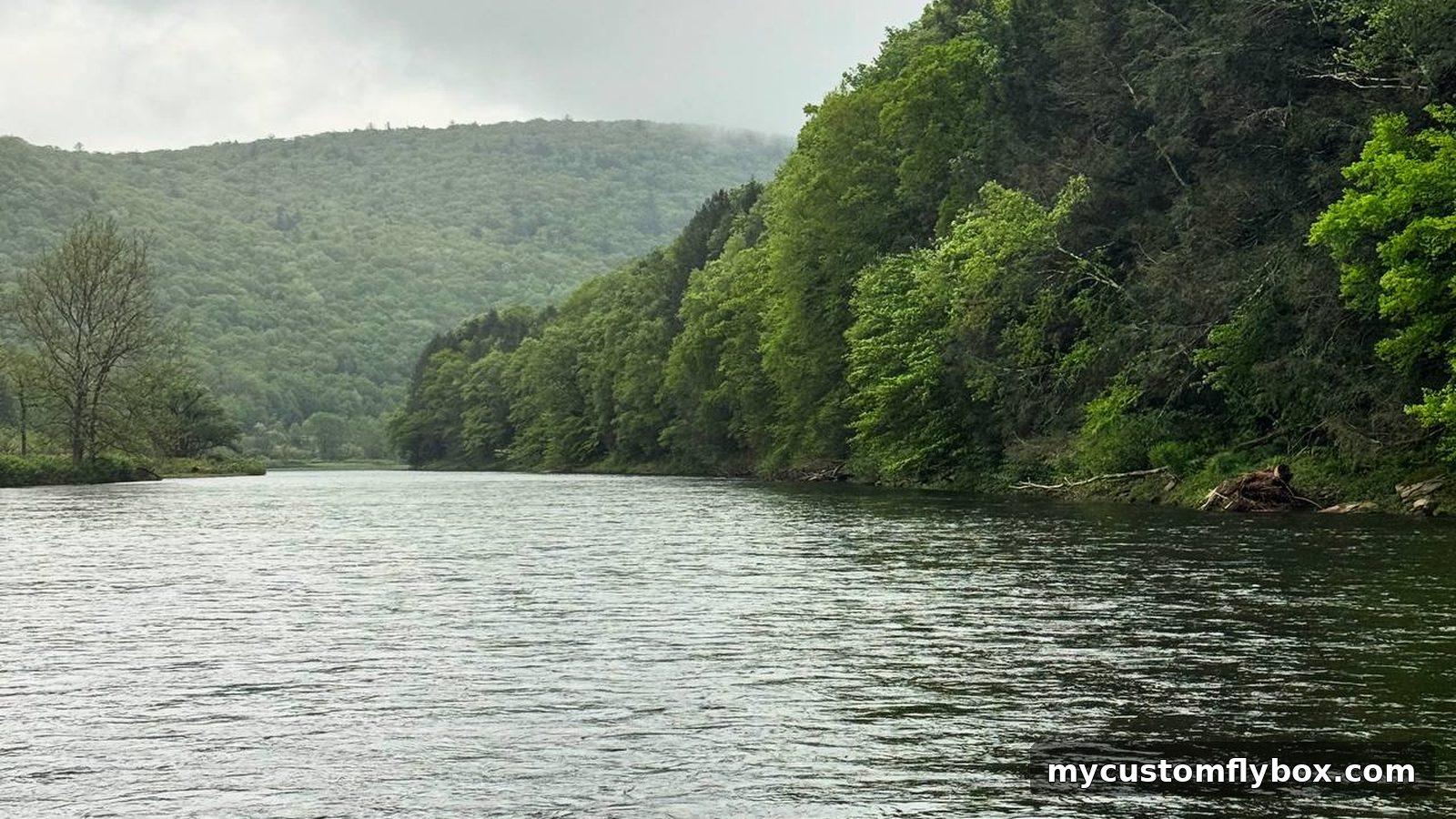
The March Fly Box for Catskills Trout
March trout fishing in the Catskills is usually a cold-water job. The calendar says spring is close, but the river often says winter is still in charge. Snowmelt can lift the Beaverkill overnight. A cold rain can stain the Willowemoc before lunch. A warm afternoon can put midges in the air and move a few trout into the inside seam, then a hard freeze can shut the same pool down the next morning.
That is why a March fly box should be small, heavy on subsurface flies, and built around real conditions instead of hope. You are not packing for long blanket hatches. You are packing for short feeding windows, bottom-hugging trout, cold hands, changing flows, and a few good fish that will eat if the drift is slow enough and the fly is close enough.
Use this as a working Catskills box for early spring freestones such as the Beaverkill, Willowemoc, Neversink, Esopus, and smaller tributaries, with a few notes for nearby tailwater fishing on the West Branch Delaware. Check the current Beaverkill and Willowemoc fly fishing report and the West Branch Delaware fly fishing report before you drive. In March, water level and temperature matter more than the date.
March river conditions
Most March days are not dry-fly days. Trout are cold-blooded, so their feeding pace follows water temperature. In cold water, they hold where they can save energy: deep tailouts, slow inside bends, soft cushions behind rocks, shelf edges, and the lower third of pools. They may slide up when a nymph drift improves or when a small hatch starts, but they are not likely to chase a fly across fast current.
The Beaverkill and Willowemoc are freestone rivers. They respond quickly to snowmelt and rain. A warm day can feel promising in the driveway and still put too much water in the river by afternoon. The West Branch Delaware is a tailwater, so releases and reservoir influence can make it fish differently from the freestones, but it still demands a cold-water mindset in March.
Before fishing, read the hydrograph, not just the flow number. A river that is high and falling can be fishable along the edges. A river that is rising hard often fishes poorly and can become unsafe. If the gauge jumps during snowmelt, stay out of pushy water and look for soft bank seams, side channels, or another watershed with less runoff. If you need a refresher, review how to read a USGS gauge before you leave.
Box priorities
A March box should do four jobs:
- Get flies near the bottom without turning every drift into a snag.
- Cover small food, especially midges, small mayflies, and stonefly nymphs.
- Give you a few visible dry flies for the rare surface window.
- Carry enough small streamers to fish stained edges or a warming afternoon.
Do not carry every spring pattern you own. Carry patterns that solve March problems. A dozen kinds of Hendrickson dries will not help much if the river is 39 F and two feet higher than normal. Two sizes of Pheasant Tails, a few stoneflies, a midge row, and three small streamers will.
I like a March box split into five rows: small nymphs, larger nymphs, midges, sparse dries and emergers, and streamers. If you fish a foam or silicone box, keep the heavy flies separated from the small dries so wet tungsten nymphs do not crush delicate hackle.
Small nymphs
Small nymphs are the heart of the box. They imitate the immature mayflies and small aquatic insects trout see all winter and early spring. They also fish well when you do not know exactly what is active.
Carry these patterns:
- Pheasant Tail, sizes 14-20
- Hare's Ear, sizes 14-18
- Walt's Worm or Sexy Walt's, sizes 14-18
- Frenchie, sizes 14-18
- Perdigon, olive or brown, sizes 16-20
- Zebra Midge, black and olive, sizes 18-22
The Pheasant Tail is the first fly I want in the box. It covers small mayfly nymphs, can be tied slim or buggy, and works on both freestones and tailwaters. In March, sizes 16 and 18 often matter more than the bigger spring sizes. On the West Branch, where trout can be selective in clearer flows, a slim size 18 or 20 may fish better than a bulky attractor.
The Hare's Ear and Walt's Worm are not exact copies of one insect. That is the point. In cold water, trout often see the fly for a brief moment as it rolls along the bottom. A buggy tan or gray nymph in the right lane can look enough like caddis larva, mayfly nymph, or general river food to earn a take.
Perdigons have a place when the water is deep, fast, or cold enough that trout will not move. Use them as your point fly when you need quick depth. Keep the colors quiet: olive, brown, black, and dark red. March is not the time for a box full of bright bead candy unless the river is off-color and you need a trigger.
Larger nymphs
Catskills freestones have stoneflies, and trout know them. Larger nymphs also help anchor a two-fly rig without adding too much split shot. In March, a larger nymph should usually be the weight and silhouette fly, with a smaller dropper doing much of the matching.
Carry these patterns:
- Pat's Rubber Legs, black or brown, sizes 8-12
- Golden Stone nymph, sizes 8-12
- Prince Nymph, sizes 12-16
- Copper John, copper or black, sizes 14-18
- Caddis Larva, green or tan, sizes 14-18
A size 10 black stonefly nymph is a good high-water searching fly along the Beaverkill and Willowemoc. Fish it close to the bank, behind larger rocks, or where a riffle dumps into slower water. If the river is up but not dangerous, trout may sit where the fast water softens against the edge. That is where a larger nymph earns its space.
The Prince Nymph is useful when visibility drops. It has enough profile and flash to be found, but it still looks like river food. In very clear water, go smaller and quieter. In stained March water, a size 12 or 14 Prince above a size 16 Pheasant Tail is a practical rig.
Midges and early olives
Midges are the most reliable surface or near-surface food of late winter and early spring. They do not always bring trout up, but when they do, you need small flies and clean presentation. The Willowemoc is known for midge fishing, and the NYSDEC Catskills guide notes that trout there often feed on surface midges nearly year-round.
Carry these patterns:
- Griffith's Gnat, sizes 18-24
- Black Midge dry, sizes 20-24
- CDC Midge Emerger, sizes 20-24
- RS2, gray or olive, sizes 18-22
- BWO Comparadun or Sparkle Dun, sizes 18-22
- BWO soft hackle, sizes 18-20
Do not expect a long hatch every day. Look for the softest part of the pool during the warmest part of the afternoon. Watch for single rings, not splashy rises. A trout eating midges in March may barely break the film. If you see a fish feed twice in the same lane, slow down, lengthen the leader if needed, and make one careful cast instead of ten quick ones.
Early Blue Winged Olives can show during damp, mild weather, especially as March turns toward April. Keep the patterns small. A size 18 or 20 olive emerger is usually more useful than a big dun. If fish rise but refuse the dry, swing a small BWO soft hackle through the lane at the end of the drift.
Sparse dry flies
Dry flies are not the bulk of a March box, but leaving them home is a mistake. The right hour can happen quickly. A sheltered pool warms. The wind drops. Midges collect in the film. A few olives show in cloudy weather. Suddenly the fish that ignored nymphs all morning are sipping softly along the foam.
Carry these dries:
- Griffith's Gnat, sizes 18-24
- Parachute Adams, sizes 16-22
- BWO Sparkle Dun, sizes 18-22
- Black or gray midge cluster, sizes 20-24
- Small Elk Hair Caddis, sizes 16-18, only as a visible searching dry or dry-dropper tool
The Parachute Adams is a practical compromise. It can cover a small mayfly, it is easier to see than many flush-floating patterns, and it gives you a quick answer when you find one rising fish but cannot identify the bug. On flat water, switch to a lower-profile emerger if refusals start.
Small streamers
March streamer fishing is not always about big flies and hard strips. In cold water, a trout may eat a streamer that swims slowly past its face, especially if the water has a little stain or the day warms. Smaller streamers often outfish large patterns because they can be presented slowly without looking out of place.
Carry these streamers:
- Woolly Bugger, black and olive, sizes 6-10
- Sculpin pattern, olive or natural, sizes 6-8
- Zonker, black or white, sizes 6-8
- Mini Dungeon or small articulated streamer, sizes 4-6
- Soft hackle streamer or small wet fly, sizes 8-12
Fish streamers where they can be controlled. In high water, that usually means bank edges, slow seams, tailouts, and the soft side of boulders. Cast across or slightly downstream, let the fly sink, and move it with short strips or a slow swing. If the fish are cold, pause more than you strip.
Do not wade deep to throw streamers in March. Cold high water is unforgiving. If you cannot fish the seam from safe footing, leave it alone.
Rigging for cold water
For most March nymphing, start simple. Use a 9-foot leader tapered to 4X or 5X, then add tippet as needed. If the water is clear and the flies are small, drop to 5X or 6X. If the water is heavy or stained, 3X or 4X may be better.
A two-fly rig works well when legal and appropriate. Use a larger stonefly, Walt's Worm, or tungsten nymph as the point fly, with a smaller Pheasant Tail, Zebra Midge, or RS2 above or below it. Adjust weight before changing flies. Most cold-water refusals are not refusals at all. The fly never reached the fish.
For dry flies, use longer leaders when the pool is flat and clear. Grease only the butt and midsection if you want an emerger to sit in the film. Keep casts short enough to control drag. A perfect 25-foot drift beats a sloppy 50-foot cast.
Reading March holding water
The best March water is rarely the fastest water in the run. Start on the inside edge before stepping in. Trout use those softer lanes because they can feed without burning energy. A foot of walking can push fish that were sitting close enough to catch.
Look for:
- Tailouts with enough depth to cover a trout
- Slow shelves beside main current
- Seams below riffles
- Back eddies that collect midges
- Soft bank water during high flows
- Deep pools with a defined current tongue
On bright cold days, deeper nymphing may be the only consistent option. On cloudy mild days, watch the shallow tail of the pool. Trout may slide up for midges or olives even when the main current still looks dead.
Safety and fish care
March safety starts with the gauge and continues at the river. Cold water reduces strength quickly. Felt or rubber soles with studs help, but they do not make high water safe. Use a wading staff, unbuckle the waist strap on a pack if you are crossing, and skip any crossing that requires a second thought.
Fish care matters too. Cold water is easier on trout than warm summer water, but that does not mean rough handling is harmless. Land fish quickly, keep them wet, and avoid dragging them onto gravel for photos. If air temperatures are below freezing, keep fish in the water. Gills and eyes can be damaged by cold air.
Check regulations before fishing. New York trout rules vary by water, reach, season, and method. The Beaverkill and Willowemoc include special regulation areas, and those rules should be confirmed from current New York State DEC sources before a trip.
A practical March box list
If I were packing one slim box for a Catskills March day, it would look like this:
| Category | Patterns | Sizes | |---|---|---| | Small nymphs | Pheasant Tail, Hare's Ear, Walt's Worm, Perdigon | 14-20 | | Midges | Zebra Midge, Griffith's Gnat, CDC Midge Emerger, RS2 | 18-24 | | Larger nymphs | Pat's Rubber Legs, Golden Stone, Prince Nymph, Caddis Larva | 8-18 | | Early dries | Parachute Adams, BWO Sparkle Dun, midge cluster | 16-24 | | Streamers | Woolly Bugger, Sculpin, Zonker | 6-10 |
That is enough to fish most March conditions without carrying a shop wall in your vest. If the river is low and clear, lean on small nymphs, midges, and careful dry-fly work. If it is high but fishable, lean on stoneflies, buggy nymphs, and small streamers. If it is rising, dirty, and unsafe, the best fly choice is the one you leave in the box while you go scout access for another day.
A river-specific box gets better with notes. After each trip, write down the river, gauge, weather, water temperature if measured, flies used, and where fish held. The My Custom FlyBox app can help keep that pattern history organized so the next March trip starts with actual river memory instead of a guess. For a broader planning approach, see how to build a river-specific fly box and water temperature and trout.