How to Build a River-Specific Fly Box
By My Custom FlyBox Team
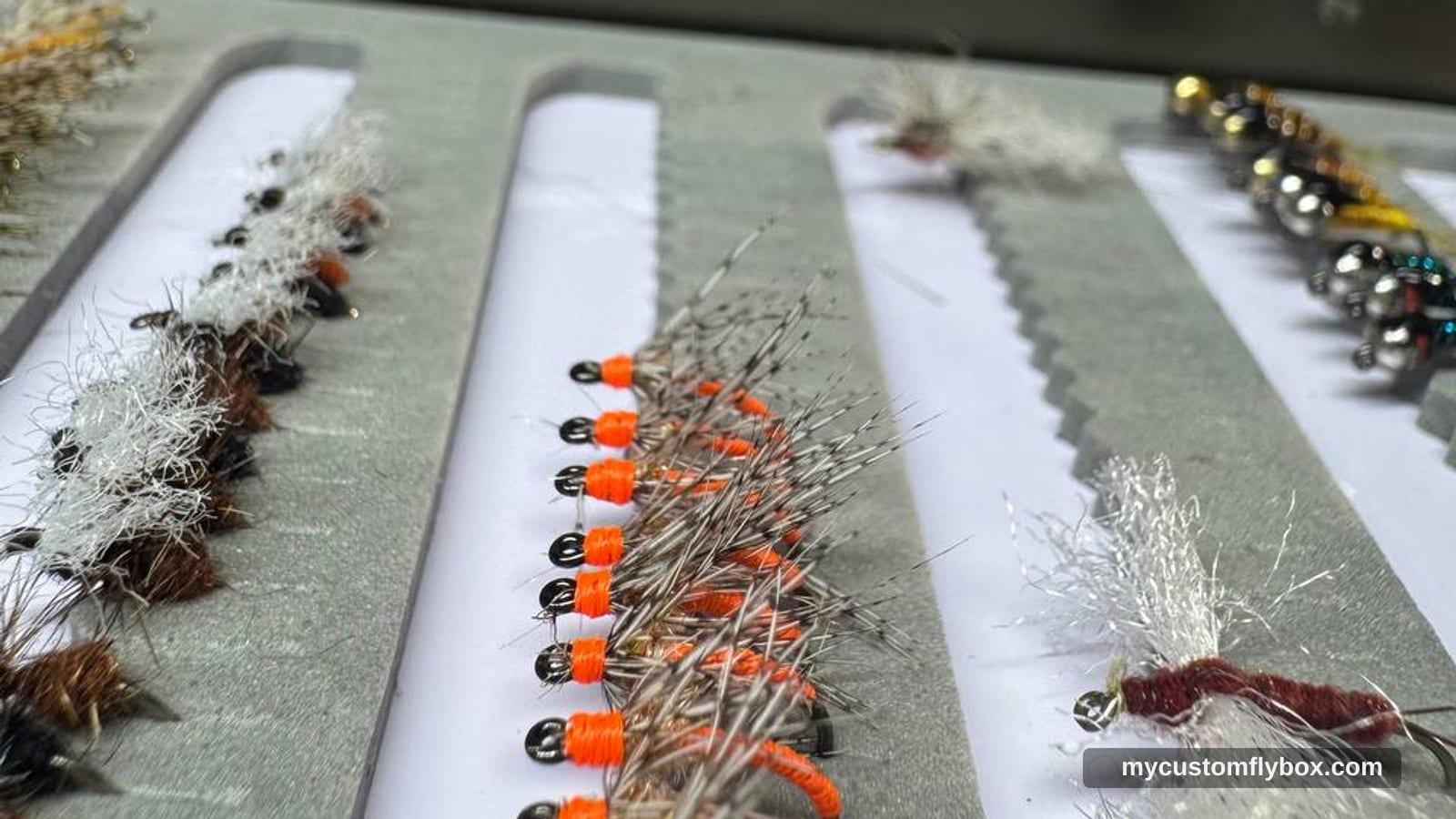
How to Build a River-Specific Fly Box
A river-specific fly box is not a box stuffed with every pattern you have ever bought. It is a working box built around one piece of water: its seasons, bottom type, insect life, flow range, trout behavior, and the way you actually fish it. Done right, it saves time on the bank. You open the lid and see a short set of good choices instead of a hundred maybes.
That matters on trout water. A rising fish on a Catskills pool may give you a few clean drifts before it slides off the feed. A pocket-water rainbow may only hold in one soft seam behind a boulder. If you spend five minutes digging through flies, changing your mind, and second-guessing size, the window can close. A good river box narrows the decision before you leave the truck.
The goal is not to predict the day perfectly. No fly box does that. The goal is to cover the likely work: the food trout see, the water you will fish, the way flows change, and the flies that still make sense when the hatch does not show.
Start With the River, Not the Catalog
Most anglers build boxes by pattern. They buy a few Parachute Adams, a handful of Pheasant Tails, some caddis, a couple streamers, and call it a trout box. That can work, but it is backwards. A river-specific box starts with questions about the water.
Is the river mostly riffle and pocket water, or long flats and glassy pools? Does it have strong mayfly hatches, heavy caddis activity, summer terrestrials, or a lot of small midges? Is the bottom clean gravel, broken ledge, cobble, silt, or weed beds? Can you wade most flows, or are you often fishing from the bank or a boat?
A freestone stream like the Beaverkill or Willowemoc asks for a different box than a broad tailwater section on the West Branch Delaware. On the Beaverkill and Willowemoc, you may fish riffles, runs, and classic pools in the same evening. You need dry flies that ride well, soft hackles for broken water, nymphs that get down without hanging every cast, and a few small streamers for stained water. On the West Branch Delaware, long leaders, accurate dry fly profiles, emergers, and confidence in small adjustments often matter more, especially when trout are feeding in slow, clear lanes. If you fish those waters often, keep an eye on the current report pages for the West Branch Delaware and Beaverkill-Willowemoc before deciding what goes in the day box.
Build Around Seasons
A river box should change through the year. You do not need to rebuild it every week, but you should not carry the same lid in April, June, August, and October.
For early spring trout fishing, think low water temperatures, inconsistent surface activity, and fish that often hold near the bottom. Your box should lean on nymphs and small streamers: Pheasant Tails in sizes 14-18, Hare's Ears in 12-16, stonefly nymphs in 8-12 where the river has stones, and a few dark or olive Woolly Buggers in 6-10. Add early dries and emergers only where the river has them: Blue Winged Olives in 18-22, Quill Gordons in 12-14, Blue Quills in 16-18, and Hendricksons in 12-14 on waters where those hatches are part of the spring calendar.
By May, the box gets more balanced. This is the month when a trout angler can need everything in one day: a nymph rig before lunch, a caddis pupa in the riffles, a dry fly during a brief hatch, and a spinner after dinner. Carry Hendricksons or March Browns where appropriate, tan and olive caddis in 14-18, Rusty Spinners in 12-18, and a few soft hackles that can swing through broken water when fish will not fully commit to the surface.
In summer, the river-specific part gets more important. Cold tailwaters can still fish well with olives, sulphurs, midges, ants, beetles, and small nymphs. Warmer freestones may need an early-morning plan, more terrestrials, and a firm willingness to stop when water temperatures get unsafe for trout. A summer box should include ants in 14-18, beetles in 12-16, small caddis, small parachutes, and a few fast-sinking nymphs for pocket water. It should also include a thermometer in your vest or pack, even though it is not a fly.
Fall brings another shift. I like a box with Isonychia-style dries or nymphs where they are present, Blue Winged Olives in 18-22, caddis in 16-18, small streamers, and a few egg patterns only where they are legal and appropriate. Fall trout can be aggressive, but they can also be spooky in low, clear water. Do not let streamer season talk you out of carrying small dries.
Divide the Box by Jobs
A river box is easier to use when every row has a purpose. Instead of grouping only by fly name, group by what the fly is supposed to do.
One section should be for searching dries: Parachute Adams, Elk Hair Caddis, Stimulators, small Chubby-style attractors where they fit the water, and a few high-floating patterns that can hold a dropper. These are the flies you tie on when no fish is showing but the water looks alive enough for a dry.
Another section should hold hatch-matching dries and emergers. This is where the sizes matter. A size 12 Hendrickson and a size 18 Blue Winged Olive do not solve the same problem. Keep mayflies by size and color: gray, olive, tan, rusty, and sulphur/yellow if the river has sulphurs. Add comparaduns, sparkle duns, CDC emergers, and spinners if you fish flat water where trout get a long look.
A third section should be nymphs. Keep the dependable stuff first: Pheasant Tails, Hare's Ears, Walt's Worms, Perdigons, caddis pupa, Zebra Midges, and stonefly nymphs. Carry each in a range that fits the river. On a big river with strong current, a size 14 tungsten nymph may earn its space. On skinny summer water, the same pattern in 18 or 20 may be more useful.
The last section should be problem solvers: streamers, soft hackles, terrestrials, and oddballs. These are not throwaway flies. They are the flies that save a day when trout are not doing what the hatch chart promised. A Partridge and Orange, a March Brown soft hackle, a black Woolly Bugger, an olive sculpin, a foam beetle, and a simple ant can cover a lot of uncertain water.
Match Fly Weight to Water Speed
Anglers talk about pattern choice, but weight often catches more fish than the exact pattern. A river-specific box should include flies that match the speed and depth you expect to fish.
For fast pocket water, you need nymphs that get down quickly. Tungsten beads, slim bodies, and heavier hooks help. A size 16 Perdigon may reach a feeding lane faster than a bushier size 12 nymph that looks more buggy in your hand. In choppy water, trout do not inspect every rib and tail fiber. They see size, shape, movement, and whether the fly arrives where food should arrive.
For slow pools and clear tailouts, heavy nymphs can be too much. They drag, hang, or plow through fish at the wrong angle. In those places, unweighted or lightly weighted nymphs, small emergers, and soft hackles can look more natural. The same river can require both approaches within a few hundred yards.
This is why one fly box for one river should still have depth options. Carry a few slim tungsten patterns, a few standard bead-heads, and a few unweighted wets or emergers. Then you can adjust with the fly instead of adding more split shot every time the current changes.
Use Hatch Charts, Then Edit Them
Hatch charts are useful, but they can make anglers carry too much. If a chart lists ten insects for June, you do not need ten separate boxes. You need the main sizes, colors, and stages that trout are likely to notice.
For mayflies, think in groups. Large brown or gray mayflies might be covered by March Brown, Gray Fox, or Isonychia-style patterns depending on the river and season. Small olives are often covered by BWO dries, emergers, and slim nymphs. Sulphurs need their own space on rivers where they are important because color and size can matter when fish are feeding steadily.
For caddis, do not carry only adult dries. Trout often eat pupa before adults show in numbers. A tan caddis pupa in 14-16, an olive caddis pupa in 16-18, an Elk Hair Caddis, and a soft hackle will fish more situations than a dozen adult patterns with slightly different wing colors.
For midges, keep it simple unless you are fishing a technical tailwater. Zebra Midges, small black or olive larvae, Griffith's Gnats, and small midge clusters can be enough for most general trout boxes. On rivers where winter midge fishing is a main event, give them more room.
The trick is to turn the hatch chart into practical coverage. Ask: what size, what color, what water type, what stage? Then stock the box to answer those questions.
Carry Confidence Flies, But Limit Them
Every angler has confidence flies. Keep them. Confidence matters because it keeps your fly in the water and your drift honest. But a river-specific box can get messy when every good memory earns a permanent slot.
A good rule is to give confidence flies one row, not the whole box. If a size 16 Pheasant Tail has caught trout for you on that river for ten years, carry it. If an olive Bugger gets eaten every time the water stains after rain, carry two. But if you have six attractor dries that all do the same job, pick the two you fish well.
The best fly box is not the one with the most choices. It is the one that makes the next good choice obvious.
Plan for Flow and Clarity
The same river fishes differently at different flows. If the water is low and clear, your box should favor smaller flies, lighter tippets, sparse dries, small terrestrials, and natural-colored nymphs. If the water is up but still fishable, you may want larger nymphs, worm patterns where legal and appropriate, dark streamers, and flies with enough profile for trout to find in broken water.
Clarity matters too. In clear water, exact size and drift often beat flash. In stained water, silhouette and movement become more important. A black streamer can be easier for trout to track than a pale one. A larger stonefly nymph may outfish a small mayfly nymph simply because fish can find it.
Do not make one box do every possible flow. Build the normal box for the conditions you fish most, then keep a small high-water sleeve or streamer patch in your pack. That way a thunderstorm or release bump does not leave you underprepared.
Do Not Forget Access and Wading Style
A river-specific fly box should match how you move through the river. If you fish from a drift boat, you can carry bigger streamer boxes, multiple dry-fly boxes, and backups. If you walk two miles of freestone stream in summer, you may want one compact box that covers dries, nymphs, and terrestrials without weighing down your vest.
If the river has tough wading, simplify. You do not want to change flies while standing thigh-deep in pushy water with a slick ledge under your boots. Carry visible dries, durable nymphs, and patterns you can tie on quickly. If the river has long, slow pools and good bank access, you can afford more specialized dry-fly options because you will often be changing flies from stable ground.
This is also where fly durability matters. For rough pocket water, a slightly sturdier pattern can be better than a delicate fly that looks perfect for three casts. For flat-water risers, delicate may be exactly what you need.
A Simple River Box Template
Here is a practical starting point for a trout river box. Adjust sizes and patterns to the water.
Dries and emergers
- Parachute Adams, 12-20
- Blue Winged Olive, 18-22
- Elk Hair Caddis, 14-18
- Comparadun or Sparkle Dun, hatch-matched sizes
- Rusty Spinner, 12-20
- Ant and beetle, 12-18
Nymphs
- Pheasant Tail, 14-20
- Hare's Ear, 12-18
- Walt's Worm or Sexy Walt's, 14-18
- Caddis Pupa, 14-18
- Zebra Midge, 18-22
- Stonefly Nymph, 8-12 where suitable
- Slim tungsten nymphs for fast water, 14-18
Soft hackles and wets
- Partridge and Orange, 12-16
- Partridge and Green, 14-18
- March Brown or hare's ear soft hackle, 10-14
Streamers and high-water flies
- Woolly Bugger, black and olive, 6-10
- Sculpin pattern, olive or natural, 4-8
- Small baitfish streamer, 6-10
- San Juan Worm or similar high-water pattern where legal and appropriate
That list is not a command. It is a framework. A small mountain stream box may lean harder on attractor dries and simple nymphs. A technical tailwater box may need more midges, emergers, and fine-tuned sizes. A Catskills box in May may need more mayfly duns and spinners than a summer pocket-water box.
Keep Notes After Each Trip
A river-specific box gets better when you keep honest notes. Not long journal entries. Just enough to remember what happened.
Write down the date, river, section, approximate flow, water temperature if you took it, weather, what was hatching, what fish ate, and what you wished you had. If you use the My Custom FlyBox app to organize your boxes, this is the kind of practical thinking that makes a named box useful: West Branch sulphurs, Beaverkill spring dries, summer freestone terrestrials, or high-water nymphs.
The most valuable note is often not what caught fish. It is what you were missing. Maybe you had caddis dries but no pupa. Maybe you had big streamers but nothing small enough for clear water. Maybe you had six dry-fly choices but no unweighted emerger. Those gaps tell you what to add before the next trip.
Keep the Box Honest
At least once a month during the season, open the box at home. Pull out rusty hooks, crushed dries, chewed streamers, and patterns that no longer fit the season. Refill the sizes you actually used. Move out the flies that belong to another river.
This little bit of maintenance keeps a river box from turning back into a junk drawer. It also helps you buy or tie with purpose. Instead of needing "more trout flies," you know you need size 16 tan caddis pupa, size 18 olives, two black Buggers, and a few Rusty Spinners.
That is the point. A river-specific fly box is not about having less gear for the sake of less gear. It is about carrying the right choices for the water in front of you. When the light gets soft, the first fish rises, or the flow bumps after rain, you should be able to open the box and know where to start.