How to Fly Fish Catskills Trout in Late Fall
By My Custom FlyBox Team
How to Fly Fish Catskills Trout in Late Fall
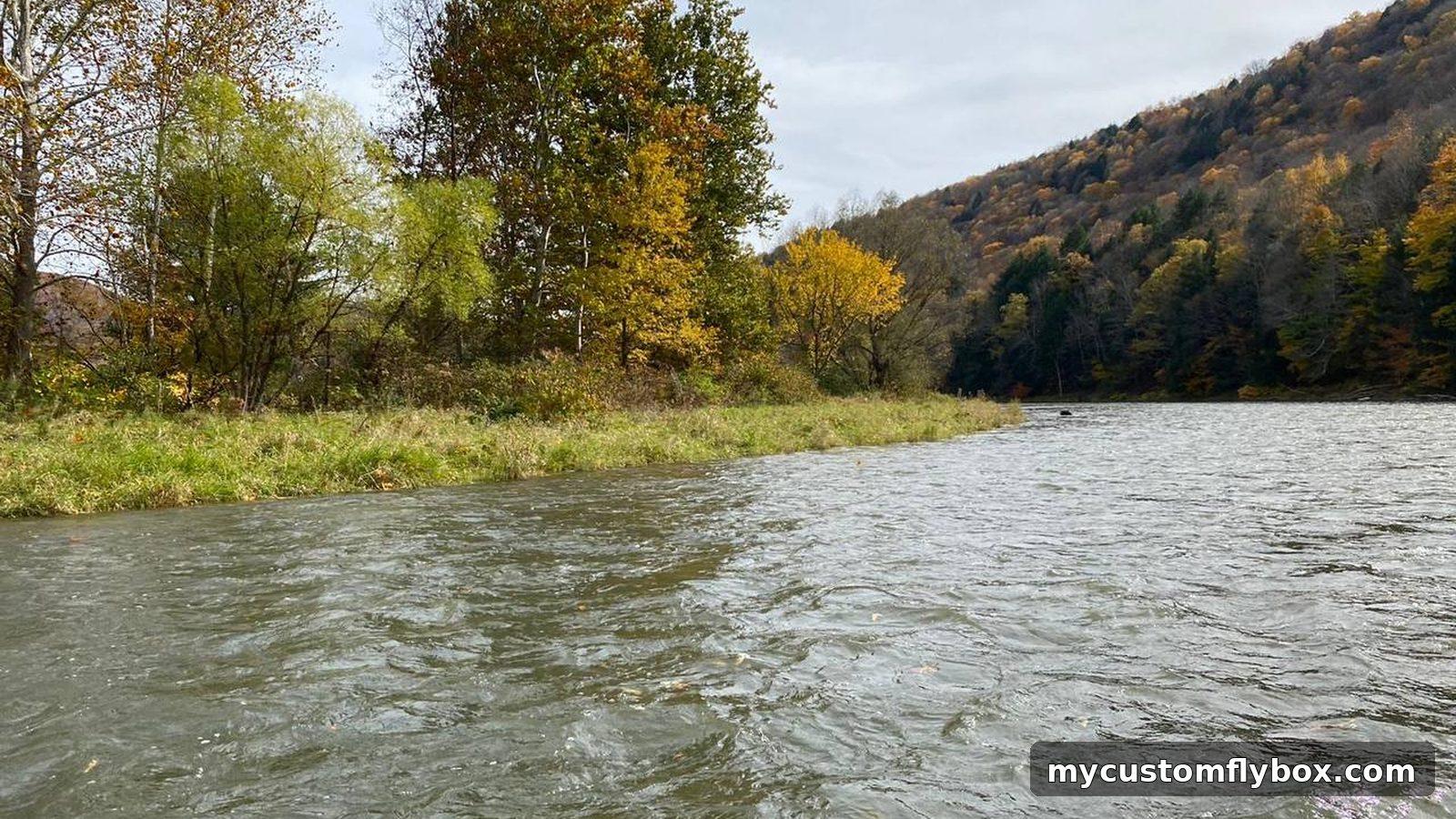
Late fall strips a Catskills trout stream down to its working parts. The broad hatches of May are gone. Leaves fill the slow pockets, daylight shortens, and a cold night can make the morning river nearly lifeless. Trout still feed, but the useful window may last two hours instead of all day. The angler who checks the water, waits for it to warm slightly, and fishes a small set of flies can find good water without carrying a spring hatch box.
This season begins after the first hard frosts and runs until winter settles in. On the Beaverkill and Willowemoc, that often means low freestone water, cold mornings, and brown trout moving through their spawning period. The West Branch Delaware has a different flow and temperature regime below Cannonsville Reservoir, but short days, small insects, and spawning ethics still shape the fishing. Check the current Beaverkill and Willowemoc fishing report or West Branch Delaware fishing report before choosing a river.
The Late-Fall Window
Do not assume dawn is the best starting time. In July, an early start protects trout from warm water. In November, the first hour of daylight can be the coldest and least active part of the day. A few hours of sun may raise a shallow riffle or dark-bottomed pool enough to start midge or olive activity. Even a small change can move trout from deep cover to a feeding seam.
On a mild, overcast day, late morning through midafternoon is a sensible window. On a clear day after a hard freeze, wait until the sun reaches the water. If a warm rain lifts the river without making it unsafe, streamers and larger nymphs can become useful. A cold front with a sharp barometer change may leave fish close to the bottom and unwilling to move.
Carry a stream thermometer and check the same type of water you intend to fish. A reading from a sun-warmed backwater does not represent the main current. Measure shaded, moving water, and give the thermometer time to settle. Use the number as context rather than a promise. Cold trout can feed well when insects are moving, while a river several degrees warmer can still fish poorly under bright sun and falling flow.
Flow Before Flies
Late-fall flows determine where trout can hold and how close you can approach. Start with the guide to reading a USGS gauge, then compare the current reading with the recent hydrograph. The trend matters as much as the number.
Low, steady water calls for a careful approach. Trout may leave the thinnest riffles and settle into pool heads, deeper slots, undercut banks, and the broken water below ledges. Use longer leaders, enter below the water you plan to fish, and keep false casts away from the lie. A bright indicator and a pile of split shot can scatter fish before the first drift reaches them.
A modest rise after rain can improve the fishing. Color gives trout cover, dislodged food enters the current, and larger fish may move toward banks and inside seams. Rising water also carries sticks and leaves. If the river is pushing hard enough to move debris or hide the bottom, stay out and fish from the bank or choose another reach.
Falling water can remain productive, especially when clarity improves. Fish often stay near softer edges before returning to their usual lies. Watch the gauge through the day rather than checking it only at breakfast. Upstream rain, reservoir releases, and tributary input can change the river after you arrive.
Small Insects
Blue Winged Olives and midges cover much of the honest surface activity in late fall. The hatch may be sparse. You might see three trout rise in one tailout, then nothing for twenty minutes. That is enough reason to stop walking and watch.
Carry olive dries and emergers in sizes 18 through 22. A CDC comparadun or slim parachute works when upright duns are visible. A low-riding emerger, RS2, or unweighted Pheasant Tail is better when rises show backs and tails without a clear mouth at the surface. A small soft hackle can cover fish taking moving nymphs just under the film.
Midges may be smaller, commonly sizes 20 through 24. A Griffith's Gnat covers clusters. A sparse black or gray midge adult covers single insects, and a Zebra Midge or thread midge handles subsurface feeding. Fine tippet helps a small fly drift, but there is no reason to fish lighter than needed. A clean presentation on 6X is better than breaking a trout on 7X.
Late-fall caddis activity can occur, but do not build the day around it without seeing evidence. A tan or dark caddis dry in sizes 16 through 18, a caddis pupa, and a soft hackle provide enough coverage. If there are no adults, shucks, or splashy rises, return to small mayflies and midges.
Nymph Water
Most late-fall feeding happens below the surface. The right nymph water has enough current to deliver food without forcing a cold trout to spend too much energy. Look at the seam beside the main current, the first deep slot below a riffle, and the slow edge along a cut bank. The middle of a fast chute may look productive in summer but can be too costly once temperatures drop.
A compact nymph selection is enough:
- Pheasant Tail, 16-20
- Hare's Ear, 14-18
- Olive or brown Perdigon, 16-20
- Zebra Midge, black or red, 18-24
- Caddis pupa, tan or olive, 14-18
- Small stonefly nymph, 12-16
- Unweighted soft hackle, 14-18
Start with one fly. Add a second only when it solves a clear problem, such as pairing a heavier anchor with a small midge. Adjust depth before replacing every pattern in the box. If the fly ticks bottom on every drift, remove weight or shorten the drop. If it never reaches the slower layer, add a small shot or use a slightly heavier fly.
Takes can be quiet. Lead the line through the drift without dragging the flies, and set when the indicator pauses, turns, or moves sideways. A short lift is enough. In clear water, a small yarn indicator or tight-line setup lands more softly than a large foam indicator.
Streamer Chances
Late fall is a reasonable time to carry streamers, but spawning season is a poor excuse to throw large flies at paired brown trout. Fish streamers where the river and fish behavior make the method fair: stained water, a rising flow, deep banks, woody cover, and quiet pools away from visible spawning activity.
Small patterns suit most Catskills water. Carry olive and black Woolly Buggers in sizes 6 through 10, a natural sculpin in sizes 4 through 8, and one sparse white or tan baitfish pattern. A dead drift followed by a slow swing often works better than a fast summer strip. Add short strips near cover, then let the fly pause.
Keep the leader strong enough to land fish promptly. A short 2X or 3X leader turns over a weighted fly and reduces the chance of leaving it in a fish. Wear eye protection when casting weighted streamers in gusty November wind.
Spawning Water
Brown trout and brook trout spawn in fall. Their redds are shallow nests in gravel where a fish has cleaned away darker silt, leaving a brighter patch. Redds can appear at pool tails, along gentle riffle margins, and where groundwater or tributary flow improves the gravel. Leaves and changing light can make them hard to see.
Do not cast to paired fish on clean gravel. Do not wade through the bright patch, and avoid the area immediately downstream where eggs may also be buried. Give the whole feature room. If you cannot cross without stepping through likely spawning gravel, find another crossing or remain on the bank.
Legal access does not make every trout a good target. New York permits a statewide catch-and-release season on inland trout streams from October 16 through March 31, with artificial lures only, but special regulations and border-water rules can differ. Check the current NYSDEC regulations for the exact water before fishing. The DEC trout stream map also identifies management categories and mapped access, including Public Fishing Rights and locations where other permits may apply.
Leaves and Wading
Fallen leaves change both fishing and footing. They collect on the bottom, slide over rocks, and pack into soft seams. A leaf hooked on the dropper can make the rig look alive for half a second, then ruin the next three drifts. Check the flies often and shorten the drift when the current is full of debris.
Fish lane by lane. A clean seam beside a raft of leaves can hold feeding trout because it still delivers insects. The leaf-choked center of a pool is usually wasted effort. If every drift gathers debris, move upstream to faster water or downstream to a section where the leaves have settled out.
Use a wading staff and polarized glasses. Cold water reduces the margin for a mistake, and wet leaves make bank trails slick. Wear insulation under waders, carry dry clothes in the vehicle, and avoid crossings that would be routine in June but uncertain under stained water or floating leaves. A belt belongs around the waders every trip.
A Compact Box
A late-fall Catskills box should cover small surface insects, slim nymphs, and a few streamers without burying the useful flies under spring patterns.
Dries and emergers:
- BWO comparadun, 18-22
- Parachute BWO, 18-22
- CDC olive emerger, 18-22
- Griffith's Gnat, 20-24
- Sparse midge adult, 20-24
- Rusty spinner, 18-22
- Elk Hair Caddis, 16-18
Nymphs and wets:
- Pheasant Tail, 16-20
- Hare's Ear, 14-18
- Olive Perdigon, 16-20
- Zebra Midge, 18-24
- RS2, 18-22
- Caddis pupa, 14-18
- Pheasant Tail soft hackle, 14-18
- Small black stonefly, 12-16
Streamers:
- Olive Woolly Bugger, 6-10
- Black Woolly Bugger, 6-10
- Natural sculpin, 4-8
- Sparse white baitfish, 6-8
Two or three of each working pattern are more useful than one copy of twenty near-identical flies. Keep the smallest flies in labeled rows so a size 22 olive does not disappear among larger nymphs. The river-specific fly box guide explains how to refine that selection after each trip. The dry, nymph, or streamer guide helps when the day's first method stops producing.
The Day's Sequence
Start at home with the gauge, weather, regulations, and current report. Pack a thermometer, spare gloves, a wading staff, and fewer flies than you would carry in May. Arrive late enough that daylight has reached the valley unless a mild overnight temperature suggests an earlier start.
At the river, watch before wading. Look for spawning gravel, rising fish, drifting insects, leaf lanes, and safe entry points. Fish one likely nymph seam first. If olives or midges appear, stop prospecting and watch an individual trout long enough to identify whether it is eating in the film or on top.
When the afternoon light leaves the water, activity may end quickly. There is little value in pounding a quiet pool after temperatures drop and insects disappear. Check the last riffle, reel up before dark footing becomes uncertain, and note which flies, temperatures, and flow trends mattered. Those observations are what turn a general late-fall box into one suited to the Beaverkill, Willowemoc, or Delaware water you actually fish.
References
- New York State Department of Environmental Conservation, 2026 New York State Freshwater Fishing Regulations Guide. Current statewide inland trout stream seasons and limits, with direction to check special and border-water rules. https://dec.ny.gov/sites/default/files/2024-03/fishguide.pdf
- New York State Department of Environmental Conservation, Inland Trout Stream Management in New York. Management categories, year-round catch-and-release season background, and the 2021-2024 evaluation of autumn angling and wild trout recruitment. https://dec.ny.gov/things-to-do/freshwater-fishing/fisheries-management-research/inland-trout-stream-management
- New York State Department of Environmental Conservation, Trout Stream Fishing Map User Guide. Public Fishing Rights, mapped access, management categories, and permit context. https://dec.ny.gov/things-to-do/freshwater-fishing/places-to-fish/trout-stream-fishing-map-guide
- U.S. Geological Survey, National Water Dashboard. Real-time streamflow, water level, precipitation, and available water-quality observations. https://www.usgs.gov/tools/national-water-dashboard-nwd