How to Fish Terrestrials for Trout
By My Custom FlyBox Team
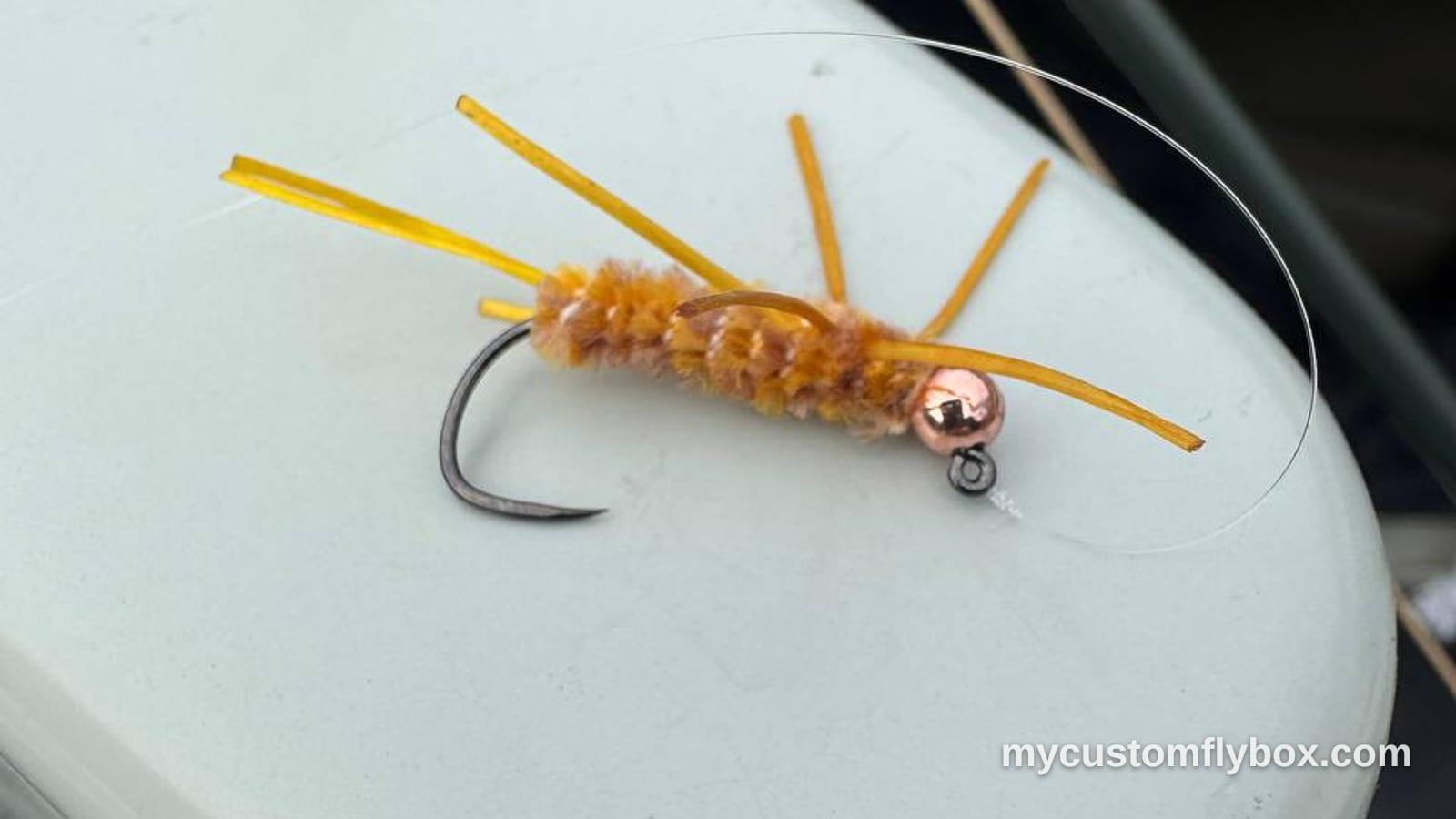
How to Fish Terrestrials for Trout
By late summer, most trout anglers have spent months thinking about mayflies, caddis, stoneflies, sulphurs, olives, spinners, emergers, and the small differences between one pale fly and another. Then August arrives, the big hatch charts go thin, the banks grow high with grass and knotweed, and a trout that ignored a perfect size 20 dry will move three feet for a black beetle.
That is terrestrial season.
A terrestrial is simply a land insect that ends up in the water. Ants, beetles, grasshoppers, crickets, inchworms, caterpillars, and other bank-side insects are not aquatic insects, but trout learn to eat them when they fall, blow, crawl, or get washed into the current. On many freestone streams and tailwaters, terrestrial fishing becomes the most useful dry-fly game from midsummer into early fall.
This does not mean you should throw a foam hopper all day and expect the river to solve itself. Good terrestrial fishing is still trout fishing. You need to read water temperature, shade, wind, flow, bank cover, fish position, and presentation. The fly works because it matches a situation, not because it is large and made of foam.
If you are headed toward the Catskills, check current conditions first. The Beaverkill and Willowemoc report gives useful freestone context when summer heat, low water, or thunderstorms change the day. The West Branch Delaware report helps compare tailwater flows and temperatures when the freestones are warm or skinny.
Why Terrestrials Matter After the Main Hatches
Trout do not stop eating when the famous spring hatches fade. They change where and how they feed. In late June, July, August, and early September, a lot of trout food comes from the banks instead of the bottom.
Walk a trout stream in late summer and look at the edges. Grass leans over the current. Alders and willows shade the banks. Beetles crawl through leaves. Ants run along exposed roots. Hoppers move through open meadows. Low, clear water pushes trout toward the same cover. A small ant or beetle placed close to that shade looks like something that belongs there.
The best part is that terrestrial fishing rewards accuracy more than fly-changing. A well-placed beetle against the bank usually beats three random pattern changes in the middle of the run. That makes it a good way to simplify your fly box and focus on the water.
Start With Water Temperature
Before you make terrestrial plans, make the trout-care decision. Late-summer dry fly fishing can overlap with the warmest and most stressful water of the year. A trout rising to an ant in skinny water is still a trout that needs cold, oxygenated water to recover after the fight.
A practical catch-and-release rule is to start looking for colder options as water approaches 68 F and to stop targeting trout when it reaches or exceeds that range unless a local regulation, agency recommendation, or clearly coldwater situation supports continued fishing. That is especially important on freestone streams like the Beaverkill and Willowemoc during hot weather. Tailwaters such as the West Branch Delaware can stay colder, but section still matters. Downstream reaches, long sunny pools, and slow margins can warm more than the gauge or upstream access suggests.
Carry a thermometer. Check moving water where trout are holding, not a warm puddle along the bank. Check again when the sun gets high. If the water is too warm, switch to bass, panfish, or a colder stream. The water temperature and trout guide goes deeper on that decision, but the short version is plain: do not let a good rise make you ignore the thermometer.
When the water is safe, terrestrials can be excellent in the same periods when aquatic hatches feel weak. Cool mornings after a warm night, shaded afternoons on spring-influenced water, and breezy evenings near grassy banks can all produce surface takes.
Read the Banks Before You Pick the Fly
Terrestrial fishing starts with the bank, not the box.
On a meadow stream, look for grass hanging over undercut banks. Hoppers and crickets are more likely where the river touches open fields, pastures, weedy bars, or sunny floodplain grass. On a wooded Catskills stream, ants and beetles may matter more than hoppers because the banks are shaded, brushy, and full of overhanging leaves instead of tall open grass. On a tailwater with long flat pools, the best terrestrial water may be a shaded bank with just enough current to carry a fallen insect past a holding fish.
Wind matters. A steady breeze blowing from the bank toward the river can turn a quiet edge into a feeding lane. A quick shower can knock ants and beetles into the water. A hard thunderstorm can stain the stream and shift the whole plan toward nymphs or streamers.
Look for these clues before tying on:
- Overhanging grass, alders, willows, knotweed, or brush
- Undercut banks with depth right against the edge
- Foam lines that collect debris and floating insects
- Slow seams beside faster current
- Shaded pockets during bright sun
- Occasional rises that happen tight to the bank instead of midstream
If you see none of that, terrestrials can still work as searching flies, but they are less automatic. A beetle in the middle of a featureless slick is just another dry fly. A beetle six inches from a grassy cut bank is a reason for a trout to move.
Ants: Small, Plain, and Often the Best Answer
Ants are easy to overlook because they do not look like much in a fly box. A black or cinnamon ant in size 14 to 20 is not flashy. It does not float like a hopper. It may be hard to see. But when trout are eating ants, they can ignore everything else.
Ants work especially well on low, clear water and during summer afternoons when the obvious hatches are absent. They also shine after rain or wind, when bank-side insects get knocked into the river. On Catskills freestones, a small black ant can be the right answer in late summer when trout have seen every parachute and caddis in the county.
Carry two basic styles. A simple fur or thread ant rides low and looks natural in slick water. A foam ant floats better in riffles, pocket water, and dry-dropper rigs. Black is the first color. Cinnamon or reddish brown is worth carrying where dry grass, sandy banks, or heavy ant activity are present. Fish ants with a dead drift close to the bank. If the fly is hard to see, watch the end of the tippet for a hesitation or sideways turn.
Good sizes: 14, 16, 18, and 20.
Beetles: The Everyday Terrestrial
If I had to pick one terrestrial for trout, it would be a beetle. Beetles are common, compact, dark, and easy for trout to recognize as food. They also have the right silhouette. A little black oval with legs sits in the film like something helpless.
A foam beetle in size 12 to 18 belongs in almost every summer trout box. Bigger beetles work around grassy banks and broken water. Smaller beetles work on clear pools, spring creeks, and tailwaters where trout get a long look. Put them tight to structure: under branches, beside root wads, along shaded shelves, and on the soft inside edge of fast current. A beetle that lands with a small plop can be a trigger, but do not slap it down like a bass popper.
One good trick is to fish a beetle where you would normally fish a small parachute dry. If trout are rising occasionally but refusing mayfly imitations, a beetle gives them a different profile without forcing you into a tiny fly. It is also easier to see in broken evening light.
Good sizes: 12, 14, 16, and 18.
Hoppers: Use Them Where They Belong
Hoppers get the attention because they are fun to cast and draw aggressive takes. They also get overused. A big hopper can be the right fly on the right water, but it is not a magic late-summer dry.
Hoppers belong near grass, open banks, pasture edges, and bigger water where trout have room and reason to move. They are less convincing on tight, shaded trickles where no grasshoppers are likely to fall in. On the Beaverkill or Willowemoc, look for open runs with grassy banks and enough depth for a trout to hold comfortably. A size 8 foam hopper can work in choppy water or stained flows, but many eastern trout prefer a smaller hopper or cricket in size 10 to 14.
Do not twitch a hopper every cast. Start with a dead drift. If the fly lands beside grass or under a bank, let the current do the work. A single small twitch can help when the fly is trapped in soft water, but constant skating often looks wrong unless trout are already chasing moving bugs.
Good sizes: 8, 10, 12, and 14, with smaller sizes usually better on pressured eastern water.
Dry-Dropper With a Terrestrial
A terrestrial dry-dropper is one of the most efficient summer rigs because it covers two feeding levels without making the surface fly feel out of season. A foam beetle, ant, or small hopper can suspend a light nymph while still fishing as a believable meal.
Keep the dropper short in shallow water. Eighteen to twenty-four inches is plenty for bank pockets, riffles, and skinny seams. Use a small Pheasant Tail, Zebra Midge, Hare's Ear, Walt's Worm, or caddis pupa in size 16 to 20. This rig is useful when trout swirl under the beetle, bump the fly, or refuse at the last moment.
The risk is drag. Two flies create more ways for the current to pull the rig. Keep casts short, mend early, and avoid throwing across too many current lanes. Terrestrial fishing is often close-range work. If you can make a clean twenty-foot cast tight to the bank, you are better off than making a sloppy forty-foot cast into the middle.
For a broader decision framework on when to stay dry, add a nymph, or move to a streamer, see Dry Fly, Nymph, or Streamer: How to Choose.
Presentation: Close, Quiet, and First Drift First
The first drift is the best drift in terrestrial fishing. A trout tucked under grass or shade may be willing to move once. If the first cast lands too far away, drags across the seam, or lines the fish, the second cast is already harder.
Approach from downstream or quartering downstream when possible. Stay low on clear water, and do not wade through the soft inside edge before fishing it. Aim closer to the bank than feels comfortable. A foot off the grass is often not close enough. Six inches is better. Under the branch is better still if you can cast there without hanging the fly.
When a trout eats a terrestrial, pause just enough to let the fish turn. Big foam flies make anglers strike too fast. Small ants make anglers strike too late because they never saw the fly. Watch the ring of the rise, the leader, and the fish's movement. Lift firm, not wild.
Build a Simple Terrestrial Row
You do not need a separate suitcase of terrestrial patterns. A useful summer row can be simple:
- Black foam ant: sizes 14, 16, 18
- Cinnamon ant: sizes 16 and 18
- Foam beetle: sizes 12, 14, 16
- Peacock beetle: sizes 14 and 16
- Small tan hopper or cricket: sizes 10, 12, 14
- Low-riding hopper: size 12
- Inchworm or green weenie: sizes 12 and 14 for wooded streams
- A few matching nymph droppers: Pheasant Tail, Hare's Ear, Zebra Midge, and caddis pupa in sizes 16 to 20
That row fits easily into a river-specific summer box. If you are building boxes by water, keep the Catskills freestone box heavier on ants, beetles, and small hoppers. Keep the West Branch box more technical: smaller ants, smaller beetles, longer leaders, and nymph droppers that match tailwater fish. The river-specific fly box guide covers that organizing idea in more detail.
If you use the My Custom FlyBox app to plan boxes, this is the kind of category that is worth naming plainly: "Catskills summer terrestrials," "West Branch ants and beetles," or "late-summer dry-dropper." A good name saves time when you are packing before daylight.
When Not to Fish Terrestrials
Terrestrials are useful, but they are not always the answer.
If the water is too warm, stop trout fishing. If the river is rising hard and carrying color after a thunderstorm, nymphs or streamers may be safer and more effective until conditions settle. If trout are locked onto tiny olives, midges, or spinners in flat water, a beetle might pull one opportunistic fish, but a hatch match may be the better tool. If the banks are bare rock, deep shade, or fast chute water with no insect input, a terrestrial may be less convincing than an attractor dry or nymph.
Also be careful with spawning seasons and redds later in the year. Terrestrial fishing can run into early fall, especially during warm afternoons, but do not let a good dry-fly bite put you over actively spawning trout or visible redds. Give fish room when their behavior changes from feeding to reproduction.
The best anglers do not force a favorite fly onto every river. They use it when the river is asking for it.
The Practical Takeaway
Terrestrial fishing is not complicated. That is the point. It asks you to slow down and notice the edge of the stream: grass, shade, undercuts, wind, foam, temperature, and the first small rise tight to the bank.
Carry a few ants, beetles, and smaller hoppers. Fish them close. Keep the first drift clean. Add a small dropper when trout are uncertain. Stop when the water gets too warm. If you do those things, terrestrials will carry you through many late-summer days when the hatch chart looks empty.
References
- Five Rivers Trout Unlimited, "Trout and Water Temperature," for practical trout temperature guidance and the common 68-70 F caution range: https://fiveriverstu.org/trout-and-water-temperature
- Guadalupe River Trout Unlimited, "River Flow," for an example of TU-affiliated public guidance recommending trout fishing only at 68 F or lower: https://grtu.org/river-flow/
- My Custom FlyBox, "Water Temperature and Trout: When to Stop Fishing," for the site's existing fish-care framework: /blog/water-temperature-and-trout-when-to-stop-fishing