How to Fish Sulphur Hatches for Trout
By My Custom FlyBox
How to Fish Sulphur Hatches for Trout
Sulphurs are not the biggest mayflies in the trout season, but they have a way of making anglers lose their heads. The first few pale yellow duns slide down the seam. A couple trout show in the flat. Then the whole pool seems to wake up at once, and every fish in the river looks like it is feeding on the same bug. Ten minutes later, the fly that looked perfect is being ignored.
That is sulphur fishing. It can be generous, but it is rarely mindless. On cold tailwaters, spring creeks, and freestone rivers with enough evening cool-down, sulphurs can carry the dry-fly game from late spring into summer. On the West Branch Delaware, they are one of the hatches anglers wait on when nearby freestones are getting warm. On Catskills freestones like the Beaverkill and Willowemoc, sulphurs can overlap with caddis, light cahills, olives, spinners, and the first real summer water-temperature decisions.
If you are heading to the Catskills or Upper Delaware, check current conditions before building the evening around a hatch. The West Branch Delaware report is useful for tailwater flow and temperature context, and the Beaverkill and Willowemoc report helps with freestone heat, storms, and water level. Sulphur fishing is still trout fishing. The hatch does not make warm water safe.
What Anglers Mean by a Sulphur Hatch
In fly-fishing language, "sulphur" usually means a small to medium pale yellow mayfly, often tied and fished in sizes 14 to 18. Depending on the river and region, anglers may be talking about more than one closely related mayfly. The important part for the person on the bank is simpler: a pale yellow or cream mayfly is hatching, trout recognize it, and the vulnerable stages are moving through the water column and surface film.
That last phrase matters. A sulphur hatch is not only a dry fly event. Before you see duns riding on top, nymphs are active near the bottom and moving toward softer edges, seams, and the surface. During the hatch, emergers may hang in the film longer than the fully upright dun. After the hatch, spinners can return and fall spent in the evening, often with clear wings laid flat on the surface. A trout can feed well through all of those stages without ever eating the high-floating dry fly you tied on first.
The old mistake is to see a yellow mayfly and immediately fish the brightest parachute in the box. Sometimes that works. More often, the right answer depends on where the trout's mouth is showing. Splashy rises in riffles may mean fish are taking emergers or duns. Quiet sips in a flat can mean spinners or crippled duns. Bulges just under the surface usually mean the meal is trapped in or below the film.
When Sulphurs Matter Most
Sulphur timing changes by river type, elevation, release temperature, and weather. On many eastern trout streams, anglers start watching for them from late spring into early summer. On some tailwaters, the hatch can stretch deeper into summer because cold releases keep water temperatures in a workable range. Some Upper Delaware sulphur activity is commonly discussed from late May or June into the summer season, while individual freestone windows can be shorter and more dependent on rain, shade, and cool nights.
The best fishing often comes late in the day. Warm afternoon air can push insect activity toward evening, and lower light gives trout more confidence in shallow edges and slow tailouts. Cloud cover can move the window earlier. Light rain can help if it does not muddy the river or push water temperatures up. A hard thunderstorm can end the dry-fly game quickly by adding color, debris, and rising flow.
Watch the daily rhythm instead of only the hatch chart. If the water is cold and stable, a late-afternoon emergence may be slow at first and build toward evening. If the day is hot and bright, fish may wait until shadows lengthen. If the night before was warm and the freestone never cooled, the right call may be to skip trout altogether, even if bugs are present.
That is where a thermometer belongs beside your sulphur box. The My Custom FlyBox post on water temperature and trout lays out the practical 68 F line: when water approaches that mark, start looking for colder water, and stop targeting trout at or above it unless a specific local coldwater situation supports continued fishing. Sulphurs can make trout rise in marginal water, but rising fish are not proof that catch-and-release is harmless.
Read the Rise Before You Change Flies
The best sulphur anglers are not always the ones with the most patterns. They are the ones who watch a fish long enough to understand what it is eating.
A trout eating duns often makes a confident rise with a visible nose or head. The fish may move a little farther because the upright dun is easy to see and drifting on the surface. In riffles and broken glides, those rises can look splashy. In flat water, they may still be steady but more deliberate.
A trout eating emergers may show only a bulge, swirl, dorsal fin, or quick flash. The mouth may not break the surface. These fish are taking insects as they struggle through the film, which means a high-riding dry can pass untouched even if it is the right color and size. A CDC emerger, soft hackle, unweighted pheasant tail, or sulphur emerger with a trailing shuck may sit in the right layer.
A trout eating spinners can be maddeningly quiet. The rise is often a small ring, a sip, or a nose in slow water. Spent-wing flies ride low and flat. If you cannot see mayflies standing upright but the fish are feeding regularly, get low and look across the surface film. Spinner falls are easy to miss because the wings do not stick up like little sails.
Do not change flies every three casts. Pick one rising fish. Watch it eat three or four times. Ask where its mouth is, how often it feeds, whether the rise is splashy or quiet, and whether insects on the water are upright, crippled, or spent. Then choose the fly.
The Core Sulphur Fly Box
A sulphur box does not need fifty patterns. It needs a few stages in the right sizes, tied in colors that do not look like traffic cones in clear water.
For nymphs and pre-hatch work, carry Pheasant Tails, Hare's Ears, Frenchies, and slim sulphur nymphs in sizes 14 to 18. A little flash can help in broken water, but flat tailwater fish often prefer a cleaner profile. Fish these before the hatch in riffle edges, seams below ledges, and softer lanes where nymphs are likely to move.
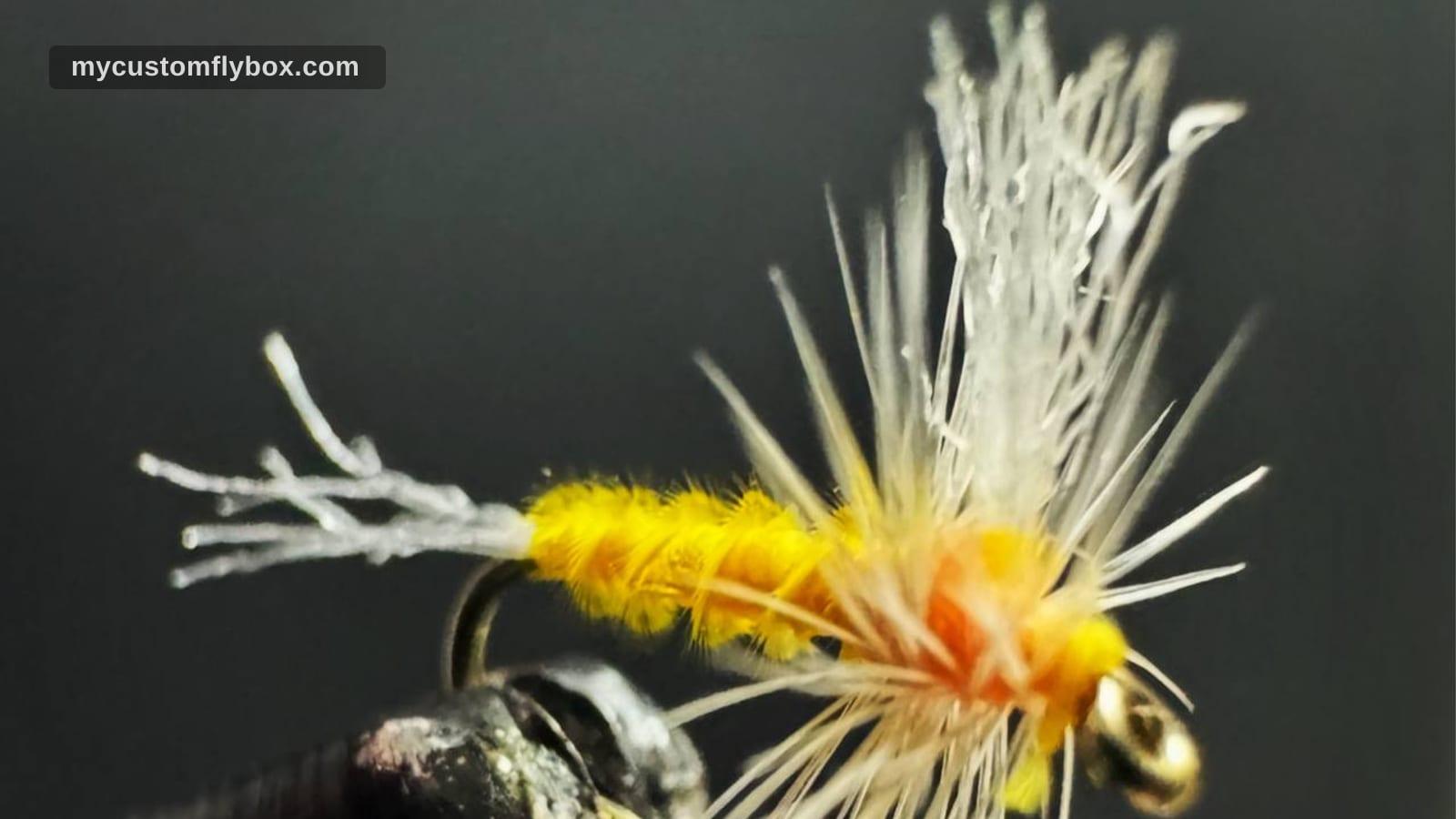
For emergers, carry CDC sulphur emergers, sparkle duns, comparadun emergers, soft hackles, and trailing-shuck patterns in sizes 14 to 18. These are the flies that save the evening when every visible dun floats past untouched. Grease only part of the leader if you need the fly to hang low. A drowned or half-floating emerger can be more honest than a perfect dry.
For duns, carry comparaduns, sparkle duns, parachute sulphurs, and low-riding no-hackle or CDC dries in sizes 14 to 18. The exact shade matters less than size, profile, and how the fly rides. Pale yellow, cream, and slightly orange bodies all have their place, but the fly should match the river's naturals more than the catalog picture.
For spinners, carry rusty, cream, and pale sulphur spinner patterns in sizes 14 to 18, with a few smaller 20s if you fish technical flats. Clear or pale spent wings, slim bodies, and low float are the whole point. A spinner should not look bulky. If it lands like a cork, it probably is not the right tool for slow tailouts.
If you build boxes by water, keep the West Branch version a little more technical: more emergers, spinners, CDC patterns, and sizes 16 to 20. Keep the Catskills freestone version broader: sulphur dries and emergers, tan caddis, light cahills, small olives, and a few terrestrials for the banks. The river-specific fly box guide covers that organizing habit in more detail.
Fishing the Hatch as It Builds
Before the first visible dun, fish underneath. A lightly weighted Pheasant Tail or sulphur nymph drifted through the lower half of a riffle can take trout that are already aware of the coming hatch. If the water is shallow and clear, use a short dry-dropper with a buoyant caddis or parachute and a small nymph 12 to 24 inches below. In deeper seams, a small indicator or tight-line approach may be cleaner.
As the hatch starts, shift toward emergers. This is the stage many anglers miss because the river looks like it should be a dry-fly show, but the trout are still eating just below the skin. A soft hackle swung at the lower end of a riffle can be excellent. So can a CDC emerger dead-drifted to an individual fish. If trout are bulging without noses, resist the urge to force a high dry.
When fish begin taking duns, make the first drift count. Sulphur fish can be forgiving in broken water and exacting in flats. Approach from below or from the side where possible. Keep false casts away from the feeding lane. Use enough leader to let the fly drift before the fly line enters the trout's window. On glassy water, 12 feet of leader is not unreasonable. On pocket water, a shorter leader with better turnover may be the better choice.
Late in the evening, watch for the mood to change. The hatch may look finished, but fish may start rising more regularly to spinners. Spinner fishing is slower and more deliberate. You are not searching water so much as feeding a single fish. Use a low fly, lighter tippet, and clean reach casts. If you cannot see your spinner, track the leader butt and the rise ring. Many good spinner fish are hooked because the angler lifted when the ring appeared where the fly should have been.
When a Sulphur Is Not the Answer
Mixed hatches are normal. Sulphurs may be present, but trout may be eating something smaller, darker, or lower in the film. Blue-winged olives, midges, caddis, light cahills, and rusty spinners can all confuse the picture. On some evenings, the biggest visible insect is not the one fish are eating.
If your sulphur pattern drifts well through a feeding lane three or four times and the trout ignores it, change one variable. Go smaller. Go lower. Change from dun to emerger. Change from emerger to spinner. If fish are splashy in broken water, try a soft hackle or caddis pupa. If fish are sipping in the flat, try a spent spinner or tiny olive. The match-the-hatch guide is built around that kind of practical narrowing rather than guessing from a full fly patch.
Also know when method matters more than species. If the river is high and stained but safe, a sulphur dry may be less effective than a nymph or small streamer along the edge. If the river is low, clear, and warm, stealth and water temperature may matter more than the perfect shade of yellow. If there are no rising fish and no active bugs, cover likely water with nymphs or wait for the evening window instead of flogging the pool.
Tippet, Leaders, and Presentation
Sulphur fishing often lives in the space between technical and practical. On broken freestone water, 5X may be fine. It turns over better, lands dries with some authority, and gives you more control over fish in current. On flat tailwater water, 6X may be needed for a natural drift, especially with size 18 or 20 emergers and spinners. Do not fish tippet so light that every trout turns into a long, warm-water fight.
The cast matters more than the brand of tippet. A reach cast buys drift before drag starts. A downstream slack-line presentation can be deadly on spinner fish, but only if you can hook and land the trout cleanly. Keep the rod low enough to control slack and high enough to protect the tippet when the fish eats. If the fly skates unnaturally, fix the angle before changing the pattern.
Mending should be gentle. A hard mend over a rising trout is often worse than no mend at all. Set up the drift before the fly reaches the fish. If you are mending directly over the trout's head, you probably chose the wrong casting position.
A Simple Sulphur Evening Plan
Start with the river, not the fly. Check flow, trend, storms, and water temperature. If the freestone is too warm, do not fish for trout. If a tailwater section is cold enough but crowded, give other anglers room and choose a lane you can fish without crossing through rising fish.
Arrive early enough to watch. Nymph the riffle edges or seams before the hatch if conditions allow. As the first bugs show, look for rise forms and switch to emergers before going straight to duns. When upright duns are being taken, fish a low-riding dry in the right size. As light drops, look hard for spinners and be ready to change even if sulphur duns are still drifting by.
Keep the box simple: nymphs, emergers, duns, spinners. Carry sizes 14 through 18, with a few smaller flies for pressured tailwater fish. Add tan caddis, small olives, and rusty spinners because sulphurs do not always own the evening. Take notes afterward: water temperature, flow, first bugs, first steady rises, fly that worked, fly that failed, and what you wished you had.
If you use the My Custom FlyBox app to organize flies, this is a good place for a specific box name: "West Branch sulphurs," "Catskills summer dries," or "Sulphur emergers and spinners." The name should remind you how the hatch actually fishes, not just what color the bug is.
Final Thought
A sulphur hatch rewards patience. The angler who waits, watches, and changes stages at the right time will usually outfish the angler who keeps throwing the same bright yellow dry. Fish the nymph before the hatch, the emerger as it builds, the dun when trout are taking upright flies, and the spinner when the river gets quiet.
References
- U.S. Geological Survey Water Data Blog, "Why we use gage height": https://waterdata.usgs.gov/blog/gage_height
- U.S. Geological Survey FAQ, "How is a rating curve used to convert gage height into streamflow?": https://www.usgs.gov/faqs/how-a-rating-curve-used-convert-gage-height-streamflow
- New York State DEC summer trout guidance summarized by Adirondack Explorer, including the 68 F stress threshold and rock-dam impacts: https://www.adirondackexplorer.org/environment/dec-give-trout-a-break-this-summer
- Al Caucci Fly Fishing, "It's Sulphur Time Again": http://www.mayfly.com/articles/Sulphur.html
- Orvis, Tom Rosenbauer, "The Hatch You Might be Missing": https://howtoflyfish.orvis.com/how-to-articles/trout-fishing-articles/the-hatch-you-might-be-missing