How to Match the Hatch Without Overthinking It
By My Custom FlyBox Guide
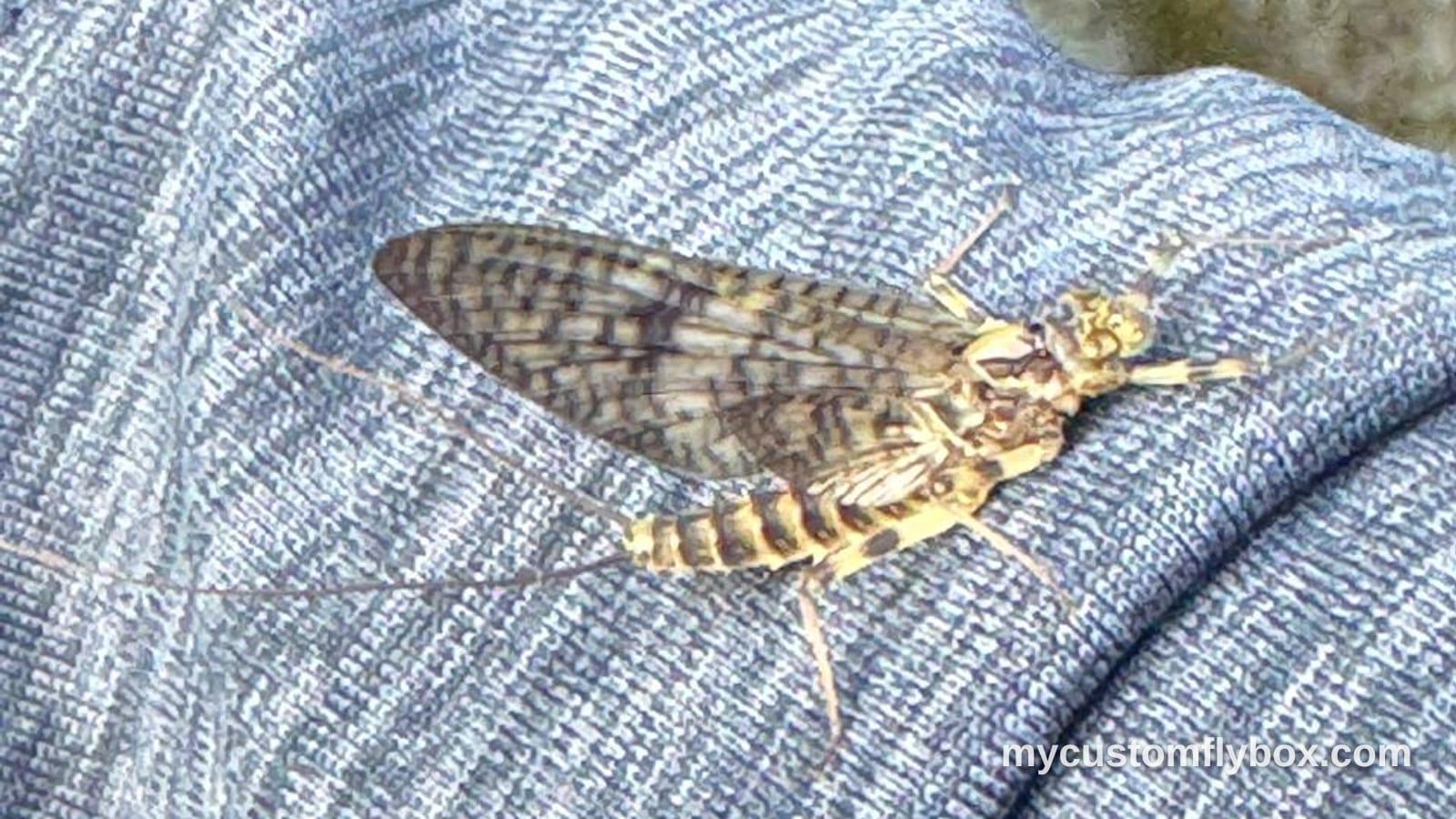
How to Match the Hatch Without Overthinking It
If you talk to enough trout anglers, you will hear "match the hatch" as though it is some advanced technique reserved for people who can identify a mayfly species from thirty feet away and rig a size 14 pattern in under three seconds. It is not. Matching the hatch is mostly about knowing when to stop thinking and start fishing.
The idea is simple: trout do not eat whatever is in your fly box. They eat whatever they are already eating. If a hatch is on, they are usually ignoring everything else. Put something in front of them that looks close enough to what they are eating, keep your drift clean, and let the fish do the work.
That is the entire theory. The details are where people lose their way. They buy twelve new packages of flies, they start carrying a vest that looks like a hardware store, and they still go home with cold feet because the fish were rising at the far end of the riffle and they were fighting a current seam at the near end.
This is the kind of practical reading we want anglers doing before they step onto a river. If you are looking for a sense of what to expect on specific waters, our fly fishing reports cover conditions, hatches, and seasonal patterns across several waters in New York and Pennsylvania. The hatch is only one part of the day. Flow, temperature, light, and fish pressure shape the outcome just as much.
What Matching the Hatch Actually Means
Matching the hatch does not require a perfect match. The goal is to put something in front of the fish that it will take without spooking.
Three variables matter, roughly in order:
- Profile. Does the fly look like an insect, an emerger, or a nymph in the water? Shape matters more than exact color.
- Size. Is the fly close to the natural? If it is twice as big, the trout will see it. Half a size different, they usually will not care.
- Presentation. Is the fly drifting naturally, with no drag? A good imitation with drag will not fool fish. A mediocre imitation with a clean drift often will.
If you nail all three, you will likely catch fish. If you nail two, you will probably catch fish. Presentation is usually the bigger factor than the fly itself. A well-presented size 18 Adams will outfish a perfectly matched size 16 CDC emerger that is swimming across the seam on a stiff leader.
The Three Things to Identify
When a hatch is happening, you do not need to know the Latin name of every insect in the sky. You need to know what stage the insects are in, what size they are, and how the trout are taking them.
If the sky is full of duns and fish are lifting gently at the surface, you have a dry fly hatch. A dry fly or a dry-dropper setup is your best bet. If the surface is full of spinners after the hatch drops, a buoyant dry with a nymph trailing beneath it works well. If you see a film of broken bubbles and rising fish with no visible insect, you might be looking at emergers. A wet fly, a pupa imitation, or a dry-dropper with the nymph just under the surface covers that situation.
Size is the next question. A size 12 Hendrickson looks and behaves very differently from a size 20 BWO. The smaller the insect, the lighter the fly, the finer the tippet, and the better the presentation needs to be. At size 22 there is not a lot of room for error. At size 10, you can get away with a lot more.
The trout's take tells you the third thing. Are they taking on the surface with a quiet sip? Rising with a bubble? Taking below the surface, just under the film? The way a fish takes a hatch tells you where to set the fly and whether you should be fishing dry or wet. A fish taking a BWO emerger three feet below the surface will not rise to a parachute Adams sitting high on the surface film. You need to see the take to make the next decision.
The Dry Fly Approach
When dry fly fishing a hatch, there is a sequence that works:
- Watch the water before you cast. Stand still for a minute. Watch where the fish are rising, where insects are landing, and where the current is holding the naturals.
- Identify the dominant insect. Mayfly with wings upright? Caddis with wings flat? BWO with gray wings spread? Small or large?
- Size down if the fish are finicky. The default move is to go down, not up. A size 18 when the naturals are size 20 will look big. A size 20 when the naturals are size 18 will still look close enough.
- Let the fly do the work. Once you have a fly on the line, your job is mostly presentation. Switching flies mid-drift because the first one "does not look right" is the fastest way to lose a hatch.
- Carry a secondary pattern. If the BWOs are spinning and the fish are ignoring a Parachute BWO, try a dry-dropper with a black nymph two feet below.
On the Catskills, a Parachute Adams in sizes 16 and 18 will cover more hatches than any specialized pattern you can name. On spring creeks like Penns Creek, where fish can be heavily pressured and very selective, a more precise imitation matters more. That is where you pull out the specific BWO or Elk Hair Caddis and size them carefully.
The Nymph Approach
Most matching the hatch happens below the surface, and most anglers never see it.
A great deal of trout feeding comes from nymphs drifting in the current, emerging from the surface film, or taking off as duns from the bottom. A BWO life cycle spends more time as a nymph than it does as a dry fly. A Hendrickson nymph can be found in the same pool for days before the first dun appears. If you are only watching the sky, you are missing most of the feeding.
For BWO nymphs, which show up across almost every trout water in the Northeast from April through October, a Pheasant Tail or Hare's Ear in sizes 16 to 20 will handle most situations. For Hendrickson nymphs on freestones like the Beaverkill and Willowemoc in late May and early June, a Hare's Ear or a Hendrickson-style mayfly nymph in size 12 to 14 is a better match. For spring creek BWOs on waters like Penns Creek, a smaller imitation like a Zebra Midge or a tiny Pheasant Tail in size 18 to 22 will often outperform bigger attractors.
The nymphing drift matters more than most anglers realize. Trout feed on insects drifting with the current. If your nymph is moving at a different speed than the naturals, the trout may ignore it even if the imitation is spot-on. A clean upstream mend, or an indicator set high enough to let the nymph drift without dragging, is the better tool.
Size Matters, but Not as Much as You Think
This is the part where most anglers spend too much time. They will spend thirty minutes looking through their fly box, holding each tiny fly up to the light, comparing it to whatever insect landed on the bank, and still throw the wrong size because they never actually looked at the water.
Big hatches like Hendrickson or Yellow Sally leave room for error. Small hatches like mid-summer BWO demand precision. Cold water makes fish pickier and size matters more. High, stained water makes them less picky and size matters less. In practice, carry a range of sizes for each pattern. A box that includes sizes 16, 18, and 20 is a better plan than a single size.
When No Hatch Is Happening
Some days there is nothing on. The fish are holding deep and you are not sure what to throw. This is not a failure. Trout fishing is not a hatch-only sport.
Fall back on patterns that cover ground:
- Nymphs. A simple dropper rig with a Pheasant Tail and a small attractor will pull fish off almost any river. You are fishing a general food source that trout eat every day of the year.
- Streamers. If the water is high, stained, or cold, a size 4 or 6 Woolly Bugger in black, olive, or chartreuse fished slowly through a seam can trigger a predatory response from bigger, hungrier fish.
- Wet flies. A soft hackle or a Parachute Adams fished just under the surface covers a lot of territory. It does not match one specific hatch, but it looks enough like an emerger to get a rise.
The important thing is to not stand on the bank and wait for a hatch that may not come. If there is no hatch, fish the river.
Fly Box Strategy
You do not need a big box for a hatch-focused day. You need the right flies in the right sizes, organized so you can reach for them without thinking.
- Dry flies, sizes 12 to 20: Parachute Adams in 16 and 18. BWO in 16, 18, and 20. Elk Hair Caddis in 16 and 18. Three patterns, six sizes.
- Nymphs, sizes 14 to 22: Pheasant Tail in 16 and 18. Hare's Ear in 16 and 18. Zebra Midge in 18 and 20. Small Caddis larva pattern in 12.
- Emergers and wet flies: Sparkle Dun or similar emerger in 18 and 20. Soft hackle in size 18.
Organize the box so dry flies, nymphs, and emergers are in separate sections. You should be able to pull the right fly in under five seconds, even if your hands are cold. For anglers using the My Custom FlyBox app to organize their selections, this is a good day to have a dedicated "hatch" fly box set up in the app.
Practice Makes the Pattern Stick
The more you fish a hatch, the better you get at reading it. On the Beaverkill, BWOs often show up in the afternoon around 2 or 3 p.m. on a warm, overcast day. On Penns Creek, a BWO hatch in the early morning can be just as productive. On the Willowemoc, the Yellow Sally hatch in June is a known event that anglers track through the season.
These patterns are not written in stone. A cold front can delay a hatch by a week. A warm spell can advance it by two. But they are useful starting points. If you know that BWOs typically show up on the Beaverkill in the afternoon during late May, you do not waste the first three hours throwing streamers. You save the streamers for when the hatch dies or the water runs up after rain, and you bring the dry flies out when the BWOs start.
The other thing that gets better with practice is reading the water while a hatch is happening. The fish feeding on the hatch are not spread randomly across the river. They are holding along seams where the current brings insects into their reach, along the edges where the water slows down and naturals collect, in pockets downstream of riffles where the current relaxes. If you can see where the naturals are going, you can see where the fish are waiting.