How to Fish Midge Hatches for Trout
By My Custom FlyBox Team
How to Fish Midge Hatches for Trout
Midges are small, plain, and easy to overlook until trout make you pay attention. A river can look empty of bugs, with no caddis bouncing, no mayfly duns sailing, and no stoneflies crawling on the rocks, while trout feed steadily on insects you can barely see. That is midge fishing. It is quiet, technical, and often more about water reading than pattern collecting.
A good midge day does not require a special box full of one-off flies. It requires knowing where midges matter, which stage trout are eating, how small you really need to go, and when a simple pupa under the surface is better than a tiny dry you cannot see. This is useful on tailwaters like the West Branch Delaware, spring creeks, slow Catskills pools, winter tailouts, and lake-influenced river sections where small food stays available when larger hatches are thin.
If you are choosing water for a same-day trip, start with current conditions before you leave. The West Branch Delaware fly fishing report is a good first check for tailwater flows, temperatures, and technical dry-fly windows. For freestone water around Roscoe, the Beaverkill and Willowemoc report helps you decide whether slow pools, softer edges, or a different plan make sense.
Midge water
Midges belong to the family Chironomidae. For trout anglers, the practical point is simple: midges are common in many freshwater systems, and their larvae, pupae, and adults are eaten by fish. They matter most where small steady food is worth more to trout than chasing something bigger.
Look first at tailwaters, spring creeks, slow pools, soft seams, back eddies, and glassy edges below riffles. Those places collect tiny insects and give trout time to inspect them. You may find midge feeders on a broad Delaware tailwater flat, along a foam line below a slow Beaverkill pool, in a winter tailout, or in a spring creek lane where every rise is quiet and deliberate.
Fast pocket water can hold midges too, but it is usually not the place where the hatch becomes obvious. In broken water, trout may eat a small midge pupa as part of a mixed nymph drift. In slow water, midges can become the main event. That is where long leaders, fine tippet, careful wading, and a low-profile fly start to matter.
The best visual clue is not always an insect. It is the rise form. Midge-feeding trout often sip with small dimples, bulges, or barely visible nose rises. They may rise on a rhythm in the same narrow lane. If fish are working steadily but you cannot find a mayfly dun, caddis adult, or spinner on the water, midges should be part of the first guess.
Seasons and timing
Midges can show up any month, but they earn their keep in cold weather and during slow hatch periods. Winter trout fishing often comes down to a small midday window when water temperatures tick upward, sun hits a pool, and midges or small olives become active. Early spring can fish the same way before larger mayflies begin. In summer, midges are useful on cold tailwaters and spring creeks when freestone water is warm or low.
Do not assume midge fishing means only winter. Tailwater trout may feed on tiny pupae and adults in June, July, and September while anglers wait for sulphurs, olives, or caddis. The difference is that summer midge fishing usually happens around other food. Winter midge fishing may be the whole menu.
The best window is often late morning through midafternoon in cold months, especially after a mild night or under light cloud cover. In warmer months, early morning and evening can be better, particularly when flat water is calmer and trout are willing to feed near the surface. Wind matters. A size 22 dry on 6X is hard enough on a calm river. On a broad tailwater with a crosswind, a subsurface pupa may be the more honest choice.
Water temperature still matters. Midges can bring trout up in cold water, but low temperature slows fish and narrows the feeding lane. Warm water creates the opposite safety problem. Carry a thermometer in summer and stop targeting trout when temperatures approach stressful levels. The water temperature and trout guide covers that decision in more detail.
Larvae, pupae, and adults
Most midge fishing gets easier when you stop thinking of a midge as one fly. Think of three useful stages.
Larvae are worm-like and live in or near the bottom. They can be red, olive, cream, tan, brown, or black. Anglers often imitate them with Zebra Midges, blood midge patterns, thread midges, and simple slim nymphs. Fish larval patterns close to the bottom, especially in slower seams, winter pools, and tailwater runs where trout are not moving far.
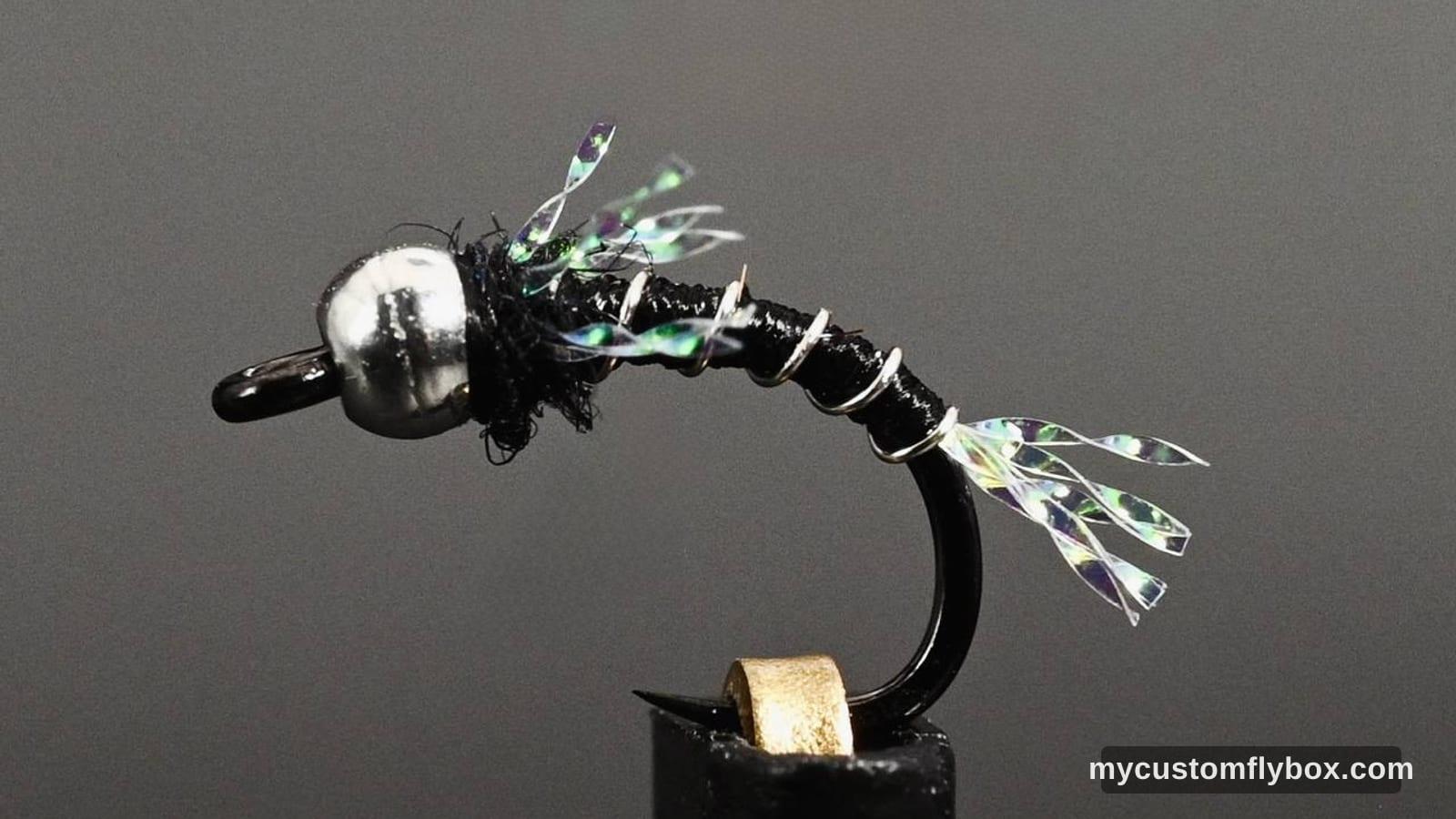
Pupae are the most important stage for many river situations. A midge pupa rises through the water column and hangs near the surface film before emerging. Trout can feed on pupae below the film, in the film, or just under a cluster of adults. This is why a tiny beadhead pupa, RS2-style emerger, WD-40, or unweighted midge pupa can outfish both a bottom nymph and a dry fly.
Adults are the flies you see on the surface or in the air. They can look like tiny mosquitoes, though non-biting midges are not the same thing as the biting insects anglers complain about in camp. Adult imitations include Griffith's Gnats, small black dries, midge clusters, spent midges, and small parachute patterns in sizes 18 to 24 or smaller. A cluster pattern is often easier for trout to find and easier for the angler to see than a single adult imitation.
If you are not sure which stage trout are eating, start below the surface. A pupa fished in or near the film covers more feeding fish than a dry when the rise forms are subtle. Switch to the adult only when you see trout clearly taking on top or when a subsurface fly drifts through feeding lanes without response.
Fly sizes and colors
Most useful midge flies for trout fall between sizes 18 and 24. That does not mean every fly has to be tiny. In stained water, broken current, or low light, a size 18 can be enough. In clear flat water with steady risers, size 22 or 24 may be necessary. Carrying three sizes of a few patterns is more useful than carrying twenty patterns in one size.
For colors, keep the box plain: black, olive, red, cream, gray, and brown. Black covers many adults and pupae. Red covers blood midge or larval impressions. Olive and cream cover lighter pupae and small emerging insects. Gray works for clusters and low-profile adult flies.
A practical midge row might look like this:
- Zebra Midge, black, sizes 18 to 22
- Zebra Midge, red, sizes 18 to 22
- Mercury or glass-bead midge pupa, sizes 18 to 22
- WD-40 or RS2-style emerger, gray and olive, sizes 18 to 24
- Griffith's Gnat, sizes 18 to 24
- Small black midge dry, sizes 20 to 24
- CDC midge emerger, sizes 20 to 24
That row fits into a broader river-specific box. If you build boxes by water, keep the West Branch tailwater box heavier on small pupae, emergers, and low-profile dries. Keep a Catskills freestone box a little broader, with olives, small stoneflies, caddis pupa, and a short midge section for slow pools and cold days. The river-specific fly box guide covers that organizing idea in more detail.
Nymphing midges
When trout are not showing on top, fish a midge like food that moves slowly. A tiny pupa tumbling too fast above the fish is just as wrong as a dry fly skating across a pool.
In deeper winter water, use a two-fly rig with a small attractor or slim mayfly nymph above a midge. A Pheasant Tail, Walt's Worm, small stonefly, or perdigon can help get the rig down. Trail a Zebra Midge or pupa 12 to 18 inches behind it. Use enough weight to tick the bottom occasionally, then remove weight if the rig hangs too much or drags through slow water.
In softer tailwater seams, fish lighter. A small yarn indicator, dry-dropper, or greased-leader setup can be better than a heavy bobber rig. Trout eating midges often sit in soft current where a clumsy rig lands too hard and puts them down. Cast upstream and across, mend early, and let the fly travel at current speed.
In very shallow flats, skip the indicator if you can. Grease the leader down to the last few feet, watch the butt section or sighter, and strike on any hesitation. You will miss some takes. You will also get better drifts and fewer refusals from fish that have already seen heavy rigs all week.
Fishing pupae in the film
The film is where many midge days are won. Trout may rise, but they are not always eating adults. They may be taking pupae trapped just under the surface. That is why an emerger hung behind a visible dry can be so useful.
Tie on a small dry you can see, such as a size 16 or 18 parachute, small caddis, or visible midge cluster. Drop an unweighted pupa or emerger 12 to 20 inches behind it. The front fly is partly an indicator and partly a real fly. The trailing fly rides just under or in the film. This works well on slow seams, tailouts, and foam lines where trout are rising but not showing much of themselves.
If fish refuse the dry-dropper, lengthen the dropper, go lighter on tippet, or change the trailing fly before changing the whole rig. A size 20 gray emerger can behave differently than a size 20 black beadhead pupa even if both look small in your palm.
Keep casts short enough that you can control drag. A long cast across three currents may look elegant, but a tiny pupa starts dragging before it reaches the fish. Move your feet, change the angle, and fish one lane at a time.
Dry-fly midge fishing
When trout are truly eating adult midges, presentation matters more than the pattern name. A Griffith's Gnat, small black dry, CDC adult, or spent midge can all work if it rides in the right lane without drag.
Use 6X or 7X only when the water and fish demand it. Fine tippet helps a tiny fly drift, but it also lengthens fights and increases break-offs if you pull too hard. Match the tippet to the size of fish, current, and water temperature. On warm summer trout water, do not use fine tippet as an excuse to fight fish to exhaustion.
Visibility is the main problem. A size 22 black dry disappears quickly. Fish a larger visible dry 18 inches ahead of the midge, use a small white or dun post pattern, or track the fly by watching the trout's lane rather than staring at the hook. If the trout rises where your fly should be, lift smoothly. Do not wait to see the fly vanish if you cannot see it in the first place.
The best dry-fly midge water is usually slow enough to be unforgiving. Approach from downstream or from the side with low movement. Keep false casts away from the fish. Let the first drift be useful, because a trout sipping midges in clear water may not give you ten chances.
Common mistakes
The first mistake is fishing too heavy. A tungsten nymph and split shot may catch bottom-feeding trout, but it will miss fish eating pupae higher in the column. If rises are present, lighten the rig before you assume the pattern is wrong.
The second mistake is changing flies too fast. Midge fishing is full of tiny patterns that look nearly identical in a box. Changing every three casts can turn a drift problem into a fly-tying problem. Get the fly to the right depth, remove drag, and cover the lane cleanly before you dig for another size 22.
The third mistake is ignoring mixed hatches. Trout may be eating midges, olives, small caddis, or spinners in the same pool. If rise forms vary, catch one fish and look carefully. A quiet sip in the slick may be a midge. A slightly taller rise under tiny sailboats may be olives. A splashy take near riffled current may point toward caddis.
The fourth mistake is standing where the fish are feeding. In winter and low water, soft edges and tailouts can hold trout within a rod length of the bank. Watch before wading. The fish you step on was often the easiest fish in the pool.
A simple midge plan
If I had to fish a technical midge pool with one small box, I would start with three rigs in mind.
First, a light two-nymph rig for fish holding near bottom: a small slim mayfly or attractor nymph above a Zebra Midge. This is the searching setup for cold water, slow seams, and no visible rises.
Second, a dry-dropper emerger setup: a visible small dry with an unweighted midge pupa or emerger behind it. This is the first choice when fish are dimpling but not clearly eating adults.
Third, a single dry or paired dry rig: a visible midge cluster or small parachute with a smaller adult midge nearby. This is for steady risers on top, especially in flat water where an indicator rig would land too hard.
Before changing patterns, ask four questions. Is the fly deep enough or high enough. Is it drifting at the same speed as the bubbles. Is the cast landing too close to the fish. Is the fly the right size for the rise form. Those questions solve more midge problems than another row of flies.
A midge box should be small, but it should be deliberate. Carry larvae for the bottom, pupae and emergers for the film, adults for real surface feeders, and enough sizes to adjust without turning the box into clutter. On tailwaters, spring creeks, and cold Catskills pools, that little row of flies can turn a blank-looking river into a fishable day.
References
- Troutnut: True Fly Family Chironomidae (Midges) — source for midge identification, water type, and pupal emergence behavior used as factual hatch context.
- University of California Riverside: Chironomidae — source for the general note that chironomid larvae, pupae, and adults are food for trout and other aquatic organisms.
- USGS Water Data for the Nation — recommended official source for checking streamflow and, where available, water temperature before choosing trout water.