How to Fish Blue-Winged Olive Hatches for Trout
By My Custom FlyBox Team
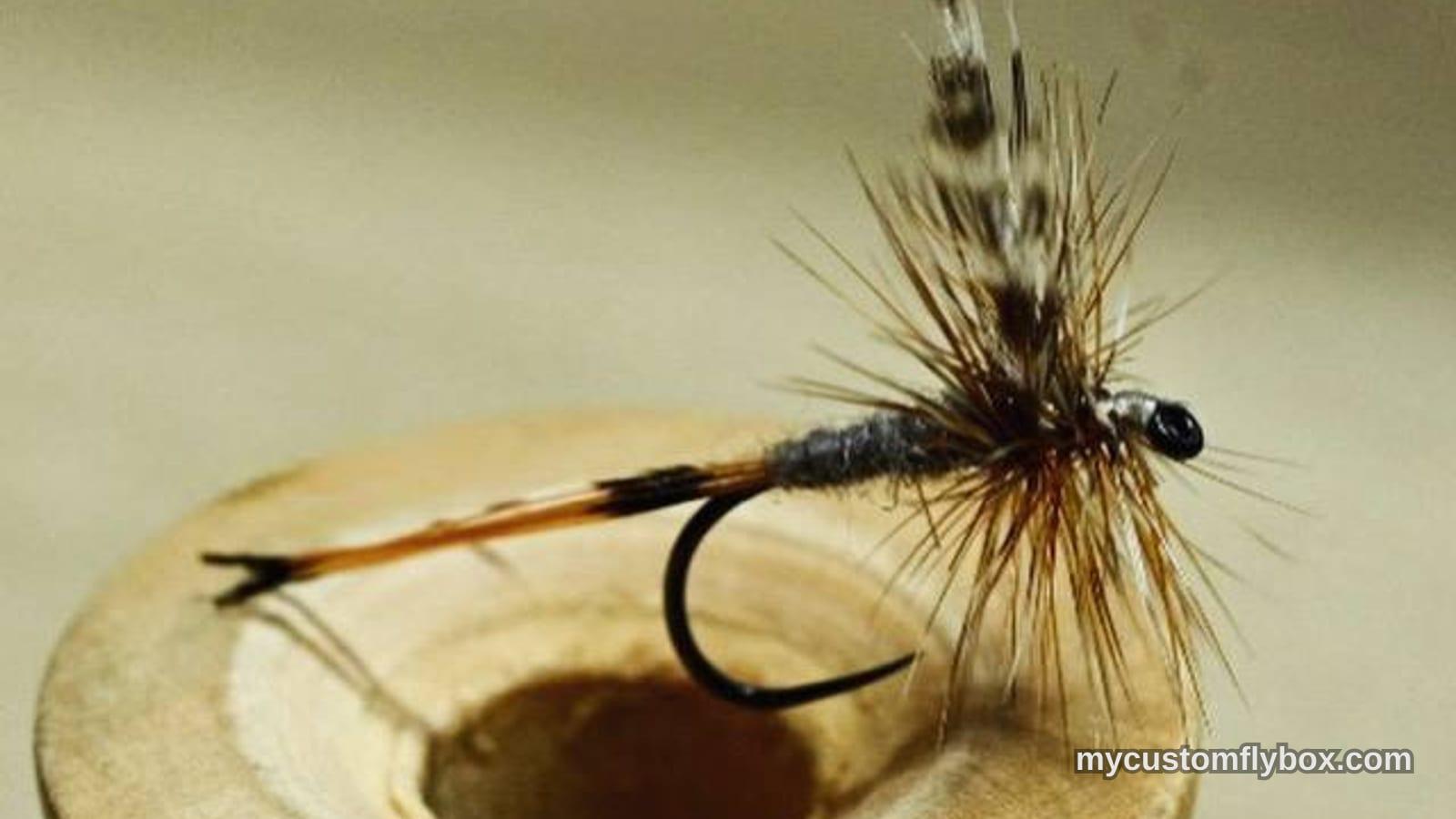
How to Fish Blue-Winged Olive Hatches for Trout
Blue-Winged Olives are the hatch that keeps a trout angler honest. They are small, common, and easy to underestimate. A river can look dead at noon, then a damp wind pushes over the valley, the light goes flat, and brown trout start making quiet rings in the slow side of a seam. There may not be a big bug anywhere in sight. You kneel by the bank, catch one mayfly against your sleeve, and there it is: gray wings, olive-gray body, size 18 or 20, not quite the fly you guessed from standing upright.
That is BWO fishing. It is rarely loud. It is often technical. It can happen on freestones like the Beaverkill and Willowemoc, on cold tailwaters like the West Branch Delaware, on limestone-influenced water like Penns Creek, and on small local trout streams that never make a famous hatch chart. The trick is knowing when trout are likely to see olives, what stage they are eating, and how to put a small fly in the right lane without dragging it across the fish.
Use this guide with current conditions. Check the West Branch Delaware report, the Beaverkill and Willowemoc report, or the Penns Creek report before you build a day around small dries. Flows, water temperature, rain, and wind decide whether a BWO box gets used or stays in the vest.
What Anglers Mean by Blue-Winged Olive
"Blue-Winged Olive" is a fishing name more than one neat insect name. Anglers use it for several small olive or olive-gray mayflies, especially Baetis and related Baetidae mayflies. That matters because the fly on the water may not look exactly like the catalog photo. Troutnut notes that anglers often expect blue wings and olive bodies, but real flies can show gray wings, pale blue-gray hints, olive bodies, gray bodies, or brownish tones. Fresh duns, older duns, and spinners can all look different.
The practical answer is simple: carry a small range of sizes and profiles. Do not bet the day on one size 18 parachute. Most eastern BWO fishing lives between sizes 16 and 22, with 18 and 20 doing a lot of work. On pressured tailwater flats or spring-creek glides, size 22 and even 24 can matter. On broken water after rain, size 16 may be easier for trout to find and easier for you to see.
Dette Flies lists Little Blue Winged Olive, Baetis tricaudatus, as an all-season hatch in the Catskills and also lists a separate Blue Winged Olive window in mid-June. That matches what many anglers see in practice: olives are not one short event like a famous drake hatch. They are a recurring part of the trout season, especially in spring, fall, cool summer weather, and tailwater conditions that stay comfortable.
The Weather Window: Gray Days Are Worth Your Time
If there is one BWO habit worth planning around, it is weather. Olives love the kind of day that sends casual anglers back to the truck: overcast sky, damp air, light rain, fog in the hollows, and a little chill that keeps the sun from punching through the river. A bright bluebird afternoon can still produce olives, especially on cold tailwater sections, but gray weather stacks the odds.
On freestone rivers, look for olives when water temperatures are comfortable and the river has enough flow to keep fish confident. A low, clear river under full sun might produce a few bugs without a serious rise. The same river under cloud cover with a slight stain can fish completely differently. Trout that were tucked under ledge rock may slide into soft seams because the light is lower and small mayflies are available.
On the West Branch Delaware, a cool release and cloudy sky can make olives important when nearby freestones are too warm or too low. On the Beaverkill and Willowemoc, olives often matter around rain, shoulder-season weather, and the softer parts of a hatch day when larger insects are absent. On Penns Creek, BWOs can be a strong answer in spring and fall when fish are feeding in steady lanes but refuse larger offerings.
Wind is the part anglers ignore. A BWO hatch with a hard downstream wind is not the same as a BWO hatch on quiet water. If the wind is pushing your leader faster than the fly, go shorter, tuck into a bank, or fish an emerger below the surface. The trout may still be eating, but you may need to change the angle before you change the fly.
Start Below the Surface
Most BWO days begin before the first obvious rise. The nymphs are small, active, and available to trout before duns are riding the film. If you get to the river early and see no surface work, start with a slim mayfly nymph or soft hackle rather than standing around waiting for noses.
Good starting flies include Pheasant Tails, olive Baetis nymphs, slim jig mayflies, Frenchies, WD-40-style patterns on tailwaters, and small Hare's Ears where the water is rough enough that exact color matters less. Sizes 16 through 20 cover the common work. In deeper runs, fish them near the bottom with enough weight to touch the lane. In shallower riffles and tailouts, lighten the rig so the fly drifts rather than plows.
A dry-dropper can be useful when olives are expected but not fully underway. Use a small visible dry, such as a parachute Adams or BWO in size 16 to 18, with a size 18 or 20 nymph 18 to 30 inches below it. Keep the rig light. A giant foam indicator and heavy split shot can ruin the water where small olives usually matter. On flat tailwater pools, a single emerger or unweighted nymph greased near the tippet can be better.
Soft hackles deserve space in the BWO box. A sparse olive soft hackle, partridge-and-olive, or small pheasant-tail soft hackle can be dead drifted, lifted, or swung at the end of the drift. That lift often matches the movement trout expect during emergence. If you see bulges, flashes, or fish turning just under the surface without clean noses, do not keep forcing a high-floating dry. A soft hackle may be the more honest fly.
Reading BWO Rises
Small olive rises can fool you because they look gentle. A trout sipping duns may leave a neat ring. A trout taking emergers may make a bulge with no nose. A trout eating cripples in the film may show a quick dimple and a bubble. A fish taking spinners can sip so softly that you mistake the rises for raindrops.
Before tying on another pattern, watch one fish for a full minute. Is it rising in rhythm, or only once every few minutes? Is it holding in a seam, a slick, a foam line, or against a bank? Does the fish show its nose, back, or tail?
If you see noses and upright duns on the water, start with a dun imitation: parachute BWO, comparadun, sparkle dun, or low-riding CDC dun. If you see bulges and very few visible adults, start with an emerger. If fish are sipping in flat water late in the hatch, try a spinner or cripple. If fish rise once and vanish, you may be dealing with scattered bugs, spooky trout, drag, or water that is just not ready yet.
This is where How to Match the Hatch Without Overthinking It earns its keep. You do not need a microscope streamside. You need size, profile, stage, and drift. With BWOs, stage and drift often beat exact shade of olive.
Fly Sizes and Patterns That Cover Most BWO Days
A useful BWO row is small but deliberate.
For dries, carry parachute BWOs in sizes 16, 18, 20, and 22. The parachute post helps you see the fly in broken light. Add comparaduns or sparkle duns in 18 and 20 for smoother water where fish inspect the silhouette. A CDC olive in 18 to 22 can be excellent when trout want a fly sitting low in the film.
For emergers, carry BWO emergers, CDC emergers, RS2-style flies, soft-hackle emergers, and small floating nymphs in 18 to 22. These are the flies to try when fish are rising but not breaking the surface cleanly. Grease the leader down to within a few inches of the fly if you need it to hang just under the film.
For nymphs, keep it sparse: Pheasant Tail, olive Baetis nymph, WD-40, Frenchie, small Perdigon, and slim Hare's Ear in sizes 16 to 22. Use darker or flashier versions in stained or broken water and plainer versions in low clear water.
For spinners, carry rusty, olive, and gray spinners in 18 through 24. Spinner falls can be hard to see, especially in low light. If trout are sipping gently and your dun keeps getting refused, a spent-wing spinner can solve the problem without a dramatic fly change.
If you organize boxes in the My Custom FlyBox app, build the BWO group by stage: nymphs, emergers, duns, spinners. Then tag the same flies by river. A West Branch box may need more 20 to 24 emergers and spinners. A Beaverkill-Willowemoc box may use more 16 to 20 parachutes and soft hackles.
Presentation Matters More Than One More Pattern
Small olive fishing exposes drag. A size 20 dry can look right in your hand and wrong after six inches of bad drift. Before changing flies, change the cast.
Work from below or slightly downstream when you can. Keep false casts away from the fish. Use a reach cast, downstream slack, or a small pile cast to give the fly a few drag-free feet. On a broad tailout, cast shorter than your ego wants.
Leader choice depends on water. On broken riffles, 5X may be fine and gives you better control. On smooth tailwater or spring-creek water, 6X is often more realistic, and 7X can have a place with tiny flies if you can land fish quickly. Do not fish tippet so light that you exhaust trout, especially in warmer water. If the river is approaching unsafe trout temperatures, stop trout fishing rather than solving the problem with lighter tackle.
The first drift is usually the best drift. That matters with BWOs because the fish are often feeding in soft, shallow, exposed places. Make the first cast from a settled position. If you slap the leader, line the fish, or drag the fly over its head, changing from olive to gray will not fix it.
When to Leave the Olive Box Closed
BWO fishing has a loyal following, but not every day is an olive day. If the river is high, brown, and pushing hard, a small dry may be the wrong tool. Fish heavier nymphs, soft edges, or streamers if conditions are safe. If the water is low, clear, bright, and warm, the better move may be early morning terrestrials, a shaded nymph, or not trout fishing at all.
Water temperature has the final say. The water temperature guide should sit beside any summer hatch plan. A trout eating size 20 olives in warm water is not an invitation to keep fishing. Carry a thermometer, take the reading in the river you are fishing, and quit when conditions are unsafe for trout. No hatch is worth a poor release.
A Simple BWO Plan for the River
Here is the plain version. Check the report and gauge before you go. If the day is cool, gray, damp, or tied to a stable tailwater release, put the BWO row near the front of the box. Start below the surface with a slim nymph or soft hackle. Watch the water before the hatch. When rises begin, pick one fish and identify the rise form. Nose and upright duns: fish a dun. Bulges and flashes: fish an emerger. Gentle sipping late: try a spinner.
Carry fewer patterns in more useful stages. A size 18 parachute, size 20 CDC emerger, size 20 Pheasant Tail, size 22 spinner, and olive soft hackle will catch more trout than a crowded row of flies you cannot tell apart in the rain. After the day, write down what happened: river, section, flow, water temperature, sky, first bugs seen, first rise, fly size, stage, and what failed. Those notes turn a general BWO box into a river-specific box, which is the whole point of building a river-specific fly box.
Blue-Winged Olives reward the angler who slows down. They ask you to watch the seam, read the rise, and make one clean cast instead of ten hopeful ones. That is why they belong in almost every trout box.
References
- Dette Flies, "Hatch Chart." Used for Catskills hatch timing, including Little Blue Winged Olive as an all-season hatch and a listed mid-June Blue Winged Olive window. https://detteflies.com/pages/hatch-chart
- Troutnut, "Mayfly Genus Baetis (Blue-Winged Olives)." Used for Baetis/BWO appearance notes, habitat context, and life-stage behavior. http://troutnut.com/hatch/180/Mayfly-Baetis-Blue-Winged-Olives
- USGS, "National Water Dashboard." Used as the recommended source for checking live streamflow and gauge context before fishing. https://www.usgs.gov/tools/national-water-dashboard-nwd