West Branch Delaware Fly Fishing: What to Know Before You Go
By My Custom FlyBox Team
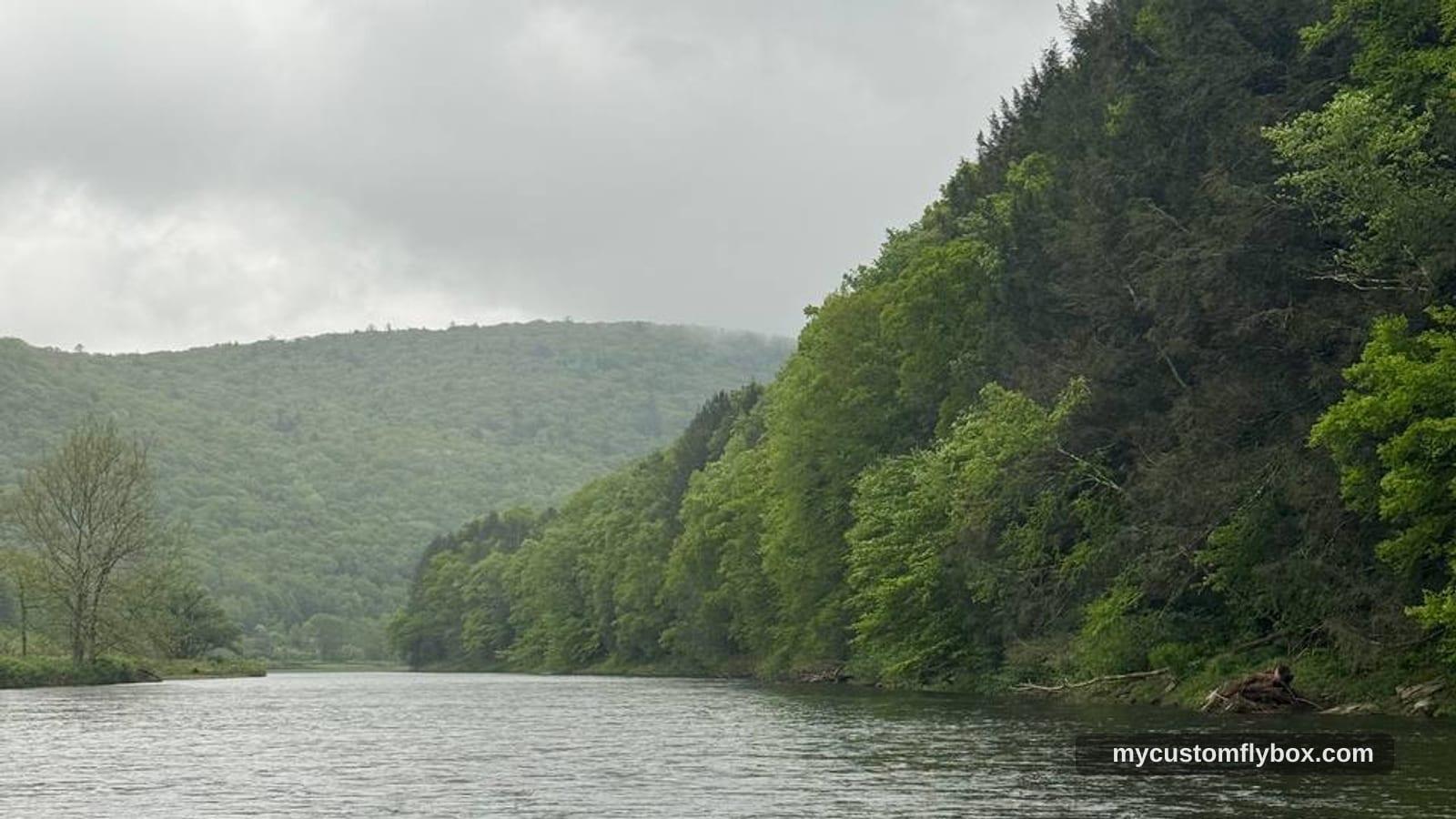
West Branch Delaware Fly Fishing: What to Know Before You Go
There is a moment, usually in May or early June, when the West Branch Delaware River turns into one of the most interesting places to stand in a trout stream in the Northeast. The water is running cold from Cannonsville Reservoir, mayflies are coming off, and if the conditions line up, fish are rising steadily from Stilesville through Hale Eddy and down toward Hancock. It is the kind of afternoon that justifies the drive from New York or Pennsylvania and the long walk down the bank.
But the West Branch is more than one hatch on one week. It is a river that changes through the season, responds quickly to weather, and demands that anglers understand its character before they show up. This guide covers what the West Branch is, when to fish it, what hatches to expect, which sections are worth your time, and what flies to carry.
For current conditions on any given day: flow, temperature, hatch activity, and access notes: check the West Branch Delaware fly fishing reports.
The River: What Makes the West Branch Different
The West Branch Delaware is a cold tailwater in the western Catskills, shaped by releases from Cannonsville Reservoir. The trout water most anglers talk about begins below the dam around Stilesville and Deposit, runs through Hale Eddy, and continues toward Hancock, where the West Branch joins the East Branch to form the main stem Delaware River.
Because it is a tailwater, the West Branch fishes differently from nearby freestone rivers. Cannonsville Reservoir releases set the cold-water baseline, while rain, tributaries, and release changes can still move flows quickly. The gauge at Hale Eddy (USGS station 01426500) is one of the most useful reference points for anglers because it shows what the river is doing through the heart of the fishery.
The West Branch is managed for wild trout and special regulations in key sections, so check the current New York DEC rules before you fish. The fishery is built around wild brown and rainbow trout, with brook trout more common in colder tributary water. That matters because the fish are wary, pressured, and often selective, especially during clear summer flows.
The West Branch is not a warm-water river. In many summers, the water running from Cannonsville stays cold enough to keep trout active when nearby freestone streams are getting warm, though anglers still need to check temperatures as they move downstream or fish during heat waves. That cold-water advantage is one reason the West Branch draws anglers when nearby rivers are struggling.
Seasonal Fishing: When to Go
The West Branch fishes from spring through fall, with different priorities at different times.
Spring (April through early May)
Spring fishing on the West Branch is a mixed proposition. Flows are typically high after winter snowmelt and spring rains. The water can be off-color, and wading is limited to specific sections with easy access and gentle banks. The upside is that rising flows move insects and dislodge invertebrates, and trout respond aggressively. This is a good time for nymphing and streamer fishing, especially around the slower pools and riffle edges that hold fish when the main current is too fast. Know the current regulation dates before fishing tributaries or seasonal sections, and avoid disturbing spawning gravel when trout are on redds.
Early summer (mid-May through June)
This is the prime window. The Hendrickson hatch can start in late April or May depending on water temperature and spring conditions. Blue-winged olives are active. Caddis hatches begin in earnest. Water temperatures hold in the low to mid-50s F, keeping fish comfortable and feeding throughout the day. The dry fly game is real here, and the evening sulphur hatch starts building by mid-June. If you only fish the West Branch once a year, plan for this window.
Summer (July through August)
The West Branch holds up better than most in the region during summer because of the cold dam releases. However, as you move downstream away from the influence of the cold tailwater, the water can warm, and you should monitor temperature if you are moving toward the Delaware River junction. Sulphurs and caddis dominate the hatch scene in July. Green drakes appear on parts of the river. The late-day and evening fishing is often the most consistent. Keep a thermometer in your wading boot. When water approaches 68 F for trout, fish metabolism changes and they become less willing to feed aggressively: and they are under more physiological stress. Know when to stop fishing, and check our guide on water temperature and trout for practical thresholds.
Fall (September through October)
Fall brings cooler water and clearer conditions. The river drops after summer thunderstorms become less frequent. Brown trout become more visible and more inclined to take dry flies in the late morning and afternoon. Blue-winged olives return as a primary hatch. September is a solid month for searching pools with streamers and dry flies, and October often brings a steady BWO hatch with some late caddis.
Major Hatches and What to Match
The West Branch Delaware supports one of the most diverse and consistent hatch sequences in the Northeast Catskills region. Here are the key events, roughly in chronological order.
Hendrickson (Ephemerella subvaria): late April into May
The Hendrickson is one of the signature spring hatches on the West Branch. Duns are often size 12 to 14, tan to pinkish-tan, and they can bring fish up in the afternoon when flows and temperatures cooperate. The hatch can be concentrated: sometimes the fish turn on hard for an hour or two, then go dead. Watch for rising fish and match the size and color. A Sparkle Dun or Adams in the right size works. The evening spinner fall is often as productive as the hatch itself, with fish sipping pale, spent duns off the surface.
Blue-Winged Olive (Baetis spp.): year-round, peaking in fall and spring
BWOs are the workhorse mayfly on the West Branch. They hatch on cloudy days, in shade, and during low-light windows: drizzly mornings, overcast afternoons, the half-hour before and after sunset. Duns are size 16 to 22. A BWO Comparadun or Parachute Adams in the appropriate size is a reliable pattern. Nymph patterns like a Pheasant Tail or Frenchie in size 16 to 18 work well during nymphing phases.
Caddis (Trichoptera): May through September
Caddis are active throughout the warm months. Larvae and pupae are in the riffles and runs year-round, but the adult hatch peaks in summer. Tan caddis and dark sedge patterns in sizes 14 to 18 are useful. Elk Hair Caddis and Spent Caddis dries are good attractors when fish are feeding on the surface but you cannot pinpoint the exact insect.
Sulphur (Ephemerella and related small mayflies): mid-June through August
The sulphur hatch on the West Branch runs from mid-June well into August. These small mayflies are size 14 to 18 and hatch in the afternoon and evening. Sulphur Sparkle Duns, spinners, and comparaduns are the go-to patterns. The hatch is often the most consistent dry fly opportunity on the river during summer.
Green Drake (Ephemera guttulata): June into early July
Green drakes are a big-bug hatch that draws attention. Adults are size 8 to 10, green to olive, and hatch primarily in the late afternoon and evening. They are not always the most abundant hatch, but when fish are keyed in on them, nothing else works. Carry a Green Drake or Coffin Fly in your box. If you see no green drakes, move on: but do not overlook them if you see the characteristic large, steady rises.
March Brown (Maccaffertium vicarium): May into June
March Browns are larger, size 10 to 14, and show up around the late-spring transition into early summer. They are worth carrying in May and June, especially when you see larger mayflies coming off sporadically instead of in a blanket hatch. Gray Fox comparaduns and March Brown dries are good choices.
Yellow Sally stoneflies: June through August
Yellow Sally stoneflies show up around rocky banks and riffle edges through the warmer months. Adults are usually small to medium-sized, pale yellow to yellow-olive, and the activity can be very local: fish may key in on them along one bank while ignoring the same pattern upstream.
For guidance on matching these hatches without getting lost in the details, read our how to match the hatch without overthinking it guide.
Key Sections and Access
The West Branch has several well-known fishing sections, each with its own character and access challenges.
Stilesville and Deposit
The water below Cannonsville around Stilesville and Deposit is the cold upper tailwater that many anglers start with. Access changes over time and includes public areas, bridge crossings, and private water mixed together, so confirm legal access before stepping in. The water can run fast after release bumps or rain, so check flows before you go.
Hale Eddy
Hale Eddy is named for the rapids and ledges that characterize the section. It is a longer run of water with deep pools, riffles, and seams. Use public access points and posted parking in the Hale Eddy area, and respect private property along both banks. This is one of the best sections for both nymphing and dry fly fishing. The flows at the USGS gauge at Hale Eddy are the most commonly referenced, so if you see a fishing report citing a flow number, it is usually this spot. Wade carefully: the ledges and slick rocks are no joke, and boat traffic is common in summer.
Hancock and the junction water
The Hancock area is the lower end of the West Branch fishery and the gateway to the main stem Delaware. The water here can still be excellent, but it is farther from the coldest release influence, so pay close attention to temperature during summer heat. Access is a mix of public points, bridge areas, boat launches, and private property. Nymphing, dry-dropper rigs, and evening dry fly fishing all have a place here when flows and temperatures are right.
For a river that changes so quickly from section to section, it helps to know what is happening on any given day. The West Branch Delaware fly fishing reports cover Hale Eddy and upstream conditions, which are representative of most of the upper river.
Fly Selection: What to Carry
A West Branch fly box should be built around versatility. The river produces a wide range of hatches, and conditions change rapidly. Here is a practical breakdown.
Dry flies
- Adams, 12-18: general-purpose emerger and dun imitator
- Hendrickson Sparkle Dun, 12-14: the key late-spring hatch
- Sulphur Sparkle Dun or Spinner, 14-18: mid-summer workhorse
- BWO Comparadun, 16-22: cloudy days and off-season
- Elk Hair Caddis, 14-18: late summer and general attractor
- Green Drake, 8-10: when big bugs are running
- Gray Fox Comparadun, 10-14: cool-weather early season
- Light Cahill, 14-16: late summer evening option
Nymphs
- Pheasant Tail, 14-18: universal bait
- Caddis Pupa, 14-18: riffle feeding
- Prince Nymph, 10-14: attractor for deeper water
- Pat's Rubber Legs, 8-12: larger nymphs and baitfish imitation
- Isonychia Nymph, 10-12: summer nymphing
- Frenchie, 14-18: effective when fish are feeding selectively
Wet flies and soft hackles
- Partridge and Yellow, 12-16: classic swinging wet fly
- Leadwing Coachman, 12-16: good in stained water
- Soft hackle in grizzle or yellow: effective on BWO and sulphur days
Streamers
- Woolly Bugger, olive or black, 6-10: the default streamer
- Sculpin pattern, olive or brown, 4-8: natural prey on the West Branch
- Sparkle Minnow, 4-6: when trout want a baitfish imitation
- Muddler Minnow, 6-8: good for sketching along banks and deeper seams
A compact box that covers the West Branch well might include: three dozen dries across the sizes and patterns above, two dozen nymphs in Pheasant Tail, Caddis Pupa, and Prince, a dozen wet flies and soft hackles, and a dozen streamers. The My Custom FlyBox app can help you track what you carry and plan your box before you head out.
Tactics That Work on the West Branch
Nymphing is the most consistently productive method on the West Branch, especially when flows are higher or fish are not rising. A standard indicator rig with a Pheasant Tail or Caddis Pupa on the point and a smaller attractor as a dropper covers most situations. Dead drift through riffles and seams is the priority: the West Branch is not a swing-fly river in the traditional sense, although you can make it work in slower pools.
Dry fly fishing is situational but can be extraordinary when the hatch is running. The key is patience. Fish may ignore your first six drifts and then start rising on the seventh. Match the hatch carefully: size matters more than pattern on the West Branch during most hatches. A slightly off-size dry fly that sits right will beat a perfect dry fly that sits wrong.
Streamer fishing is underrated on the West Branch but worth trying, especially in low-light conditions, during or after rain, or when you are targeting larger brown trout. Work a Woolly Bugger or sculpin pattern slowly along the edges of riffles, around deep pools, and near structure. Short strips with pauses are more effective than constant retrieves.
When the river is high and off-color, nymph below a strike indicator or swing a weighted fly through the softer water. When the river is low and clear, focus on seams and slower water: fish hold tight to the current's edge, not in the fastest part of the riffle.
Safety and River Ethics
The West Branch is a beautiful river, but it demands respect.
High water and wading safety. The river can rise quickly after rain. If flows at Hale Eddy exceed 1,200 cfs, wading conditions become difficult and dangerous on most of the river. Below 800 cfs, the river is generally safe and wadeable in most sections. When in doubt, do not enter the river.
Temperature awareness. Trout are cold-water fish. When water temperature approaches 68 F, trout become stressed and should not be hooked or handled. Our water temperature and trout guide covers the practical details of temperature thresholds and what to do when conditions exceed them. Carry a thermometer and check the water before you start fishing a new section.
Boat traffic. The West Branch is popular for guided drift boat trips, especially from late May through August. Be aware of boat lanes, give boats right of way, and do not wade into the main channel when a boat is approaching your section.
Catch and release best practices. The West Branch supports a strong wild trout fishery. Practice careful catch and release: use barbless hooks, keep fish in the water when removing hooks, and avoid handling fish out of the water for photographs. Wet your hands before handling fish, and if a fish does not recover quickly after release, let it rest in deeper water until it swims away on its own.
Spawning season closures. The New York DEC designates certain sections and time periods as closed for wild trout spawning. Know the current regulations before you fish. Spawning redds are visible in shallow gravel riffles in spring: stay out of these areas.
Looking Ahead
The West Branch Delaware is one of the most rewarding trout fisheries in the Northeast, and it rewards anglers who take the time to learn its rhythms. The hatches are predictable if you know what to look for. The access is manageable if you plan for it. The wild trout population, when managed responsibly, provides a fishing experience that stocking cannot replicate.
The river changes with every rain and every season, which is part of its appeal. One day it is a Hendrickson hatch with fish rising in the late afternoon. The next day it is a BWO hatch on a gray, drizzly morning with fish sipping in the shade. The variety is what makes the West Branch worth coming back to, year after year.
For the latest conditions, flow data, and hatch reports from the West Branch, check the West Branch Delaware fly fishing reports.
References
- USGS Water Data, Hale Eddy Gauge (01426500): https://waterdata.usgs.gov/monitoring-location/01426500/
- New York State DEC, Freshwater Fishing Regulations: https://dec.ny.gov/things-to-do/freshwater-fishing/regulations
- National Weather Service, Hancock, NY forecast source: https://api.weather.gov/