How to Fish Low Clear Water for Trout
By My Custom FlyBox Team
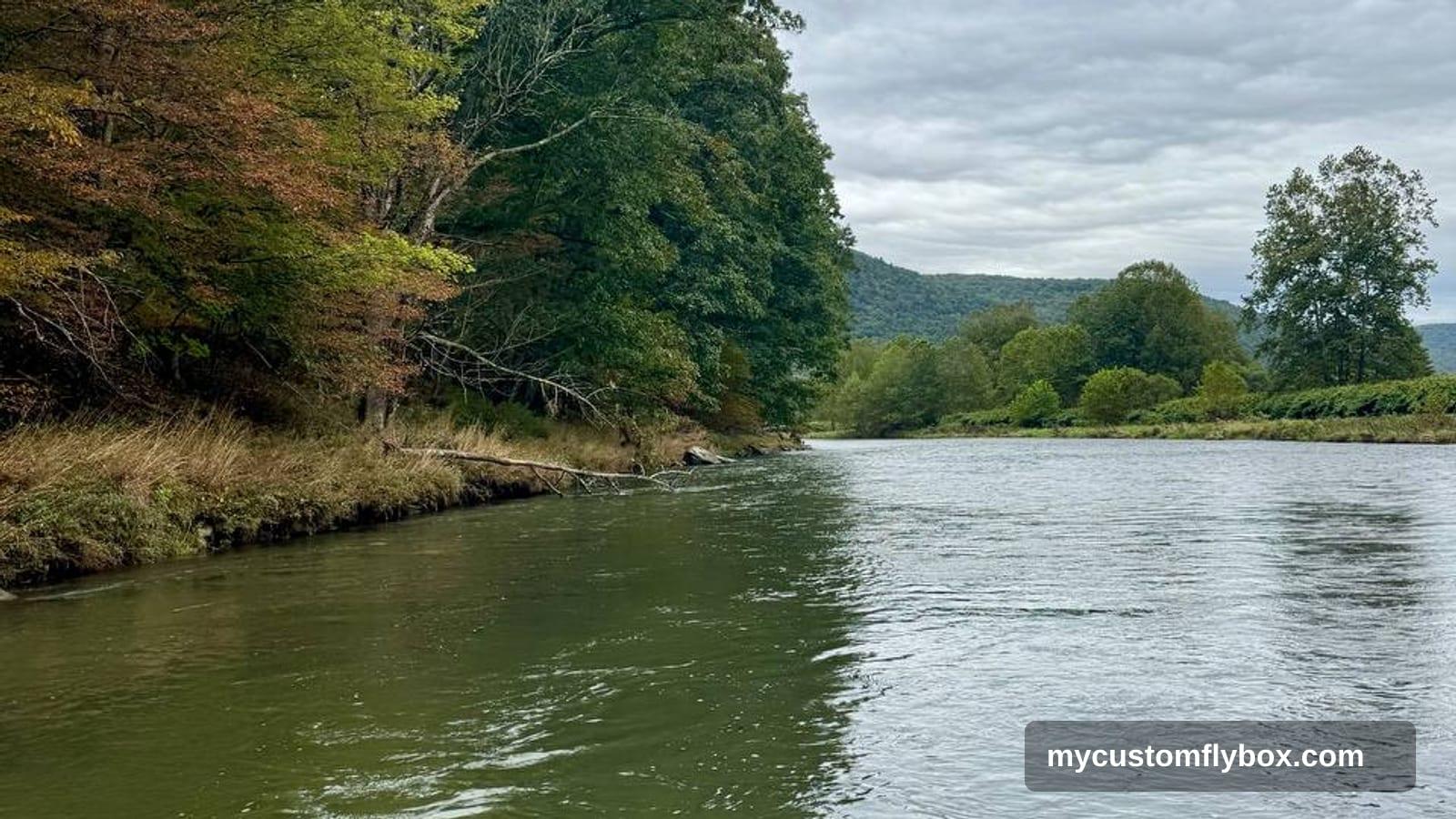
How to Fish Low Clear Water for Trout
Low, clear water makes trout fishing honest. There is less room for sloppy wading, less current to hide a bad cast, and less forgiveness when your leader lands across a fish's window. The trout can see you sooner. You can see them better, too, which is useful until you forget that a trout looking easy in shallow water is usually the hardest one in the pool.
This kind of water shows up in late spring after a dry spell, through much of summer on freestone streams, and again in fall when nights are cool but rain has been scarce. On Catskills water like the Beaverkill and Willowemoc, low water can turn famous pools into quiet, glassy rooms where one careless step sends every fish under cover. On tailwaters like the West Branch Delaware, low and clear does not always mean warm, but it still means pressured trout, longer drifts, and fly choices that need to look natural from more than one angle.
The answer is not to fish only smaller flies. That helps, but low water calls for a full change in approach: where you enter, how you walk, what angle you cast, how long your leader is, when you fish, and when you leave the trout alone.
Check flow and temperature before you rig up
Low water is not automatically unsafe water, but it deserves a closer look. Before you drive, check the nearest gauge and compare today's flow with recent days. The USGS Water Services pages explain that real-time data can include streamflow, gage height, and, where sensors are installed, water temperature. That combination tells a better story than flow alone.
A falling hydrograph after several dry days usually means trout have had time to settle into predictable lies. They may be spooky, but they are not necessarily displaced. A sharp drop after high water can concentrate fish in remaining buckets and slots. A long flat line near seasonal lows tells you to expect skinny edges, exposed tailouts, warmer afternoons, and fish that have seen the same parade of anglers.
Temperature matters more than whether the water looks pretty. Trout Unlimited notes that trout prefer cold water, often less than 65 F, and that stream temperature strongly affects their well-being. Many anglers use 68 F as a practical stop-fishing line for trout, especially when catch-and-release is the plan. That number should not become an excuse to fish until the thermometer reads exactly 68. If the river is 66 F at sunrise after a hot night, it may be headed the wrong direction fast. If it is 58 F on a spring-fed tailwater at noon, low water may be a presentation problem rather than a fish-care problem.
Carry a stream thermometer. Put it in moving water, wait long enough for it to settle, and check more than once on warm days. If the water is too warm, switch species, scout access, tie flies at home, or fish colder water where legal and appropriate. A trout left alone in August is still there in October.
For current regional context, check the Beaverkill and Willowemoc fishing report before fishing Catskills freestones and the West Branch Delaware fishing report before choosing between tailwater and freestone options.
Start by fishing less water
In high or stained water, covering water can be the right move. In low, clear water, moving too much is often what ruins the pool. Trout slide into the best remaining cover: the darker trough beside a ledge, the bubbly seam below a riffle, the inside edge of a chute, the shaded root wad, or the broken water at the head of a pool. The rest of the river may look fishy from a distance, but much of it is too thin, too bright, or too exposed.
Stand back and spend a few minutes looking before you wade. Use the bank. Use trees, grass, and boulders to break up your outline. Watch for subtle rises, pale mouths opening under the surface, flashes near the bottom, or the soft sideways movement of a trout feeding just off the main current. If you can see fish, assume they can see you.
The first cast matters more in skinny water. Make it from the bank if you can. If you have to enter the river, step in below the fish, move slowly, and keep the waves from your legs from pushing into the lie. On quiet pools, even a small wake will tell trout something is wrong long before your fly gets there.
Fish the broken water first
When low water has you feeling exposed, start where the river gives you cover. Riffles, pocket water, plunge pools, and choppy seams hide leader shadows and muffle mistakes. They also hold oxygen better than still flats during warm spells. Trout in broken water have less time to inspect a fly, which gives you a fair chance with a simple pattern presented cleanly.
A dry-dropper can be useful in knee-deep riffles. Try a buoyant caddis, small Stimulator, foam beetle, or parachute dry with a short dropper: a Pheasant Tail, Hare's Ear, Walt's Worm, Zebra Midge, or caddis pupa in sizes 16 to 20. Keep the dropper short enough that it is fishing the water you can actually reach. In thin riffles, twelve to twenty-four inches may be enough.
If the water is very clear, skip oversized indicators and heavy split shot unless the depth truly calls for them. A large bobber crashing into a shallow run can shut down fish that might have eaten a small dry or soft hackle. If you need weight, use the least you can get away with and place it so the rig still lands quietly.
Lengthen the leader for clean drifts
Low clear water often rewards a longer leader, but length by itself is not magic. A fourteen-foot leader that piles up in a heap over a feeding lane is worse than a nine-foot leader that turns over cleanly. The goal is separation between fly line and fish, a soft landing, and enough slack for a natural drift.
For dry flies, a 10- to 14-foot leader tapered to 5X or 6X is a good starting point on Catskills-style pools. On technical tailwater flats, finer tippet may be necessary, but do not go lighter than you can land fish quickly and safely. Overplaying trout on fine tippet in warm or low water is not good fishing. It is just delayed trouble.
For nymphs and soft hackles, you still need stealth. A long mono or fluorocarbon leader, a small yarn indicator, a greased-leader setup, or a tight-line approach from close range can all work. Match the rig to the water. In a shallow riffle, a small unweighted nymph swung under tension may look better than a heavy two-fly rig dredged through ankle-deep current.
Downsize flies with a reason
Small flies matter in low water because fish have more time to inspect them and because many summer and fall food sources are small. That does not mean every fly has to be a size 24. It means the fly should fit the food, the water speed, and the fish's attitude.
For mayflies, carry Parachute Adams, Blue Winged Olive duns, Comparaduns, CDC emergers, and rusty spinners in sizes 16 to 22. On Catskills water, keep a few Isonychia patterns in 10 to 12 and sulphur or Light Cahill-style flies where the season calls for them, but do not force a large mayfly just because it is in the box. If the river is flat and fish are sipping, an emerger or spinner often beats a high-riding dry.
For caddis, carry tan and olive Elk Hair Caddis or X-Caddis in 14 to 18, plus soft hackles and caddis pupa in 14 to 18. In low water, a skated caddis can still wake fish up near dusk, but a dead-drifted emerger or a swung soft hackle may be better through the afternoon.
For terrestrials, ants and beetles are practical low-water flies. Black ants in 16 to 20 and foam beetles in 12 to 18 can be excellent near grassy banks, shaded edges, and under overhanging limbs. A small terrestrial is not only a summer searching pattern. It is also a good way to show fish something different when no hatch is obvious.
For nymphs, keep them slim and natural: Pheasant Tails, Hare's Ears, Walt's Worms, Perdigons, Zebra Midges, small stoneflies where they belong, and caddis pupa. Sizes 16 to 20 cover a lot of low-water trout fishing, with a few 12 to 14 patterns for pocket water, stained edges, or larger insect activity.
Watch the shadows and the sky
Low water is not only about depth. It is about light. A pool that seems empty under full sun may come alive when a cloud slides over the valley. A bank that looks too shallow at noon may hold trout at last light. Shade from sycamores, hemlocks, willows, bridges, and high banks can make small pieces of water fish better than the obvious middle.
Position yourself so your shadow does not cross the lane you plan to fish. This sounds simple until the sun is behind you and the best seam is directly in front of your boots. In that case, change angles, crawl lower, cast from farther downstream, or skip the fish. A trout that bolts because your shadow touched its window was never really cast to.
Wind can help or hurt. A light upstream breeze can put ants, beetles, and leaves on the water and break up the surface enough to hide your leader. A hard downstream wind can ruin delicate presentations and drag your fly before it reaches the fish. On breezy summer days, look for banks where the wind pushes food toward trout rather than away from them.
Change your casting angle
The classic upstream dry-fly cast still works, but low clear water often rewards quartering casts, reach casts, and downstream presentations. If you cast straight upstream to a fish in flat water, your leader may land over the fish before the fly arrives. If you stand across from the fish, your line may drag across conflicting currents. A better angle can solve problems before fly choice enters the discussion.
A downstream reach cast can be deadly on slow risers when you have room and control. The fly arrives first, the tippet follows with slack, and the line stays above the fish. The tradeoff is hook-setting discipline. You have to wait until the fish turns down or closes its mouth before lifting. Pull too early and you will take the fly away.
In riffles, a short upstream or up-and-across cast is usually easier. Keep the rod high enough to manage slack, but not so high that you pull the fly unnaturally. In tight pocket water, make fewer false casts. Pick the pocket, hit it, drift it, and move. Low water fish do not need to watch you practice.
Think in time windows
Low clear water often fishes in windows. Early morning can be the best combination of cooler water, lower light, and rested fish. Evening can bring spinners, caddis, and terrestrials along shaded banks. Midday may still fish on cold tailwaters, spring creeks, or cloudy days, but on freestones in summer it can be the time to stop, scout, or move to bass or panfish.
The National Weather Service heat safety guidance is written for people, not trout, but it matters to anglers. Heat is taxing on the body, and long walks in waders or over slick rock can get dangerous when the valley is hot and humid. Bring water, keep an eye on storms, and do not let the desire to catch one more fish turn into a bad decision at the truck.
When thunderstorms are in the forecast, low water can change quickly. A small freestone can go from clear and skinny to brown and rising in less than an hour. That fresh push may improve fishing later, but it can also make crossings unsafe. If you hear thunder, get out of the river and give the storm room.
Build a low-water fly box
A low-water trout box should be simple and tidy. You do not need every hatch in three versions. You need patterns that land softly, match common food, and cover the water types you are actually going to fish.
A practical low-water box might include:
- Parachute Adams, 16-20
- Blue Winged Olive dries and emergers, 18-22
- Rusty spinners, 14-22
- X-Caddis or Elk Hair Caddis, 14-18
- Ants, 16-20
- Foam beetles, 12-18
- Small Stimulators or bushy attractors, 12-16
- Pheasant Tail nymphs, 16-20
- Hare's Ear nymphs, 14-18
- Walt's Worms or slim jig nymphs, 16-20
- Zebra Midges, 18-22
- Soft hackles, 14-18
- A few small olive or black streamers, 8-12, for shaded undercut banks or after rain
If you use the My Custom FlyBox app, name the box for the situation rather than the season alone: Catskills low water, West Branch clear flats, summer freestone mornings, or fall skinny-water dries. That makes it easier to pack with a purpose instead of carrying everything and still missing the flies you need.
For more on tailoring boxes by river, see How to Build a River-Specific Fly Box. For hatch choices without making the process too complicated, see How to Match the Hatch Without Overthinking It.
Handle fish like the margin is thin
Low water gives trout fewer places to recover. Warm low water is worse. Even when the temperature is safe enough to fish, land trout quickly, keep them wet, and release them in moving water. Pinch barbs if you can. Use a net with rubber mesh. Have forceps ready before you lift the fish. If you want a photo, keep it short and keep the fish over water.
Do not stand on redds in fall. Low clear water makes spawning gravel easier to see, which means there is less excuse for stepping through it. Clean, bright gravel patches with paired fish or recently disturbed stones should be avoided. Fish downstream or somewhere else.
A simple low-water plan
If you are headed out tomorrow and the gauges show skinny water, keep the plan plain.
Check flow, trend, weather, and water temperature before you leave. Fish early if the day will be warm. Start with broken water, shaded banks, and riffle seams before you wade into the famous pool. Use a longer leader, smaller flies, and quieter casts. Make the first drift count. If fish refuse, change angle before changing flies. If the thermometer climbs toward the stress range, stop fishing for trout.
Low clear water can be frustrating, but it is also one of the best teachers in fly fishing. It teaches you to look longer, move slower, cast cleaner, and think about the trout before you think about the fly. Those lessons carry into every other kind of water.
References
- USGS Water Services: official source for USGS machine-readable water data, including real-time streamflow, gage height, and other parameters where available.
- Trout Unlimited Stream Temperature Monitoring: notes that trout prefer cold water, often less than 65 F, and that stream temperature strongly affects trout well-being.
- National Weather Service Heat Safety Tips and Resources: general heat-safety guidance for outdoor activity and heat-related illness awareness.