How to Fish Stained Water for Trout After Rain
By My Custom FlyBox Team
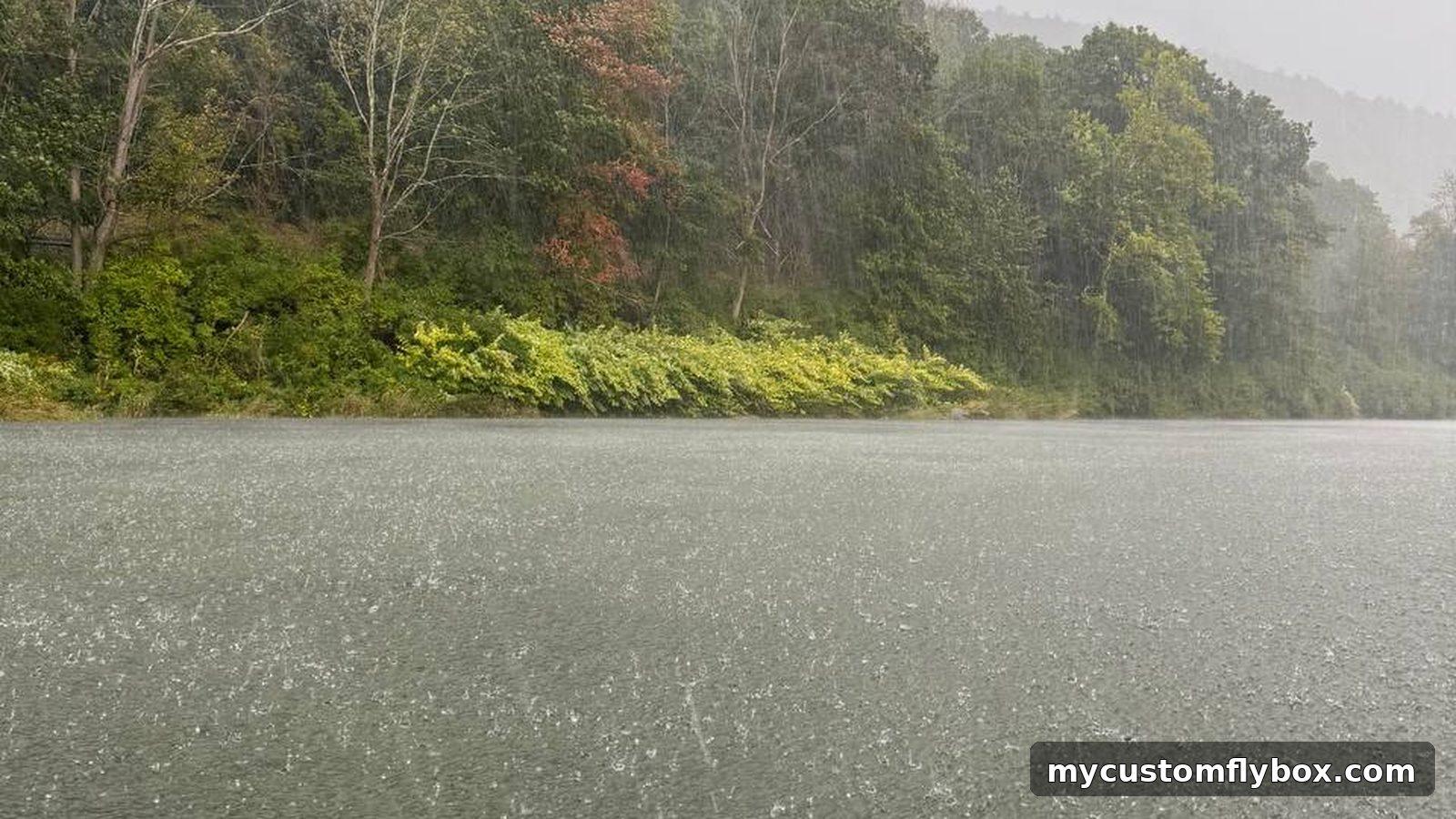
How to Fish Stained Water for Trout After Rain
Rain changes a trout stream fast. Sometimes it ruins the day. Sometimes it gives you the best two hours you will get all week. The difference is not whether the water is perfectly clear. The difference is whether the river is safely fishable, whether it is rising or falling, and whether trout can still find food without burning too much energy.
Stained water is not the same as blown-out water. A river with a green, tea, or light brown tint can fish well if the flow is manageable and the edges have shape. A river that is jumping by the hour, full of sticks, pushing over banks, or the color of wet concrete is different. That water is a safety problem first and a fishing problem second.
The goal after rain is simple. Check the gauge before you drive. Look at the river before you step in. Fish the soft water where trout can see and intercept food. Carry flies with enough profile, contrast, and movement to be found in limited visibility.
If you fish New York trout water, compare the day against current local conditions before leaving home. The West Branch Delaware report helps with tailwater flow and temperature context. The Beaverkill and Willowemoc report is useful for Catskills freestones, where rain can turn a clear wade stream into pushy water in a hurry.
Gauge checks
Start with the USGS gauge. You are not looking for one magic number. You are looking for direction, speed of change, and whether the current level sits inside a range you know how to fish safely.
Discharge, usually listed in cubic feet per second, tells you how much water is moving past the gauge. More discharge usually means more depth and current, but every river reads differently. A small Catskills tributary at 400 cfs may be too much. A larger tailwater may be comfortable at several times that number from a boat or from limited bank water.
Gage height, sometimes shown as stage, tells you the water surface height at that gauge. It matters because wading anglers often understand a river by landmarks: the rock that disappears, the gravel bar that goes under, the ledge that turns into a chute. USGS notes that gage height and discharge are related but not identical, and that gage height is also important for flood forecasts and public safety.
The hydrograph matters more than the latest reading by itself. A steep rising line after heavy rain means the river is still taking water. Clarity may keep getting worse. Banks may crumble. Logs and debris may move. A flattening or falling line often gives you a better chance, especially if the river crested overnight and has had a few hours to settle.
If the gauge has water temperature, check that too. Rain can cool a summer freestone and briefly improve conditions, but warm runoff after a hot storm does not make trout safer to catch. Carry a thermometer and stop targeting trout when water temperatures approach the warm-water danger zone covered in our water temperature guide.
Color and visibility
You can fish stained water. You cannot fish every kind of dirty water well.
A green stain is often the best version. The river has color, but you can still see a boot top in knee-deep water and trout can track a fly. This is good nymph and streamer water, and larger dries can work along the edges if bugs are active.
Tea-colored water can also fish, especially on tannic streams or after leaf litter and organic stain move through the system. In the Catskills, a brownish cast after rain does not automatically mean the river is unfishable. Look at the edge. If you can see cobble in the shallows and the water is not still rising hard, fish may feed.
Chocolate water is a different call. If you cannot see a few inches into the river, trout may still eat, but your odds fall and wading risk climbs. Save the long run. Fish from the bank if there is safe soft water, move to a smaller tributary that clears faster, or choose a colder tailwater with controlled releases.
One useful test is the boot test. Stand at the edge in shin-deep water. If you can see your boot clearly, you can fish normal nymphs, wets, and streamers with slight adjustments. If you can barely see it, use bigger profiles, darker silhouettes, and more vibration. If you cannot see it at all, make a safety call before making a fishing plan.
Safe water first
High water does not need to look dramatic to be dangerous. Knee-deep current with push can knock an angler down. Off-color water hides holes, undercut banks, wire, branches, and loose rocks. A crossing that is easy in normal flow may be a bad idea after rain.
Do not wade where the bottom disappears. Do not cross above fast tailouts, strainers, ledges, or deep outside bends. Keep your belt tight, use a staff, and fish from the bank when the river gives you good edge water. If you are unsure, stay out.
The National Weather Service treats flood warnings and flash flood warnings as action products because flood water can rise fast and carry debris. That advice is aimed at public safety, but it applies to anglers too. A trout is not worth stepping into a river that is still rising into the banks.
On bigger rivers, boat anglers need the same caution. Stained flows can hide sweepers, changed gravel bars, and low-head structure. A river that you rowed safely at the same cfs last month may not be the same after a thunderstorm or prolonged rain.
Trout position
After rain, trout usually look for three things: softer current, enough visibility to feed, and food moving past without much effort. They do not need to sit in the middle of the heaviest flow to eat well.
Start tight to the bank. Rising water floods grass edges, root balls, undercuts, and shallow shelves. Worms, beetles, ants, stonefly nymphs, caddis larva, mayfly nymphs, sculpins, and crayfish get dislodged or pushed into lanes where trout can grab them. A brown trout that ignored the bank in clear low water may slide into eighteen inches of stained water after rain.
Inside bends are another good starting point. The outside bend may be ripping and unsafe, while the inside seam collects food at a pace trout can handle. Fish the soft edge, the color change, and the walking-speed lane beside the heavier tongue.
Below riffles, look for buckets and cushion water behind rocks. High water compresses the useful holding spots. A trout may tuck into a small soft pocket because it is the only place where current, cover, and food line up. Short, accurate drifts beat long casts across too many currents.
Tailouts can be good when the river is falling and clearing. When the water is still rising, tailouts often push too hard and spread fish into softer bank water. When the river settles, fish may slide back toward the seams below riffles and the heads of pools.
Fly choices
Stained water rewards simple flies that trout can find. This does not mean every fly needs to be huge. It means the fly needs one clear reason to be noticed: size, silhouette, flash, movement, or contrast.
For nymphs, start with patterns that sink and show up:
- Pat's Rubber Legs, sizes 8-12
- Prince Nymph, sizes 10-14
- Hare's Ear, sizes 10-14
- Pheasant Tail, sizes 12-16
- Caddis pupa, sizes 12-16
- Walt's Worm or mop-style crane fly larva, sizes 10-14
- San Juan Worm or Squirmy Worm, sizes 10-14 where legal and appropriate
A dark stonefly nymph and a smaller natural dropper cover many stained-water situations. The larger fly gets attention and weight. The smaller fly catches fish that still want something closer to the normal drift. In dirty water, you can often use 3X or 4X instead of fine tippet, which helps land fish faster and turn over heavier flies.
For streamers, carry dark and natural options:
- Black Woolly Bugger, sizes 4-8
- Olive Woolly Bugger, sizes 4-8
- Sculpin pattern, sizes 4-8
- Zonker, sizes 4-8
- Small articulated streamer, sizes 2-6
- Black leech, sizes 6-10
Black gives the strongest silhouette in dirty water. Olive and brown look more like sculpins, dace, and crayfish when the river has a green stain. A little flash helps when visibility is poor, but too much flash can look wrong when the water is clearing and fish start inspecting again.
Dry flies are situational. Do not force them just because you wanted a dry-fly day. If trout are rising along the edges during olives, caddis, Isonychias, or terrestrials, fish a visible dry that still matches the food size. Parachute Adams, Comparaduns, Elk Hair Caddis, Ausable Wulffs, Stimulators, and foam ants all have a place. In stained pocket water, a size 10-14 high-floating attractor can bring fish up if the temperature is right and the river has softened enough.
Nymph tactics
In stained water, depth and lane matter before pattern. Trout may not move far to eat, especially if the current is heavy. Put the flies where fish can see them without asking the fish to cross a hard seam.
Fish shorter. A long cast across mixed currents drags quickly and makes strike detection poor. Stand where it is safe, cast upstream or slightly up-and-across, and keep the drift in one lane. Cover five feet of bank seam well before throwing across the river.
Add weight until the flies tick bottom occasionally, then adjust. Too little weight rides above the fish. Too much weight hangs and drags. In pushy water, small changes matter. One split shot, six inches of tippet, or a slightly heavier point fly can be the difference between drifting and plowing.
Use a larger indicator or a tight-line approach depending on the water. In soft bank seams, an indicator keeps the drift controlled and lets you fish slow. In pocket water, a tight-line rig helps you guide the flies through short slots without throwing excess line into conflicting currents.
Set on anything that pauses, slides sideways, or hesitates. Dirty water hides takes. Many fish in high water eat and turn without much visible movement in the rig.
Streamer tactics
Streamer fishing after rain is not just chucking the biggest fly in the box. The better approach is to match retrieve speed to temperature, clarity, and trout position.
When the water is cold, fish slower. Cast across or slightly downstream to the bank, let the fly sink, then use short strips and pauses. Keep the fly near the bottom of the soft edge or beside structure. A trout may follow for several feet before eating on the pause.
When the water is warmer but still safe for trout, you can speed up. Use strips, rod-tip twitches, and direction changes to make the fly look vulnerable. Focus on banks, logs, boulder cushions, and the first good seam below a riffle.
Do not overlook the swing. A soft-hackle-style streamer or small bugger swung through an inside seam can be more controlled than hard stripping. Cast across, mend once, let the fly come under tension, and be ready for the eat near the hang-down.
Change color before changing everything. If black gets follows but no eats, try olive or brown. If natural colors disappear, try black with a little flash. If fish bump but miss, downsize before upsizing.
Dry-fly windows
Rain does not cancel hatches. It changes where and when you should look.
Blue Winged Olives often like cloudy, damp weather, especially in spring and fall. If the river is only lightly stained and the flow is stable or falling, watch slick edges, tailouts, and soft seams. Carry olive duns and emergers in sizes 18-22, plus a visible parachute if the surface is broken.
Isonychias can be important on bigger freestones from summer into fall. Their nymphs are strong swimmers, and their hatches often line up with broken water. A size 10-14 Iso dry, wet, or nymph can make sense when the river has color but enough clarity to fish seams.
Caddis can stay active around rain, especially on warmer afternoons and evenings. Fish pupa before obvious rises. If trout start slashing near the surface, switch to an Elk Hair Caddis or X-Caddis in sizes 14-18 and skate or twitch only when the naturals are moving that way.
Terrestrials get knocked in by wind and rain. A small black ant, beetle, or hopper-dropper rig along a grassy bank can be good when summer water cools after a shower. Check the thermometer first. Cooler rain helps. Warm runoff does not.
River type differences
Freestone streams rise and fall with the weather. The Beaverkill, Willowemoc, and many Catskills tributaries can change quickly after thunderstorms. They may also clear quickly when the rain stops. On freestones, watch the trend and be willing to move. A main river may be too high while a small feeder is perfect, or the small water may be muddy while the larger river has enough volume to stay fishable.
Tailwaters respond differently. A tailwater below a dam may stay cold and clear while nearby freestones blow out, or it may jump because of release changes. On the West Branch Delaware, flow changes can affect wading, boating, fish position, and hatch timing even when the water is cold. Do not assume a tailwater is safe because the sky is clear where you are standing. Check the release and downstream gauges.
Spring creeks and limestone streams often hold clarity better than freestones. They can be good options after rain if access is safe and the water is not over the banks. Fish may still be selective, so do not bring only muddy-water flies. Carry small scuds, sow bugs, midges, olives, and light tippet along with one or two visible nymphs.
A stained-water fly box
A practical box for trout after rain does not need to be large. It needs range.
Nymph row:
- Pat's Rubber Legs, black and brown, sizes 8-12
- Prince Nymph, sizes 10-14
- Hare's Ear, sizes 10-16
- Pheasant Tail, sizes 12-18
- Caddis pupa, tan and olive, sizes 12-16
- Walt's Worm, sizes 10-14
- Worm pattern, red and natural, sizes 10-14
Streamer row:
- Woolly Bugger, black, olive, and brown, sizes 4-8
- Sculpin, olive and natural, sizes 4-8
- Black leech, sizes 6-10
- Small articulated streamer, black or olive, sizes 2-6
Dry and wet row:
- Parachute Adams, sizes 12-18
- BWO emerger and dun, sizes 18-22
- Elk Hair Caddis, sizes 14-18
- Isonychia dry or wet, sizes 10-14
- Soft hackles, sizes 12-18
- Foam ant or beetle, sizes 12-18
- Stimulator or Ausable Wulff, sizes 10-14
If you use the My Custom FlyBox app, this is a good place to build a temporary high-water or stained-water box for the day. Keep it separate from your normal hatch box so you can see gaps: enough dark streamers, enough weighted nymphs, enough visible dries, and enough sizes to adjust when the river clears.
When to leave
Some days are not worth forcing. Leave or change water when the river is rising fast, debris is moving, the bank is unstable, visibility is near zero, thunderstorms are still building, or the water temperature is unsafe for trout.
Also leave fish alone when they are stacked in tiny cold refuges during summer heat. Rain can move trout into cooler edges, but if the main river is warm and fish are packed at a spring seep or tributary mouth, that is a survival spot. Give them room.
The best stained-water anglers are patient. They do not need the first hour after the rain starts. They watch the gauge crest. They look for the first sign of clearing. They fish banks, inside seams, buckets, and soft tailouts with flies trout can find. When the river is still too much, they wait for tomorrow.
References
- U.S. Geological Survey, "How Streamflow is Measured," for definitions of stream stage, discharge, and the stage-discharge relation: https://www.usgs.gov/water-science-school/science/how-streamflow-measured
- U.S. Geological Survey Water Data Blog, "Why we use gage height," for the relationship between gage height, discharge, and flood-stage context: https://waterdata.usgs.gov/blog/gage_height/
- U.S. Geological Survey Publications Warehouse, "Chapter A6. Section 6.7. Turbidity," for the definition of turbidity as suspended and dissolved matter in water: https://pubs.usgs.gov/publication/twri09A6.7
- National Weather Service, "Flood Safety Week," for flood watch, warning, advisory, and high-water safety language: https://www.weather.gov/lmk/FloodSafetyWeek