Getting Started with Fly Fishing: A Beginner's Guide
By My Custom FlyBox Team
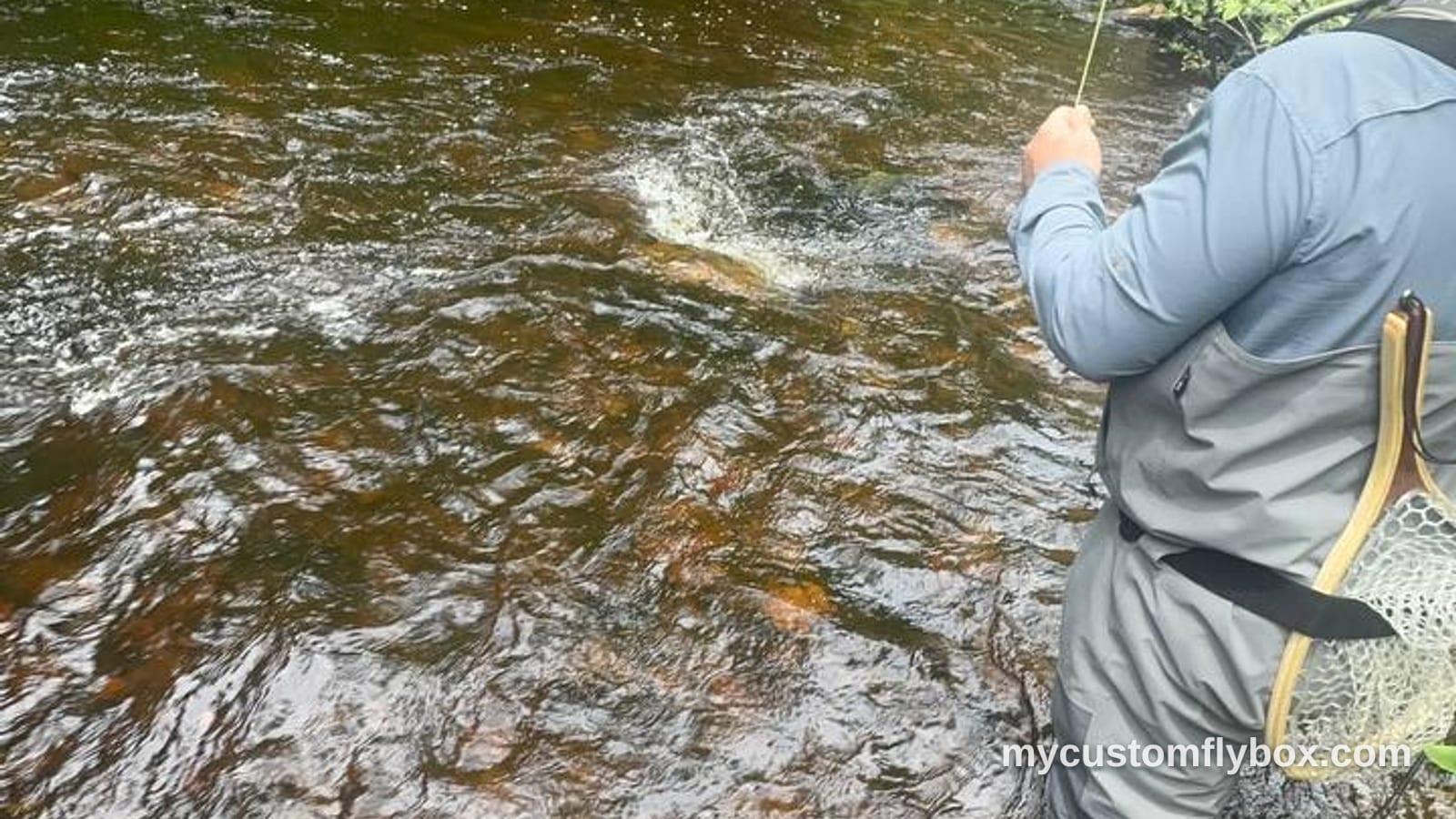
Getting Started with Fly Fishing: A Beginner's Guide
Fly fishing requires a different set of skills than conventional angling. The weighted line does the casting instead of the lure. The presentation matters more than the fly itself. A beginner who understands these fundamentals can catch trout on simple patterns with basic gear.
This guide covers the essential gear, the basic cast, and the core concepts that let you fish a trout stream with confidence.
Rod and Reel Setup
A 5-weight rod in the 8.5 to 9-foot range works for most freshwater situations. It handles small streams and larger rivers, casts light tippets and moderate leaders, and gives a beginner room to learn without being unwieldy. Pair it with a matching reel and a weight-forward floating fly line. You do not need an expensive setup to start catching fish.
Leaders and tippet follow the rod weight. A 9-foot 5X tippet is a reliable starting point for dry flies on clear water. For nymphing, use 3X or 4X to help turn over heavier flies. Carry spools of 2X through 6X as you learn what conditions demand.
Essential Flies for a Starter Box
You do not need dozens of patterns to fish productively. A small set of versatile flies covers most hatches and conditions on New York and Pennsylvania trout streams:
- Pheasant Tail nymph, size 16: imitates mayfly nymphs and works in most water
- Prince nymph, size 14: a heavy attractor for deeper water and faster current
- Adams dry fly, size 16: imitates a wide range of mayflies
- Elk hair caddis, size 14: floats reliably and covers caddis activity
- Woolly bugger, size 8, black: a streamer that targets larger fish
Tie each fly onto 5X or 6X tippet. Carry two spares of each pattern so you can replace broken flies without opening your full box.
A well-organized box matters more than having every pattern. The My Custom FlyBox app helps you track which flies you carry, plan a box before each trip, and organize patterns by type or water. You can browse hundreds of fly patterns, filter by type and hook size, and build a collection that matches the rivers you fish.
Making Your First Cast
The overhead cast is the first skill to learn:
- Hold the rod with your dominant hand, line clipped to the guide nearest the reel.
- Unspool about 20 to 30 feet of line.
- Point the tip toward the target, then lift smoothly to 11 o'clock to start the back cast.
- Wait for the line to fully straighten behind you.
- Accelerate forward to 1 o'clock and stop firmly.
The loop forms between the back cast completion and the forward stroke. If the line tangles behind you, you moved too fast on the back cast or did not wait for it to straighten. Practice on a grassy area before casting over water.
Reading the Water
Trout hold in specific places regardless of which fly you are using. Look for these features:
- Seams: the line between fast and slow water where food collects
- Below riffles: pockets of slower water at the tail of a riffle where fish rest between feeding runs
- Overhangs: bank shade where insects fall off the bank and fish wait below
- Deep pools: slower, deeper water where fish hold in summer heat or winter cold
- Rock edges: downstream of large boulders where current breaks and food pools
Start in the slower water. Fish expend less energy at seams and tailouts. A clean drift through these areas catches more fish than casting into the middle of a fast run.
Matching the Hatch
Trout feed on what is available. When insects are hatching, fish focus on that food and often ignore everything else. Matching the hatch does not require identifying species by Latin name. It means observing what is on the water, noting the size and color, and selecting a fly that looks similar.
On cloudy days and in low light, Blue Winged Olives and midges are the most common hatches across New York and Pennsylvania. Carry small black or olive patterns in sizes 16 through 20. During late spring and summer, larger mayflies like Hendricksons and caddis appear in the afternoon and evening. A size 14 or 16 dry fly covers most of these events.
For hatches on specific waters, check our fly fishing reports for current conditions and hatch activity.
When to Fish
Early morning and late afternoon are the most productive times, especially in summer when heat pushes fish deeper and less active. Spring and fall fishing extends into midday because water temperatures stay comfortable for longer periods.
Check water temperature guidance before heading out. Trout become stressed when water exceeds 68 degrees Fahrenheit. On hot days, fish cooler tailwaters or spring-influenced streams instead of low, warm freestones.
Building Your Fly Collection
Once you understand the basics of casting, reading water, and fly selection, organizing your flies becomes easier. The My Custom FlyBox app lets you:
- Browse hundreds of fly patterns with details on hook size, materials, and target species
- Filter flies by type, size, and hatch timing
- Build custom fly boxes for specific rivers, seasons, or fishing conditions
- Track which patterns you actually used and which ones earned their space
- Order flies directly from the app when your box runs low
Download the app from the App Store, explore the pattern library, and start building a collection that matches the waters you plan to fish.