The Small-Stream Brook Trout Fly Box
By My Custom FlyBox Team
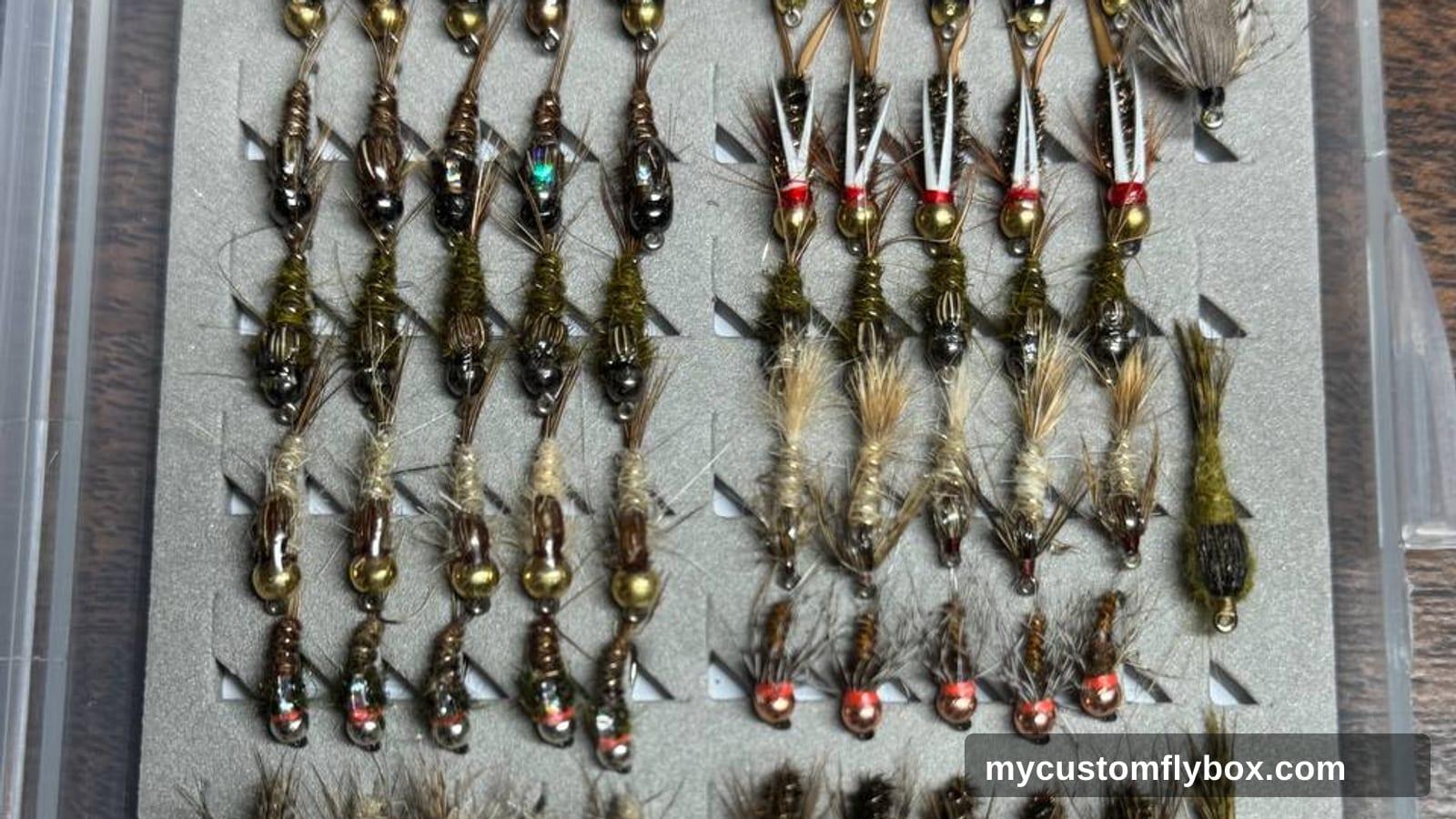
The Small-Stream Brook Trout Fly Box
Small-stream brook trout fishing has a different pace than big-river trout fishing. The casts are shorter, the fish are usually smaller, the trees are closer, and the whole day is measured in pockets, plunge pools, undercut banks, and quick decisions. You may not make a cast longer than twenty feet. You may spend more time kneeling, bow-and-arrow casting, and easing around hemlock roots than false casting over open water.
That is exactly why the fly box matters. A brook trout box for tight headwater streams should not be a downsized version of a Delaware River hatch box. It should be simpler, tougher, easier to open with wet hands, and built around flies that land well in broken water. Brook trout will eat neatly matched hatches when conditions line up, but most small-stream fishing is not a technical matching game. It is a presentation game, a stealth game, and a water-temperature game.
On Catskills tributaries, Adirondack brooks, Pennsylvania mountain runs, and little shaded freestones across the East, the best fly box is the one that lets you move quietly and fish efficiently. Carry enough variety to solve common problems, but not so much that you stand in one pool changing flies while the next fish is waiting under a root wad.
Start with the Water, Not the Pattern
Small brook trout streams are not all the same. Some run cold all summer because groundwater keeps them alive. Some are spring-fed in the upper mile and marginal downstream. Some tumble through boulder pockets where trout hold in water the size of a kitchen table. Others flatten into alder meadows with slow bends, soft banks, and fish that spook if your shadow crosses the water.
Before you open the box, read the stream. Look for shade, gradient, depth, cover, and temperature. Brook trout are strongly tied to cold, clean water. The Eastern Brook Trout Joint Venture describes brook trout as native to much of the eastern United States and dependent on cold, clean habitats, often serving as indicators of watershed health. USGS work on brook trout persistence in warming streams also points to the importance of cold-water refugia as summer temperatures rise.
For an angler, that means your fly choice is only part of the decision. If the stream is cold, shaded, and lively, small attractor dries and simple nymphs may be enough. If it is skinny, clear, and warm, the right move may be to fish early, fish higher in the drainage where legal, or leave trout alone. A brook trout caught in a six-foot-wide stream is still a trout that needs cold water and careful handling.
If you are deciding between a small tributary day and a larger river day, check current reports first. The Catskills report at /flyfishing-reports/new-york/catskills/beaverkill-willowemoc can help you understand freestone conditions before you head into smaller water. The West Branch Delaware report at /flyfishing-reports/new-york/upper-delaware/west-branch-delaware gives a tailwater comparison when summer heat or low flows make tributary fishing questionable.
The Case for a Small Box
A small-stream fly box should fit the fishing. You are usually walking more than you are standing in one pool. You may be crawling through laurel, crossing wet rocks, climbing around blowdowns, and working with limited casting room. A heavy vest full of duplicate patterns gets old quickly.
I like a box that fits in a shirt pocket or the front pouch of a small pack. It should hold three groups: buoyant dries, small nymphs, and a few wet flies or tiny streamers. That is it. If a fly does not solve a problem on small water, leave it in the truck.
A good brook trout box also needs durability. These flies hit branches, boulders, logs, and sometimes the back of your hat. Hackle gets chewed up. Foam legs get twisted. Hook points get dulled on rock. Pack patterns you can fish hard, not just patterns that look good in a photograph.
The goal is not to carry every fly that might catch a brook trout. Most will. The goal is to carry flies that help you fish different water types without slowing down.
Dry Flies: Buoyant, Visible, and Easy to Place
Dry flies are the heart of small-stream brook trout fishing. They are fun to fish, easy to control at short range, and often all you need when the water is cold enough and fish are looking up. The best ones float well, show up in broken current, and land without a hard slap.
Start with bushy attractors in sizes 12 to 16. A Royal Wulff, Humpy, Stimulator, or small Ausable Wulff belongs in the box because each rides well in pocket water. Brook trout do not need a perfect mayfly profile in a plunge pool with foam lines twisting across the current. They need a meal they can see and catch.
Add a few Elk Hair Caddis in sizes 14 to 18. Caddis are common on trout streams, but the pattern is useful even when no caddis are visibly hatching. It skates, floats, and can be dropped into tight seams. A tan Elk Hair Caddis is a good searching fly on summer evenings. A darker one can work well under shade or during low light.
Carry small parachutes too. A Parachute Adams in sizes 14 to 18 covers many mayfly moments and is easier to see than a low-riding comparadun in broken water. On flatter pools where brook trout sip instead of slash, a parachute may outfish a bushier attractor.
Terrestrials deserve a row from June into early fall. Small ants, beetles, and foam hoppers in sizes 12 to 18 can be steady producers where grass, laurel, and overhanging hardwoods drop food into the stream. A beetle that lands tight to the bank and twitches once may draw the best fish in the pool.
Nymphs: Simple Patterns That Sink Fast
You do not need a heavy tailwater nymph box for brook trout water. You need small nymphs that sink quickly, handle short drifts, and suggest the common food in a freestone stream.
A Pheasant Tail in sizes 14 to 18 is hard to beat. It covers slim mayfly nymphs and looks natural in clear water. A Hare's Ear in sizes 12 to 16 gives you a buggier, broader profile for pocket water and riffles. Add a few Prince Nymphs or small stonefly nymphs in sizes 12 to 16 when the stream has enough gradient and rock to support stoneflies.
For faster pockets, a few bead-head or jig-style nymphs help because the drift is short. You may only have three feet of useful current before the fly drags into a rock or sweeps under a log. A fly that sinks immediately is better than a delicate pattern that never reaches the fish.
Keep weight reasonable. In small streams, too much weight causes more trouble than too little. You hang bottom, spook fish, and lose flies in woody cover. A single weighted nymph under a buoyant dry is usually enough. If the fly cannot get down in a knee-deep plunge, move closer, shorten the drift, or fish the soft edge rather than adding a pile of split shot.
Wet Flies and Soft Hackles
Soft hackles are useful on small brook trout water because they fish well in motion. A Partridge and Orange, Partridge and Green, or simple Hare's Ear soft hackle in sizes 14 to 18 can be swung through the tail of a pool, pulsed along a seam, or dropped behind a dry.
Brook trout often respond to movement. They may refuse a dragging dry but take a soft hackle that lifts at the end of the drift. In tight water, that lift happens naturally. The leader comes tight, the fly rises, and a fish that ignored the nymph on the dead drift turns and eats.
Wet flies are also good when a hatch is half-happening. Maybe you see a few caddis, a few small mayflies, and no steady rise. A soft hackle lets you fish the middle layer without trying to name every insect. It is not lazy fishing. It is practical fishing.
Tiny Streamers for Bigger Pockets
A streamer box for brook trout should be small in both size and ambition. You are not usually throwing articulated meat into a six-foot stream. But a few small streamers earn their place.
Carry Woolly Buggers in sizes 8 to 12, especially black, olive, and brown. Add a small Mickey Finn, a Black Nose Dace, or a simple marabou streamer if you like fishing deeper plunge pools. These patterns work after rain, in slightly stained water, or in the deepest bend pools where a larger brook trout may hold under wood.
Fish them with short strips, jigging motions, or a downstream swing. Do not rip the fly through every pool. Brook trout are fast, but in cold headwater water a slower retrieve often looks more natural. Cast above the cover, let the fly sink, then move it just enough to suggest a sculpin, dace, or injured minnow.
Leaders, Tippet, and Stealth
The best fly box will not help if you walk straight up to the pool and line every fish in it. Small-stream trout live close to cover because everything eats them. Herons, mink, kingfishers, larger trout, snakes, and anglers all teach them to move first and ask questions later.
Use a short leader. Seven and a half feet is plenty in many places. On very tight water, a leader no longer than the rod can be easier to control. Tippet from 4X to 6X covers most situations. If the water is brushy and the flies are bushy, 4X or 5X is sensible. If the stream is clear and flat, 6X may help, but do not go so fine that you overplay fish.
Stealth beats tippet size. Stay low. Fish upstream or quartering upstream when you can. Keep false casts out of the lane. Drop the fly once, maybe twice, and move on if the pool blows up. Brook trout often give you the honest answer quickly.
Seasonal Adjustments
Early spring small-stream fishing is cold and close to the bottom. Pack more nymphs, a few small streamers, and only a handful of dries for warm afternoons. Quill Gordon, Blue Quill, and early caddis activity can happen in the region, but shaded tributaries often lag behind the main river.
Late spring is the easy packing season. Water is generally colder, insect life is active, and brook trout are willing. Carry attractor dries, caddis, small mayfly dries, soft hackles, and simple nymphs. This is when a dry-dropper rig can cover a lot of water.
Summer requires restraint. Fish early. Carry a thermometer. If the water is too warm, stop. The Connecticut DEEP cold-water stream habitat work notes that summer water temperature is important for defining cold-water fish habitat, and small increases in average summer temperature can shift a stream toward a different fish community. You do not need that exact threshold on every stream to understand the point: small cold-water habitats are vulnerable.
Fall can be excellent, but it asks for care. Brook trout spawn in fall, often over clean gravel influenced by groundwater. Avoid stepping on redds and do not target spawning fish. Fish pocket water and deeper runs away from visible spawning activity, and keep handling short.
A Practical Small-Stream Brook Trout Box
If I had to pack one small box, it would look like this:
Dries
- Royal Wulff, sizes 12-16
- Stimulator, sizes 12-16
- Elk Hair Caddis, tan and dark, sizes 14-18
- Parachute Adams, sizes 14-18
- Foam beetle, sizes 14-18
- Ant, black or cinnamon, sizes 16-18
Nymphs
- Pheasant Tail, sizes 14-18
- Hare's Ear, sizes 12-16
- Prince Nymph, sizes 12-16
- Small stonefly nymph, sizes 10-14
- Walt's Worm or caddis larva, sizes 14-16
Wet flies and streamers
- Partridge and Orange, sizes 14-18
- Hare's Ear soft hackle, sizes 14-16
- Woolly Bugger, black or olive, sizes 8-12
- Black Nose Dace or small bucktail, sizes 8-12
That list is not sacred. If your home stream has more caddis, carry more caddis. If it has tiny brook trout and no real depth, trim the streamers. If it has deep plunge pools and stained water after rain, keep the small buggers. The right box is the one shaped by your own stream, not by a catalog.
This is where keeping notes helps. After each trip, mark what you used, what you lost, what fish ignored, and what the water was doing. A simple river-specific fly box record, whether in the My Custom FlyBox app or your own notebook, can keep those observations from disappearing by the next weekend.
Handle Brook Trout Like They Matter
Small-stream brook trout are not disposable just because they are eager. Many live in fragile habitat, grow slowly, and depend on narrow bands of cold water. Wet your hands before touching fish. Keep them in the water while unhooking. Use barbless or pinched-barb hooks if you plan to release them. Skip the grip-and-grin unless the fish is calm, cold, and ready for a quick photo.
Also watch where you step. Small streams are easy to damage because they look tough until you notice how small the spawning gravel, bank cover, and root structure really are. Walk the edges carefully. Cross on rocks when you can. Avoid trampling soft banks and redds.
References
- Eastern Brook Trout Joint Venture, "Brook Trout Basics": https://easternbrooktrout.org/why-wild-brook-trout/brook-trout-basics
- U.S. Geological Survey, "Understanding mechanisms for Brook Trout persistence in warming streams: what stream temperatures do fish actually experience?": https://www.usgs.gov/data/understanding-mechanisms-brook-trout-persistence-warming-streams-what-stream-temperatures-do
- Connecticut Department of Energy and Environmental Protection, "Cold Water Stream Habitat Map": https://portal.ct.gov/deep/water/inland-water-monitoring/cold-water-stream-habitat-map
- New York State Department of Environmental Conservation, "Adirondack Brook Trout Management Plan, 2025-2040": https://dec.ny.gov/sites/default/files/2025-05/brooktroutpondmgmtplan.pdf