The October Fly Box for Catskills Trout
By My Custom FlyBox Team
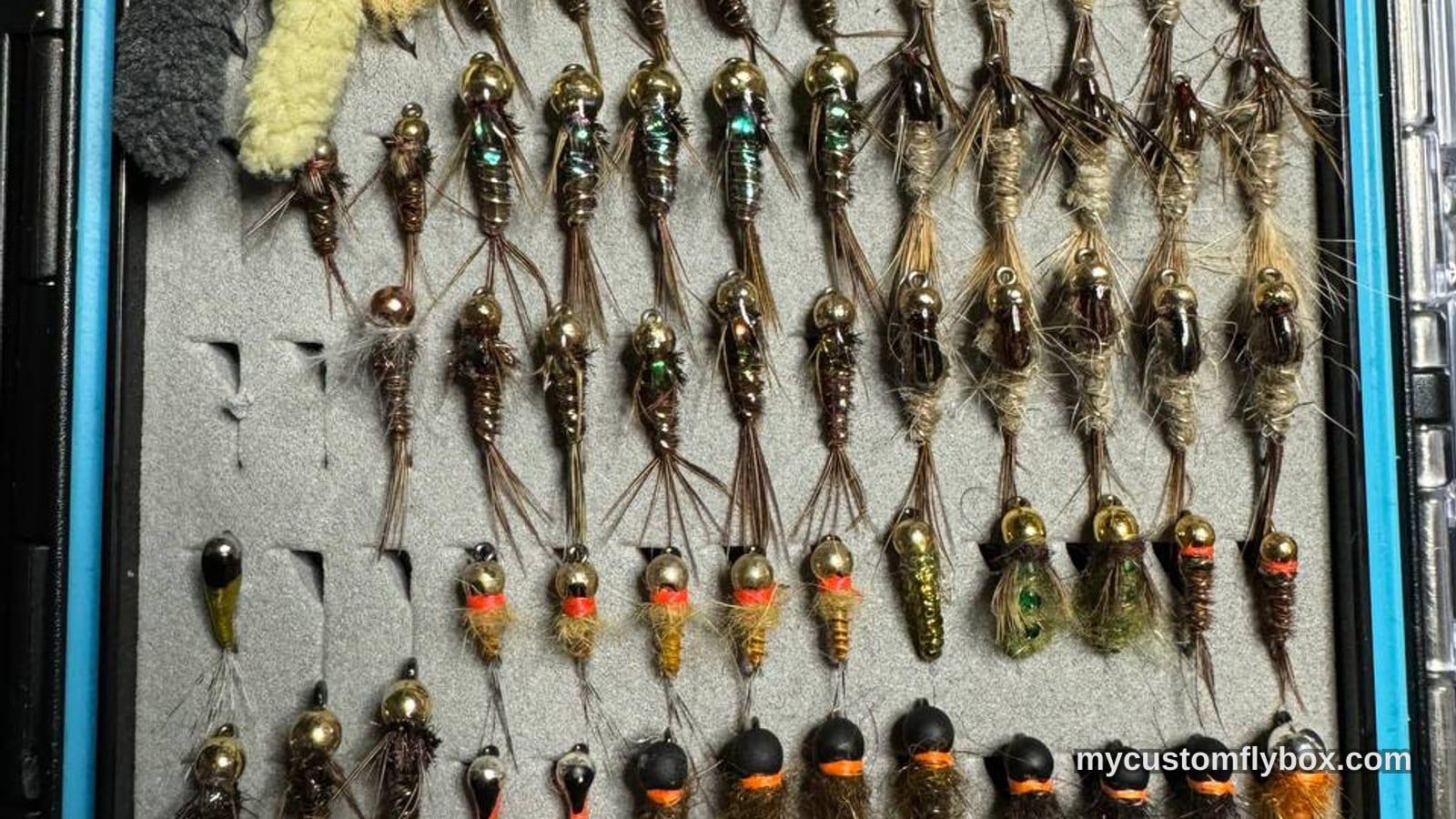
The October Fly Box for Catskills Trout
October in the Catskills is not spring with colder fingers. The water is different, the light is different, and the trout are different. Leaves pile in the soft edges. Mornings can be frosty enough to slow everything down, then a gray afternoon can bring Blue-Winged Olives and steady risers in the same pool that looked empty at ten o'clock. A brown trout that ignored a clean dry fly in August may move several feet for a sculpin in October, but only if the water has enough color and flow to make that fish comfortable.
A good October fly box should match that mixed personality. It needs small olives for slow glides, a few larger mayflies for broken water, caddis for warm afternoons, stonefly and mayfly nymphs for normal searching, and streamers for the days when rain pushes the Beaverkill, Willowemoc, Neversink, or Upper Delaware into a better fall shape. It should also be lean. October fishing rewards anglers who spend more time watching seams and less time digging through twenty versions of the same fly.
Use this as a working Catskills box, not a fixed recipe. Check the current Beaverkill and Willowemoc report and the West Branch Delaware report before you go. In October, one cold rain, one warm spell, or one release change can move the day from dry-fly work to streamers or from comfortable wading to edge fishing only.
October Conditions
The first question in October is not "what is hatching?" It is "what kind of water am I looking at?" A clear freestone at summer-low flow fishes small and technical even if the leaves say fall. A stained river coming down after rain fishes bigger. A cold tailwater reach can have olives when a warmer freestone is quiet. A sunny afternoon may wake up caddis and ants. A raw, damp day may keep the best feeding compressed into a short olive window.
Look at three things before opening the fly box. First, check flow trend. Rising water can make wading risky and push trout tight to banks, inside seams, and soft edges. Falling water after a rain can be the best streamer condition of the month. Stable low water usually means longer leaders, smaller flies, and better angles.
Second, check water temperature. October usually brings relief from summer heat, but warm spells still matter, especially on lower freestone sections. If the water is near the upper 60s, trout handling becomes a concern and it is time to fish early, move to colder water, or leave trout alone. New York DEC notes on the Neversink that temperatures approaching 70 degrees can stress trout and that many anglers stop fishing when water is over 68 degrees. That is summer advice, but the habit belongs in October too: carry a thermometer and believe it.
Third, look at light. Low October sun can put glare across the best pools. Cloud cover can turn a quiet river on. If you have a flexible day, do not burn your best water too early. Scout in the morning, nymph pocket water if you want to fish, and be ready for the afternoon window when olives, caddis, or a little stain give trout a reason to feed.
Small Olives
If I had to pick one dry fly group for October Catskills trout, I would start with Blue-Winged Olives. They are not always the only bug on the water, but they are the hatch most likely to matter on a gray fall day. Carry parachute BWOs, comparaduns, sparkle duns, CDC olives, and low-riding emergers in sizes 18 through 22. Add a few size 16s for broken water or when the bugs run larger than expected.
The mistake is fishing every olive like a high-floating dun. October trout often take emergers, cripples, or stillborn adults stuck in the film. If you see bulges without noses, tie on a CDC emerger or soft-hackle emerger instead of another upright dry. If fish sip with slow, steady rings in the tail of a pool, try a low comparadun or spent-wing olive. If you cannot see the fly, use a small parachute as a marker only when the fish will tolerate it, or fish two flies with a visible dry ahead of a lower-riding olive.
The best olive water is often softer than anglers expect: back eddies, inside bends, tailouts, foam lanes along a bank, and slicks behind midstream stones. On the Willowemoc, that might mean kneeling below a glassy bank seam. On the West Branch, it may be a flat where the cast matters more than the pattern.
Larger Mayflies and Searching Dries
October is not only size 22 work. You still want a few larger mayfly and attractor dries for broken water, prospecting, and warm afternoons. Carry Isonychia-style dries or slate drake imitations in sizes 10 through 14, a few parachute Adams in 12 through 18, and a couple of low-riding rusty spinners in 14 through 20. The larger flies are not for every pool. They are for riffles, pocket edges, and those afternoons when trout are looking up but not locked on tiny olives. A parachute Adams earns a place because it can stand in for several gray or olive-gray mayflies when exact imitation is less important than drift.
Keep one or two orange or rusty spinners as well. Fall spinner falls can be subtle, and low light makes them easy to miss. If trout are sipping gently near dark and refusing duns, a spent spinner can be the answer.
Caddis and Terrestrials
By October, a lot of anglers have mentally put caddis and terrestrials away. That is too early. Warm afternoons can still bring caddis activity, and trout remember ants and beetles long after the heavy summer terrestrial bite fades. Keep the selection small, but keep it.
For caddis, carry tan and olive Elk Hair Caddis, X-Caddis, CDC caddis, and soft-hackle caddis pupa in sizes 14 through 18. The dry can search broken water when you do not see a clean hatch. The pupa and soft hackle are better when fish flash under the surface or when caddis are skittering but trout are not taking adults cleanly.
For terrestrials, carry black ants in 16 and 18 and a couple of small beetles in 12 through 16. Ants are especially useful on bright, low-water afternoons when mayfly activity is poor. Fish them tight to grassy banks, under overhanging limbs, and beside slow foam.
Nymphs That Earn Space in October
An October nymph box should be simple and honest. You need small mayfly nymphs, a few caddis pupa, a few stoneflies, and enough weight choices to fish the right depth without turning every rig into a dredge.
Start with Pheasant Tails in sizes 14 through 20. They cover olives, small mayflies, and general mayfly nymphs well enough that they should be in every Catskills trout box. Add Hare's Ears in 12 through 18 for rougher water and for a buggier, less exact profile. Add slim olive or brown Baetis nymphs in 18 and 20 for technical olive days.
For caddis, keep olive and tan pupa in 14 through 18, plus a few soft hackles. For stoneflies, a small black or brown stone in sizes 8 through 12 is enough. Catskills trout see stoneflies, and a dark stonefly nymph can be a good anchor fly in heavier pocket water after rain.
Egg patterns belong in the October conversation but should be treated carefully. Brown trout spawn in fall. Do not target fish on redds, do not wade through clean gravel where trout are spawning, and do not turn spawning behavior into a numbers game. If eggs are legal and appropriate where you fish, use judgment and avoid actively spawning fish. In many cases, you will do better and do less harm by fishing adjacent holding water with nymphs or streamers and leaving shallow gravel alone.
Streamers
Streamers are part of October because trout behavior changes and water conditions often give you permission to fish bigger. A brown trout that has spent summer under cover may become more willing to chase when the water cools, the light drops, and a storm adds color. That does not mean every October day is a streamer day. Low, clear water can make a big articulated fly look like a boot thrown into the pool.
Build the streamer row around a few profiles. Carry Woolly Buggers in black, olive, and brown, sizes 4 through 8. Carry a small sculpin pattern, a muddler or muddler-style fly, and one or two white or yellow baitfish patterns for stained water.
Match the retrieve to the water. In cold, clear water, slow strips, swings, and jigged pauses often beat hard ripping. In stained, falling water, a sharper retrieve along banks and undercut edges can move fish. Fish the soft side of current seams, log edges, plunge pools, and the first walking-speed water below a riffle.
Wading safety matters here. Streamer days are often high-water days. Do not step into a pushy Beaverkill or Willowemoc run just because the color looks right. Fish from the bank, stay on inside bends, and remember that leaf-covered rocks are slicker than they look.
Two Practical October Boxes
For a normal October day on the Beaverkill or Willowemoc, pack this: parachute BWO 18-22, CDC olive emerger 18-22, comparadun 18-20, parachute Adams 14-18, Isonychia dry 10-14, Elk Hair Caddis 14-18, X-Caddis 16-18, ant 16-18, beetle 12-16, Pheasant Tail 14-20, Hare's Ear 12-18, olive Baetis nymph 18-20, caddis pupa 14-18, small black stone 8-12, soft hackles 14-18, and Woolly Buggers or sculpins 4-8.
For a technical Upper Delaware or flat-water day, trim it smaller and cleaner: BWO comparaduns and CDC emergers 18-24, olive and rusty spinners 18-24, parachute Adams 16-20, small caddis 16-18, ants 18, sparse Baetis nymphs 18-22, RS2-style emergers 20-24, small soft hackles 18-20, and a couple of modest streamers for low light. Bring longer leaders, finer tippet, and more patience than flies.
That is the real lesson. October is not about owning every pattern. It is about carrying enough flies to answer the day in front of you. If the river is low and bright, fish small and careful. If clouds and olives show up, get quiet and watch rise forms. If rain adds color and the flow is dropping, tie on a streamer and cover banks. If water temperature or spawning trout tell you to back off, back off.
Box Maintenance
After each October trip, make one note before you drive home. What did the water do? What did trout actually eat? What flies stayed in the box? That record matters more than a generic hatch chart. If you use the My Custom FlyBox app, tag productive flies by river and condition: Beaverkill low water, Willowemoc olives, West Branch flat water, post-rain streamer, warm afternoon caddis. Over a few seasons, your October box becomes local instead of theoretical.
Also refill the boring flies. Anglers love buying the unusual pattern that solved one hard fish, then forget the Pheasant Tails, BWOs, caddis pupa, and black Buggers that actually carry the month. October trout can be selective, but they are still trout. A sparse, well-presented fly in the right lane beats a clever fly in the wrong water.
The Catskills give you some of the best trout fishing of the year in October, but it asks you to pay attention. Dress for cold mornings and warm afternoons. Watch the gauges. Carry a thermometer. Mind the regulations. Leave spawning fish alone. Then build a box that lets you fish the river you find, not the river you hoped to find.
References
- New York State Department of Environmental Conservation, "Neversink River Trout Fishing," including trout temperature and catch-and-release guidance: https://dec.ny.gov/places/neversink-river-trout-fishing
- New York Fishing Regulations, "Inland Trout Stream Special Regulations," including catch-and-release/artificial-lures-only periods for listed trout stream categories: https://www.eregulations.com/newyork/fishing/inland-trout-stream-special-regulations
- U.S. Geological Survey Publications Warehouse, "Thermal onset of cellular and endocrine stress responses correspond to ecological limits in brook trout": https://www.usgs.gov/publications/thermal-onset-cellular-and-endocrine-stress-responses-correspond-ecological-limits