The November Fly Box for Catskills Trout
By My Custom FlyBox Team
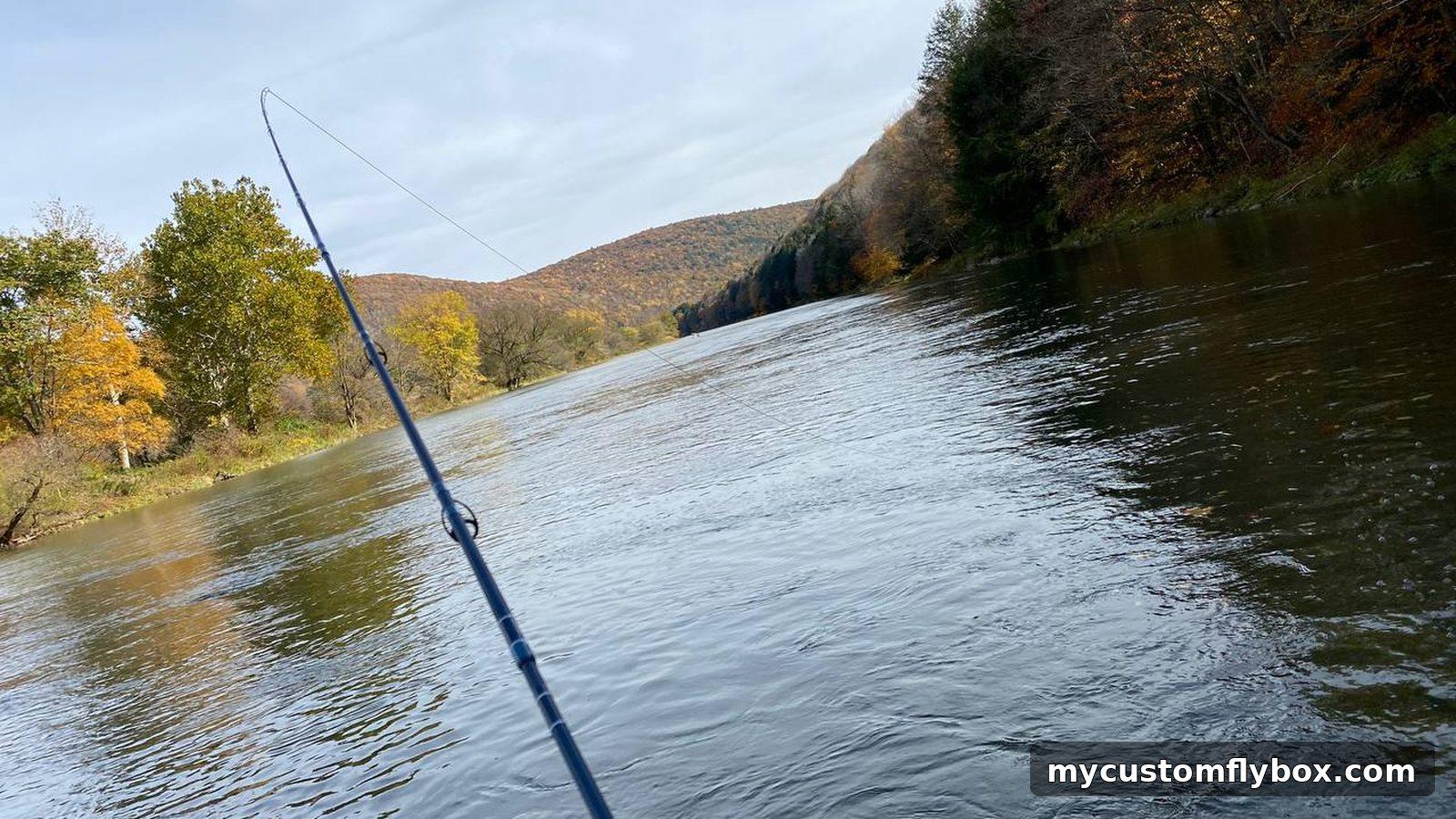
The November Fly Box for Catskills Trout
November is not the loud month on a Catskills trout stream. The big spring hatches are gone, the summer evening crowds have thinned, and the first hard frosts have knocked the banks down to brown grass, bare alder, and slick leaves. The fishing can still be good, but it asks for a different kind of box and a different kind of patience.
On the Beaverkill, Willowemoc, Neversink, Esopus, and the Upper Delaware system, November trout are living between fall and winter. Brown trout and brook trout may be spawning or recovering from it. Rain can lift a freestone stream quickly. A tailwater can hold a steadier temperature but still fish technical in clear flows. The best hour may be noon to three instead of last light. Some days a size 20 olive is the whole game. Other days the honest choice is a single dark streamer worked through one soft bank seam.
This is not a month for carrying every fly you own. A November Catskills fly box should be lean, durable, and built around what trout are most likely to do in cold water: hold in softer current, feed opportunistically during short windows, and ignore anything that moves too fast or looks out of place.
Read the Water Before You Pick the Fly
The calendar says November, but the river tells you what kind of November it is. A mild week after rain can fish like late October, with olives, small caddis, and trout willing to move. A cold snap with clear nights can make the same pool feel like December, with fish glued to the bottom and feeding in narrow windows.
Before you choose flies, check the gauge trend, air forecast, and water temperature if the gauge reports it. A stable or slowly falling flow is easier to read than a hard rising stream. A river that bumped overnight and is dropping with a touch of stain can be a good streamer or larger nymph day. A low, clear river after several cold nights calls for smaller flies, lighter tippet, slower wading, and fewer casts.
If you are headed toward Roscoe, start with the current Beaverkill and Willowemoc fly fishing report and then check the specific gauge closest to the reach you plan to fish. If you are considering a tailwater day, the West Branch Delaware fly fishing report helps put flow, temperature, and access into context before you drive.
The big mistake in November is fishing a spring plan on a late-fall river. Trout do not usually want a fast chase all day. They want food delivered where they can take it without burning much energy.
Respect Spawning Trout and Redds
November fly selection has to start with restraint. Brown trout and brook trout are fall spawners. In Catskills water, that means you need to watch gravel carefully and avoid fishing to trout that are paired up, holding on clean shallow gravel, or clearly involved in spawning behavior.
A redd often looks like a bright, freshly swept patch of gravel in a riffle tail, side channel, or shallow pool edge. The cleaned stones may stand out against darker algae-covered bottom. Sometimes fish are visible on or near it. Sometimes the fish have moved off and the eggs are still in the gravel. Either way, do not wade through it.
There is plenty of water to fish without stepping on the future of the stream. Focus on deeper seams, soft edges below riffles, pool margins, and places where non-spawning fish can feed without being on redds. Fish that are actively spawning are not the fish you should be proud of catching. November is better when you fish for trout that are feeding, not trout that are trying to reproduce.
The Core November Nymph Row
If I had to build the first row of a November Catskills box, it would be nymphs. Not a random pile of bead heads, but a narrow set of patterns that cover mayflies, caddis, stoneflies, midges, and general cold-water food.
Start with Pheasant Tails in sizes 14 through 20. The larger ones cover leftover Isonychia-style mayfly nymphs and general buggy drift in heavier water. The smaller ones cover olives and slim mayflies when the river is clear. Carry both bead-head and lightly weighted versions if you can.
Add Hare's Ears in sizes 14 through 18. A Hare's Ear is not exact, and that is why it earns space. It suggests a lot of living things: mayfly nymph, caddis, scud-like debris in some water, and general bottom food. In November, a scruffy natural pattern often beats a shiny one when fish have time to inspect it.
Carry Walt's Worms, Sexy Walt's, or similar guide nymphs in sizes 14 through 18. They sink well, look enough like caddis and other larvae, and do not force you into a narrow match. A few Perdigons or slim jig nymphs in 16 through 20 help when you need depth without split shot in pocket water or a deeper seam.
Do not leave out stoneflies. You do not need a full row, but a few small dark stonefly nymphs in sizes 8 through 12 belong in the November box, especially after rain. Bigger nymphs can be a good anchor when the Beaverkill or Willowemoc has extra push and color. In low clear water, use them carefully or not at all.
Midges and Small Olives for the Surface Window
November dries are not over, but they are usually small and conditional. Blue-winged olives can still matter, especially on gray days with steady air temperatures. Midges can bring trout up when nothing else seems to be happening. The rise forms are often quiet: a dimple in a soft seam, a nose in the tailout, a fish sipping beside foam.
Carry BWO dries in sizes 18 through 22. Parachute olives, CDC comparaduns, sparkle duns, and low-riding emerger patterns all have a place. If you struggle to see a size 22 dry, use a slightly more visible pattern or fish an emerger behind a small visible dry. The fish may care about size and drift more than your perfect wing material.
For midges, keep it simple. Griffith's Gnats in sizes 18 through 24, small black midge dries, tiny trailing-shuck emergers, and simple midge pupae will cover most November surface activity. A midge cluster can be better than a single insect imitation when the surface is peppered with tiny bugs and the fish are sipping steadily.
Tippet matters here. A size 20 olive on 4X is not going to drift well in a flat pool. Most small dry fly work in November wants 5X or 6X, sometimes longer than you would use in broken spring water. Do not go so light that you overplay fish. Use the heaviest tippet that still gives you the drift.
Soft Hackles and Streamers
A November box without soft hackles feels incomplete. Carry Partridge and Orange, Partridge and Olive, Hare's Ear soft hackles, and simple pheasant-tail soft hackles in sizes 14 through 18. Fish them upstream as a lightly sunk emerger, across and down below a riffle, or as the trailing fly behind a small nymph. In cold water, slow the swing down.
November is also one of the better months to keep a small streamer wallet in your pack. Not because every day is a streamer day, but because the right water can make streamers the most honest choice.
After rain, when the river is up a little and carrying tea color, trout may shift tight to banks, inside bends, undercut edges, and soft pockets behind structure. A dark Woolly Bugger, Sculpin, Zonker, or small articulated streamer in sizes 4 through 10 can show up better than a tiny nymph. Olive, black, brown, and natural baitfish colors are enough.
The retrieve should match the water temperature. In cold water, short strips, pauses, slow swings, and upstream mends often beat a fast strip. Let the fly hang near likely cover. Let it sink before you move it. If the water is clear and low, downsize to a sparse streamer or skip streamers until conditions improve.
How I Would Organize the Box
For a single November Catskills day, I would rather carry one disciplined box than three crowded ones. Build it in rows by decision, not by pattern name.
The first row is confidence nymphs: Pheasant Tails, Hare's Ears, Walt's Worms, slim jigs, and small dark stoneflies. The second row is small stuff: olive nymphs, Zebra Midges, RS2-style emergers, tiny pheasant tails, and midge pupae. The third row is dries and emergers: BWOs, Griffith's Gnats, midge clusters, and a few small parachutes. The fourth row is soft hackles. The streamer wallet rides separately so wet marabou does not soak the dry flies.
If you use the My Custom FlyBox app to keep track of patterns, November is a good month to make a river-specific list instead of a generic trout list. The flies overlap between the Beaverkill-Willowemoc and West Branch Delaware, but the proportions change.
Tactics That Make the Box Work
The best November flies fail when they are fished like June flies. Slow down before changing patterns. Watch the water for ten minutes. Look for tiny sailboat wings, midges in the back eddy, nervous baitfish along the bank, or one trout rising on a schedule.
With nymphs, fish closer than you think. Long drifts across mixed currents create drag and missed takes. Work one seam at a time. Adjust weight before changing flies. If the fly is not touching the right depth, the pattern is not really being tested.
With dries, make fewer casts. A November trout sipping in flat water may not tolerate repeated lining. Change angle, lengthen the leader, and make the first good drift count. With streamers, cover the soft water first: inside banks, tailout edges, submerged roots, and slower buckets below riffles.
Safety and Access in Late Fall
November wading deserves more respect than summer wading. Rocks are slick with leaves and algae. Banks freeze overnight. A knee-deep crossing that felt easy in September can be a bad idea when the air is forty degrees and nobody else is around.
Wear a wading belt. Carry a staff if the river is pushy. Pack dry layers in the truck. Do not cross just because the run on the far side looks better. If the gauge is rising, especially after cold rain, choose bank water, smaller tributaries where legal and appropriate, or skip the wade.
New York's inland trout stream rules also change after the regular harvest season. NYSDEC lists October 16 through March 31 as catch-and-release only with artificial lures only for many inland trout stream categories, while year-round catch-and-release reaches have their own rules. Always check the specific reach before fishing, because Catskills streams include different management categories and special regulations.
A Practical November Fly List
Here is a simple working list for a Catskills November box:
- Pheasant Tail nymphs, sizes 14 to 20
- Hare's Ear nymphs, sizes 14 to 18
- Walt's Worm or similar guide nymph, sizes 14 to 18
- Slim jig nymphs or Perdigons, sizes 16 to 20
- Small dark stonefly nymphs, sizes 8 to 12
- Zebra Midges, black and olive, sizes 18 to 22
- RS2 or small olive emergers, sizes 18 to 22
- BWO dries and emergers, sizes 18 to 22
- Griffith's Gnat and midge clusters, sizes 18 to 24
- Partridge and Olive, Partridge and Orange, and Hare's Ear soft hackles, sizes 14 to 18
- Woolly Buggers, Sculpins, and sparse baitfish streamers, sizes 4 to 10
That list is not meant to fill a catalog. It is meant to keep you from digging when you should be watching the river.
Final Thought
November trout fishing in the Catskills is good when you let it be what it is. It is colder, quieter, and less forgiving than spring. The windows are shorter. The flies are smaller unless rain gives you streamer water. The wading requires more care. The spawning fish deserve space.
But there is something honest about a November day on a trout stream. A few olives in the gray light. A soft hackle tightening below a riffle. A brown trout sliding from a bank seam after a dark streamer. A quiet river that makes you earn every fish without needing to turn the day into a production.
Build the box for that kind of fishing: practical nymphs, small olives, midges, soft hackles, a few streamers, and enough judgment to leave the wrong water alone.
References
- NYSDEC Inland Trout Stream Special Regulations — source for New York inland trout stream catch-and-release and artificial-lures-only regulation language for October 16 through March 31 across listed management categories.
- NYSDEC Inland Trout Stream Management in New York — source for the statewide catch-and-release season context since 2021.
- U.S. Geological Survey: Winter feeding, growth and condition of brown trout in a groundwater-dominated stream — source for cold-season brown trout feeding context, including winter stress, water temperature effects, prey availability, and aquatic invertebrate diet notes.
- Fly Fisherman: How to Identify Trout Redds — source for redd identification and the need to avoid wading on or fishing to spawning trout.