The High-Water Trout Fly Box
By My Custom FlyBox Team
The High-Water Trout Fly Box
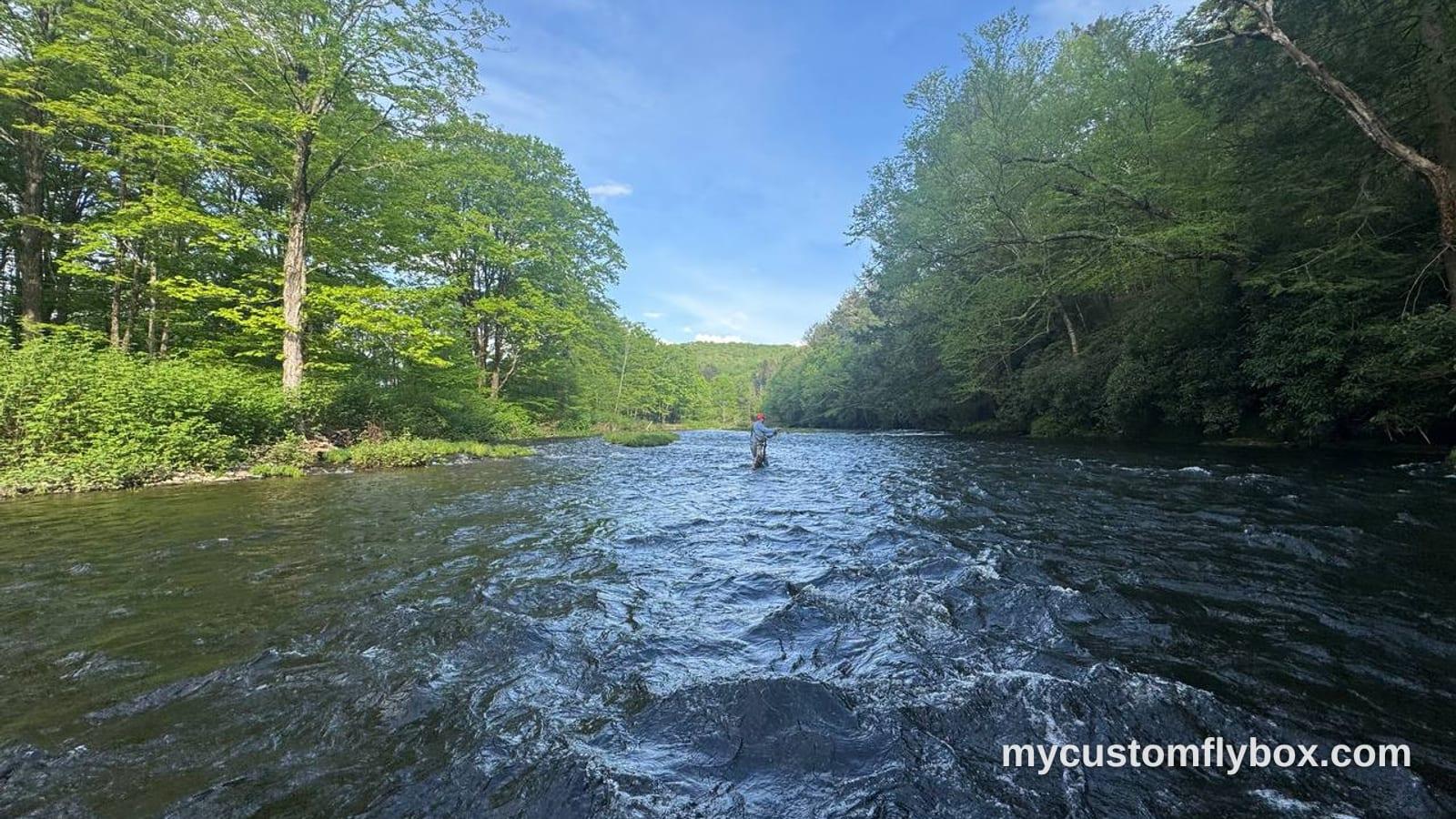
High water changes a trout river faster than almost anything else. A gentle riffle turns into a sheet of pushy current. A familiar crossing becomes a bad idea. Gravel bars disappear. The inside seam that held fish last week may still hold them, but the fly has to get there through heavier, darker water.
That is why a high-water trout box should not be just a normal dry-fly box with a few bigger patterns added. It needs flies that show up, sink when they should, move water, and make sense when trout slide out of the main current and tuck into softer lanes. It also needs enough restraint to remind you that some days are better spent scouting, tying leaders, or moving to smaller water.
High water can fish well, especially as a river drops and clears after rain. Browns use the cover. Bigger fish may feed close to the bank. Nymphs and streamers can be effective when the surface looks empty. But high water also punishes careless wading and lazy rigging. The goal is not to beat the river. The goal is to read what changed, choose flies that fit the new water, and leave when the conditions stop making sense.
Start with the Gauge
Before you pick flies, read the river. A USGS streamgage is often the first useful stop because it shows discharge, stage, and trend. Discharge is the volume of water moving past the gauge, usually listed in cubic feet per second. Stage is water height at that gauge. The USGS explains that stage is converted to streamflow with a site-specific rating curve, which is why two rivers at the same cfs can feel completely different underfoot.
For an angler, the number matters less than the pattern. Is the river rising hard from overnight rain. Is it cresting. Is it dropping slowly after a storm. A rising river with color pushing in can be unstable, unsafe, and hard to fish well. A dropping river that still has a little stain often gives you the better window. Trout have had time to settle into softer edges, and the color lets you fish heavier tippet and larger flies without needing perfect stealth.
This is where the daily reports matter too. Check the current West Branch Delaware conditions at /flyfishing-reports/new-york/upper-delaware/west-branch-delaware or the Catskills Beaverkill-Willowemoc report at /flyfishing-reports/new-york/catskills/beaverkill-willowemoc before you drive. A gauge can tell you height and trend. A local report may add clarity, access notes, hatches, and whether a particular section is better left alone.
Safety First
A high-water fly box is only useful if you can fish it safely. The National Weather Service warns that six inches of fast-moving flood water can knock over an adult, and it is never safe to walk or drive into flood water. Trout anglers do not usually think of themselves as flood victims, but we make similar mistakes when we trust a crossing because we crossed there last month.
Do not wade where you cannot see the bottom. Do not step into brown water just because the bank looks familiar. If the river is climbing, think about where you will stand thirty minutes from now, not just where you are standing now. Keep your route back to the bank simple. Fish from shore, fish the soft edge, or move to a tributary instead of forcing a mid-river position.
High water also carries debris. A floating branch that looks harmless from upstream can sweep a leg. A river that is merely high at breakfast can be unsafe by lunch if rain is still falling in the headwaters. When in doubt, build the day around observation. Walk the bank. Watch the seams. Note which side channels fill first. That kind of scouting pays off later, and it keeps you from turning a fishing trip into a rescue problem.
What Trout Do When the River Comes Up
Trout are built for current, but they do not waste energy if they can avoid it. When the river rises, the main push may become too heavy for comfortable holding. Fish often shift to the edges, inside bends, soft pockets behind boulders, flooded grass, submerged bank structure, and the slow side of current breaks.
That does not mean every trout is in six inches of water. It means the best lies are often closer than anglers think. In high water, your first cast should not always be across the river. It may be two rod lengths out, tight to a willow root or along the soft seam next to a flooded shelf. If you march straight to the edge and start false casting, you may step on the best fish of the day.
The food changes too. Heavy flows dislodge stonefly nymphs, caddis larvae, mayfly nymphs, worms, crane fly larvae, sculpins, and small baitfish. Surface feeding can still happen, especially during a strong hatch on a tailwater or when the river is high but clear, but the default high-water meal is often below the surface and easy to catch.
The Core High-Water Fly Box
A good high-water trout box has four jobs. It needs to get down, show up, suggest vulnerable food, and stay fishable in broken water. You do not need fifty patterns. You need a tight set of flies that cover different depths and looks.
Heavy nymphs
Carry nymphs that sink without needing a chain of split shot. Pat's Rubber Legs in sizes 6 to 10 is a standard high-water anchor because it suggests a stonefly, moves water, and has enough profile for stained current. Add larger Hare's Ears, Pheasant Tails, Walt's Worms, Prince Nymphs, caddis larvae, and perdigon-style flies in sizes 10 to 16.
When the water is pushy, weight is not just about depth. It is about control. A fly that gets down quickly lets you fish a short drift in a small soft pocket. A fly that takes twelve feet to sink may never enter the feeding lane before the current drags it away.
Worms and eggs
After rain, a San Juan Worm or Squirmy-style worm can be practical, especially near banks, ditches, and soft edges where real worms get washed in. Use sizes 10 to 14 and do not overthink the color. Red, pink, wine, and natural brown all have days.
Eggs are more seasonal and should be used with care around spawning trout. In fall, avoid targeting fish on redds or fishing directly over spawning areas. Away from redds, small egg patterns can make sense in stained water where loose eggs are part of the drift, but the ethical line matters more than the catch.
Streamers
Streamers earn space in a high-water box because they can be seen, felt, and moved through narrow windows. Woolly Buggers in black, olive, and brown, sizes 4 to 8, still belong. Add a few sculpin patterns, small articulated streamers, Zonkers, and jig streamers. In stained water, black gives a strong silhouette. Olive and tan fit sculpin or baitfish water. White can be good when visibility is better and fish are chasing.
You do not need to throw the biggest fly you own. A three-inch streamer fished well along a soft bank often beats a five-inch pattern ripping through water no trout wants to hold in. In very heavy current, cast downstream and across to the near bank, mend for control, and let the fly swim slower than your instinct tells you.
Visible dries and dry-droppers
High water does not erase dry-fly fishing, but it changes the dry flies worth carrying. A low-riding size 20 emerger can be hard to track in broken, high flows unless fish are truly locked in. Keep a few buoyant patterns: Chubby Chernobyls, Stimulators, foam caddis, Elk Hair Caddis, and larger parachutes in sizes 8 to 16.
These flies can suspend a nymph along a soft edge or work as searching dries when trout are willing to look up. If you are fishing the Catskills in May or June and there is a real hatch, you still need the right mayflies and caddis. The difference is that your high-water dry needs visibility and flotation as much as exact imitation.
Sizes, Colors, and Tippet for Stained Water
High water usually lets you fish stronger tippet. If the river has color and the flies are larger, 3X or 4X is often reasonable for streamers and bigger nymphs. For smaller nymphs or cautious fish in clear tailwater, you may still need 5X, but do not automatically rig fine just because it is trout fishing. Heavier tippet lands fish faster and gives you more control around logs, flooded grass, and bank cover.
For color, think silhouette first. Black, dark olive, brown, and purple show well in stained water. Hot spots can help on nymphs, especially orange, pink, or chartreuse collars, but a fly still needs the right size and depth. Flash can be good when visibility is low, though too much flash in clearing water can look wrong. Carry both plain and flashy versions of your confidence patterns.
Fly size should match both food and visibility. If the water is only a little high and clear, a size 14 Pheasant Tail or caddis pupa may still be right. If the river is up and tea-colored, a size 8 stonefly, worm, or dark streamer may be a better first look. Change one thing at a time: depth, speed, profile, or color. If you change everything every five casts, you will not learn what the trout are telling you.
How to Fish the Box
Start close. Stand back from the edge and fish the bank water before you step in. Make short casts. High water creates short feeding lanes, and many of the best drifts last only a few seconds. A long cast across three current speeds often creates drag before the fly ever looks alive.
With nymphs, use enough weight to touch the zone but not so much that the rig hangs on every cast. Tight-line methods can be useful where you can stay close and keep line off the water. An indicator or dry-dropper can be better in slower edge seams and flooded side channels. The method should fit the water, not your habit.
With streamers, slow down. High, cold, stained water often rewards a broadside swing, a pulsing strip, or a jigged retrieve near structure. The fish may not chase across the river. Put the fly in the soft water next to the heavy water and let it look like an easy meal. If a brown rolls behind the fly and misses, change the angle before you change the pattern.
A Simple High-Water Packing List
If you want a compact box for rainy weeks, start here:
- Pat's Rubber Legs, black and brown, sizes 6-10
- Beadhead Hare's Ear, sizes 10-14
- Pheasant Tail, natural and flashback, sizes 12-16
- Prince Nymph, sizes 10-14
- Caddis larva or pupa, green and tan, sizes 12-16
- Walt's Worm or similar cress bug/scud-style nymph, sizes 12-16
- San Juan Worm, red, wine, and natural, sizes 10-14
- Woolly Bugger, black, olive, and brown, sizes 4-8
- Sculpin pattern, olive and tan, sizes 4-8
- Small articulated streamer, black or olive, sizes 2-6
- Chubby Chernobyl or foam attractor, sizes 8-12
- Stimulator, orange and yellow, sizes 8-14
- Elk Hair Caddis, tan and olive, sizes 12-16
- A few local hatch dries, such as Hendricksons, Sulphurs, March Browns, or Blue Winged Olives when the season calls for them
This list is not meant to replace local knowledge. A high-water box for the West Branch Delaware in June is not identical to one for a brook trout stream in March. But the categories hold: weighted nymphs, worms when rain washes food in, visible streamers, and dries that can float a dropper or survive rough water.
When Not to Fish
The hardest part of high-water trout fishing is knowing when the right fly is no fly at all. If the river is still rising fast, if the banks are undercut and collapsing, if the water is over your normal trail, or if you cannot fish without stepping into unsafe current, go elsewhere. If summer water temperatures are near the upper 60s, especially after a warm rain or during a heat wave, trout may need a break even if the flow looks attractive.
A responsible trout angler has backup plans. Fish a colder tributary if legal and appropriate. Tie flies. Scout access. Target warmwater species. Use the My Custom FlyBox app or your own notes to mark which high-water patterns you actually used and which ones just took up space. The next storm will teach you more if you keep track.
Build the box, read the gauge, respect the current, and fish the water that is actually in front of you.
References
- U.S. Geological Survey, "How Streamflow is Measured": background on discharge, stage, and rating curves. https://www.usgs.gov/water-science-school/science/how-streamflow-measured
- USGS Water Data for the Nation: current streamgage data source for planning. https://waterdata.usgs.gov/
- National Weather Service, "Turn Around Don't Drown": floodwater safety guidance. https://www.weather.gov/safety/flood-turn-around-dont-drown