Penns Creek Fly Fishing: Hatches, Access, and Fly Selection
By My Custom FlyBox Team
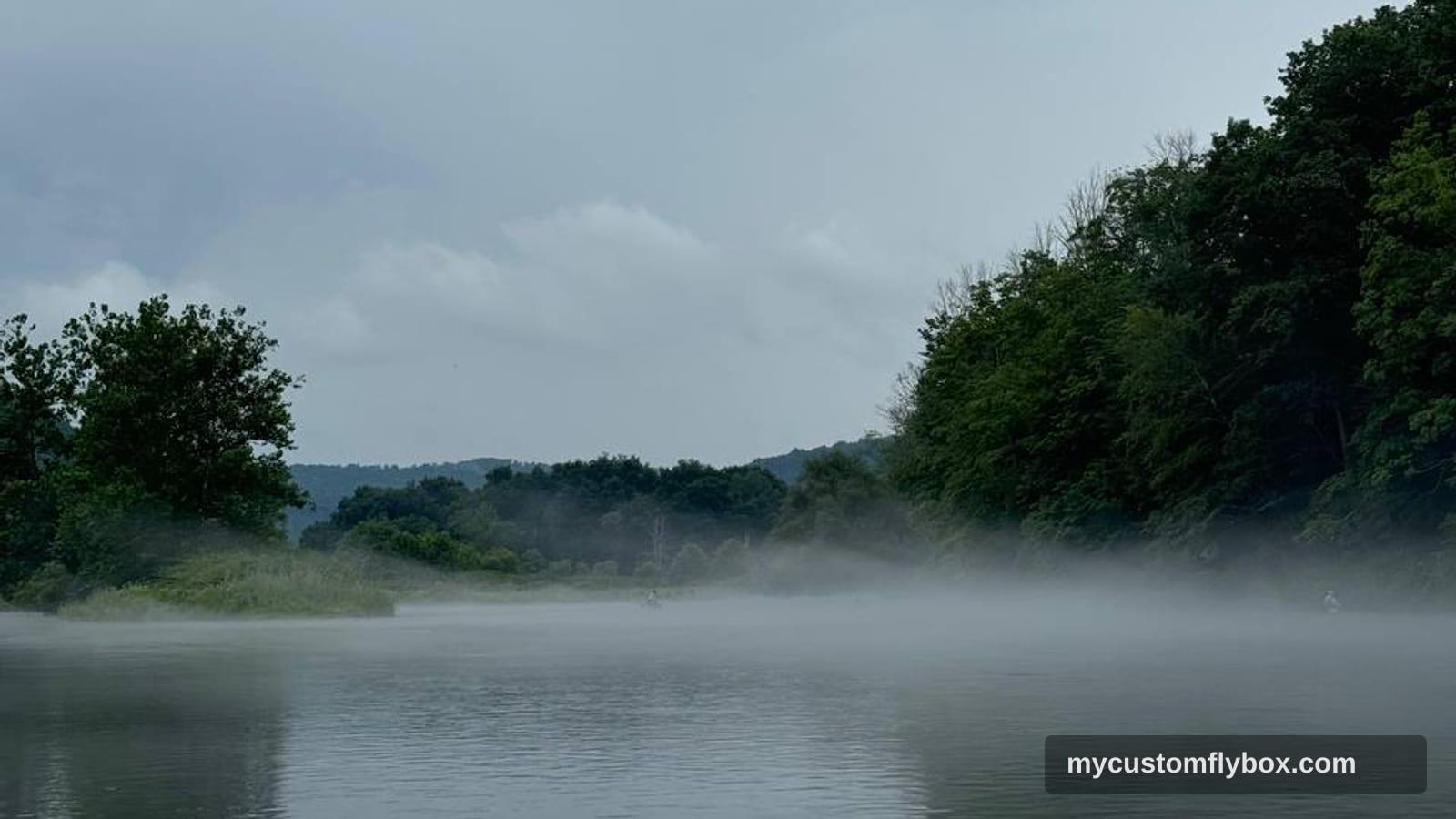
Penns Creek Fly Fishing: Hatches, Access, and Fly Selection
Penns Creek in central Pennsylvania is one of those waters anglers talk about when they need a clear example of a limestone-influenced trout stream with real character. It drains out of Penns Valley, runs through a mix of farm country, wooded ridges, and public access water, and eventually works its way toward the Susquehanna system. The sections most fly anglers focus on hold wild brown trout, and the Pennsylvania Fish and Boat Commission classifies important reaches as Class A Wild Trout Waters, meaning those stretches support self-sustaining trout populations.
This is not a stream that hands trout to anglers on a platter. It is wadeable in summer when flows run low, tricky in spring when rain pushes the water above comfortable wading depth, and demanding in winter when the cold water keeps fish holding tight in deeper pockets. But if you spend enough time learning its rhythms, Penns Creek rewards the kind of patient, deliberate angling that the best country streams teach you.
The Water and the Fish
Penns Creek drains a central Pennsylvania watershed shaped by limestone springs, forested ridges, farm valleys, and small tributaries that help keep the main stem interesting through the season. The upper and middle trout sections around Penns Valley, Coburn, Weikert, and Poe Paddy are the water most visiting fly anglers have in mind when they talk about Penns Creek.
The brown trout population is the defining feature. Many fish are in the 10- to 14-inch range, but better trout live in the heavier runs, shaded banks, and deeper slots. Rainbow trout may show up in stocked or lower reaches depending on where you fish, but the wild brown trout are what make a trip to Penns Creek worth planning around.
In the summer months, flows often drop and clear compared with spring. That lower water is a double-edged sword: it can make wading easier, but it also makes fish hyper-vigilant. You will feel that difference the moment you step in. In the smaller upper reaches, fish can be eager but spooky. In the middle sections around Coburn, Weikert, and Poe Paddy, fish tend to be larger and more selective.
For the latest daily conditions on Penns Creek, including flow readings from the USGS gauge near Penns Creek borough and hatch reports, check the Penns Creek fishing report.
Hatches and What They Tell You
Penns Creek supports a broad spectrum of aquatic insects, and tracking them through the season is the most reliable way to know what a fish is likely to be eating. The creek can produce memorable hatch windows, but it rarely fishes like a hatch chart on command. Some evenings are full of bugs and steady rises. Other days ask you to nymph patiently through broken current until the light drops.
Late April through May The spring hatch cycle begins in earnest. Blue-winged olives (BWOs) are present year-round on Penns Creek, but their peak activity in the late afternoon arrives in May. You will also see early pale morning duns (PMDs) and some caddis in the warmer sections. Nymphing is the dominant method at this time because the fish are feeding below the surface on emerging mayfly nymphs and caddis larvae.
June June is the green drake hatch on Penns Creek. The green drake (Ephemera simulans) is one of the largest mayflies on the eastern seaboard, and its emergence on Penns Creek draws anglers from outside the region. The hatch is not the same scale as the Delaware, but it is reliable. Look for large, greenish spinners on the water surface in the evening, usually between 7 and 9 PM. Between green drake events, caddis, sulphurs, and smaller mayflies can keep trout looking up through June and into July when water temperatures allow.
July and August Summer hatches slow down as water temperatures rise. PMDs and caddis persist, but the overall insect activity thins compared to spring. Low, clear water in these months means your presentations need to be clean and your approach careful. This is when a nymph rig with a small dry dropper: a BWO or a small parachute Adams: often outperforms a single dry fly.
September through October The fall hatch brings BWOs into prime focus again. Blue-winged olives on Penns Creek are most active on overcast days and during brief warming windows in otherwise cold mornings. Fall is also one of the better times to fish the lower sections, where water levels are still manageable and fish have moved into shallower gravel runs to feed on emerging insects before the winter slowdown.
Winter Winter nymphing on Penns Creek is a niche activity. The water stays cold enough that fish hold tight to deep runs and seam edges, and insect activity is minimal. A weighted nymph rig: tungsten bead head Pheasant Tail or a small stonefly nymph: swung across the deepest pocket in the slowest current will sometimes produce a fish. But you should not plan a winter trip to Penns Creek expecting excitement. Plan it for peace, and you will not be disappointed.
Access and the Lay of the Land
Penns Creek is not a stream you can access from a single parking lot and expect to fish it all. The access situation is one reason why regular fishing report updates matter: the section you can wade in June may be completely unfishable in March.
Upper and Middle Penns Creek The water through Penns Valley and the middle creek gives anglers a mix of riffles, long glides, wooded banks, and private-property edges. Some access is straightforward, and some requires careful map work before you go. Respect posted land, use established parking where it exists, and do not assume every roadside pull-off is public access.
USGS Gauge Reference The USGS gauge at Penns Creek, PA (01555000) is one of the most useful references before a trip. It does not tell you everything about clarity or hatch timing, but it helps you decide whether the creek is within your wading range, rising after rain, or falling back into shape. Pair the gauge with a fresh local report before committing to a long drive.
Woodward and Poe Paddy State Park Poe Paddy State Park is one of the best-known access landmarks on Penns Creek. The park area gives anglers a practical base for reaching classic middle-creek water, and the surrounding valley has the kind of riffles, shelves, and shaded banks that make Penns Creek memorable. Check Pennsylvania DCNR information before a trip for current park access, road, and facility details.
Lower Creek and Downstream Water The lower creek becomes a different animal as it moves away from the classic trout sections. Water temperature, access, and species mix can change quickly. If your goal is wild trout and matching hatches, focus first on the established trout water and use current PFBC regulations to understand where special rules apply.
For any stretch of Penns Creek, verify access rules with PFBC resources and check PA DCNR information for state park areas. Access can change with land ownership, road conditions, floods, and seasonal restrictions.
Fly Selection for Penns Creek
The fly box you bring to Penns Creek depends on the season, the section, and the water conditions. That said, there are patterns that consistently work on this stream across most of the year.
Nymphs (year-round) Nymphing is the bread and butter of Penns Creek fishing. Brown trout here tend to feed below the surface more often than fish on freestone streams with stronger hatches.
- Pheasant Tail Nymph, sizes 14–18: works for BWO nymphs and general mayfly imitation. Your default choice in most conditions.
- Gold Ribbed Hare's Ear, sizes 12–16: effective as a general mayfly and caddis nymph, especially in slightly stained water.
- Prince Nymph, sizes 10–14: a proven fall-back for deep runs and cold water.
- Caddis Pupa, sizes 14–18: tie a few in both olive and tan variants. Caddis are present on Penns Creek from spring through fall.
- Stonefly nymph, sizes 8–12: useful in late spring and early summer, especially around larger riffles.
Dry Flies
- BWO Comparadun or Parachute Adams, sizes 18–22: your primary dry fly from late spring through fall.
- Elk Hair Caddis, sizes 14–18: essential for summer. The brown trout on Penns Creek are familiar with caddis, and a good elk hair pattern floats reliably over the kind of riffly water this creek tends to hold.
- Sulphur or PMD parachutes, sizes 14–18: bring these for late spring and early summer.
- Green Drake imitations, sizes 8–10: for June evenings when the hatch arrives. Do not expect a massive surface take: these fish are wary: but the opportunity is real.
Attractor Nymphs
- Pat's Rubber Legs, sizes 10–14: effective in slightly higher water and early season.
- San Juan Worm or squirmy-style worm, sizes 10–14: useful after rain when natural worms and larvae are in the drift. Check the current regulation section you are fishing before using any material you are unsure about.
Tactics Worth Knowing
Penns Creek is a stream that teaches good habits. The low water of summer means you need to read it carefully and approach every run with intention.
Downstream nymphing works best in summer. When the creek is low and clear, charging upstream through a run is risky. Fish see you before you see them. A downstream dead-drift approach with a light tippet: 5x or 6x: gives the nymph a natural presentation without the telltale drag.
Nymph with a dry dropper. This is one of the most effective techniques on Penns Creek when you see intermittent rises but cannot identify a specific hatch. A small parachute Adams or BWO dry fly on the end of the leader, with a Pheasant Tail or caddis pupa 18 to 24 inches below, covers both surface and subsurface feeding without requiring you to commit to a single method.
Watch for tailouts and seam lines. Brown trout on Penns Creek hold in the seams between fast and slow water, particularly in summer when the sun has been out long enough to make the open water feel exposed. A seam line that runs parallel to the bank: where the fast water of the riffle meets the slower water near the edge: is worth a cast before you move to the next section.
Wade carefully in the low sections. This is not a stream with deep, forgiving gravel bottoms. Many sections of Penns Creek have rocky, slick substrates where a slip can mean a cold and painful fall. Step where you can see the bottom, and do not wade above fish you have not located.
When to Go
Penns Creek is fishable most of the year, but the quality of the experience varies significantly by season:
- May is arguably the best all-around month. Flows are still manageable, BWO and early PMD activity is strong, and the water temperature is comfortable enough for extended wading. The green drake may start appearing toward the end of the month in the warmest sections.
- June is green drake time, but it is also when the creek gets very low. If the green drake is not your thing, early June can still offer caddis, sulphurs, and smaller mayflies with better water conditions than late June.
- September and October are underrated. Fall BWO hatches on low water can produce some of the most enjoyable dry fly fishing of the year. The crowds are thinner, and the creek feels more like yours for the day.
- Winter is for people who prefer fishing alone in cold weather and do not expect much action. If that describes you, Penns Creek is a fine destination. If you expect a productive day, go somewhere else.
A Note on Conservation
Penns Creek's Class A Wild Trout Waters designation matters because those sections support wild trout naturally. The brown trout population depends on cold-water habitat, intact banks, clean tributaries, and careful angling pressure.
That makes every part of the fishing ethic on Penns Creek important:
- Practice catch and release, especially for the larger brown trout that are likely to be part of the naturally reproducing population.
- Watch your wading. Stream bank erosion in central Pennsylvania is a real concern, and the rocky substrate of Penns Creek is fragile under heavy foot traffic.
- Respect access points and parking areas. Do not block private driveways or leave gates open.
- Carry a pair of forceps. Brown trout have sharp teeth, and a hook deep in the jaw is a problem you want to solve quickly.
Before You Go
- Check the current Penns Creek fishing report for flow, weather, and hatch notes.
- Review the USGS Penns Creek gauge before driving.
- Confirm current Pennsylvania Fish and Boat Commission regulations for the exact section you plan to fish.
- Check Pennsylvania DCNR updates if you plan to use Poe Paddy State Park or nearby state-managed access.