How to Fish Pocket Water for Trout
By My Custom FlyBox Team
How to Fish Pocket Water for Trout
Pocket water is the kind of trout water that looks better after you have been humbled by it a few times. From the bank it can look like a mess of whitewater, boulders, foam, and short broken lanes. There may be no neat pool head, no long glassy dry-fly flat, and no obvious place to stand. Then one brown trout comes up in a soft patch behind a rock, or a brook trout darts out from a pillow of current, and the whole piece of river starts to make sense.
The trick is to stop seeing pocket water as fast water. It is really a collection of small slow spots surrounded by fast water. Trout live in those soft spots because they get a good bargain: cover, oxygen, and food moving past close enough that they do not have to work hard for every meal.
That is why pocket water can fish well when pools are spooky, when low summer sun has trout tucked in, or when a modest bump in flow pushes fish away from open flats. It is also why it can be frustrating. Your fly has to land close, sink or float quickly, drift for only a few feet, and be picked up before drag ruins the cast. Pocket water rewards short, accurate work more than heroic casting.
If you are headed for broken Catskills water, keep an eye on current conditions for the Beaverkill and Willowemoc. When flows are safe and temperatures are reasonable, those rivers offer boulder edges, riffle tongues, pocket seams, and shaded banks where this approach belongs.
What Counts as Pocket Water
Pocket water forms where current breaks around rocks, ledges, root balls, bank corners, or uneven streambed. It is most common in freestone streams and upper river sections, but you can find pocket-like holding water almost anywhere current has to split and rejoin.
Look for the soft cushion in front of a boulder, the slick directly behind it, the V-shaped tongue below two converging currents, and the narrow slot beside a midstream rock. Also watch the drop below a riffle lip, the foamy seam below a chute, and the shallow shelf that suddenly deepens beside a boulder line.
A riffle is shallow, fast, turbulent water over rock. A pool is deeper and slower. A run is usually deeper water with more even current. Pocket water often borrows from all three. It has the oxygen and broken surface of a riffle, the cover of depth or turbulence, and the feeding lanes of a run, but in short pieces.
Why Trout Hold There
Trout are built for current, but they are not interested in wasting energy. A fish sitting in heavy current has to burn calories just to stay put. A fish tucked behind a rock can hold in softer water and slide a few inches into the faster seam to eat.
That current edge is the whole game. The fast water delivers nymphs, caddis pupa, drowned ants, beetles, stoneflies, small baitfish, and dislodged mayflies. The soft water lets trout pause and inspect. The broken surface hides the fish from herons, eagles, anglers, and bright sun. It also hides some of your mistakes, which is one reason pocket water is friendly to anglers who are still learning to get close.
The best pockets usually have three things: enough depth to make a trout comfortable, a clean food lane touching softer holding water, and some kind of cover. Cover may be turbulence, shade, rock, depth, or bank structure. If a pocket has only one of those, fish it quickly. If it has all three, give it a careful first cast.
Read Before You Step In
Most anglers ruin pocket water with their feet before they ruin it with a fly. They wade straight into the soft edge because it looks like an easy place to stand. Often that soft edge is where the fish are.
Start from the bank when you can. Before you step in, pick three or four exact targets: the foam patch behind the left boulder, the three-foot seam beside the root wad, the dark slot below the riffle tongue, and the slow cushion in front of the big rock. Then decide your path. In pocket water, safe wading matters more than perfect angle.
Fast water around boulders can be pushy even when the gauge says the river is moderate. Rock surfaces are slick. Depth changes quickly. A staff is not a bad idea, and neither is skipping a cast if the only way to make it is to stand where you should not.
Check flow before you go. A USGS gauge does not tell you whether one pocket has a trout in it, but it does tell you whether the river is rising, falling, low, high, or changing too fast to wade comfortably. If you are fishing a larger tailwater or mixed freestone section, compare the feel of the water with the current report for the West Branch Delaware. Even on a river known for long pools and technical dry-fly fishing, broken banks, riffle corners, and boulder edges can be the best water when trout are not willing to feed in the open.
The First Cast Matters
Pocket water gives you short drifts. A trout behind a boulder may only see the fly for two seconds. If the fly lands with slack in the right place and drifts naturally, the fish may eat. If it lands heavy, drags sideways, or pulls over the fish's head, the pocket may be done.
Fish close. A twenty-foot cast with a clean drift is better than a forty-foot cast with line lying across three currents. Keep the rod high enough to hold extra line off the water, but not so high that you pull the fly out of the lane. Think about placing the fly, not casting at the whole river.
A good pocket-water cast usually does one of three things. It lands a dry fly just above the soft spot so it floats into view. It tucks a nymph into the fast edge so it sinks before reaching the trout. Or it drops a streamer beside structure and moves it before the current takes over.
After the drift, pick up cleanly. Do not rip line through the next pocket. If you need another cast, change angle or weight before repeating the same mistake.
Dry Flies for Pocket Water
Dry flies belong in pocket water more often than many anglers think. Trout in broken water do not always inspect a fly like a flat-water fish sipping olives. They have less time. If the fly looks edible, lands well, and floats through the right seam, they may eat quickly.
Choose dry flies you can see and that can handle turbulence. Carry Elk Hair Caddis in 12-18, Stimulators in 8-14, Parachute Adams in 12-18, Royal Wulffs or Ausable Wulffs in 10-16, foam beetles in 12-16, and a few larger stonefly or hopper-style dries where bigger food is present. In late summer and early fall, an Isonychia dry in 10-14 belongs in the box for riffled boulder water.
Match the season, but do not overthink the exact bug in heavy chop. In May and June, a caddis or mayfly profile may be enough. In midsummer, a beetle or small hopper along shaded pocket edges can work. Dress the fly well and check it often. A waterlogged dry in pocket water is just a bad wet fly unless you mean to fish it that way.
Nymphs and Dry-Droppers
Nymphing pocket water is mostly about depth control. The fly has to get down fast, but not so heavy that it hangs under every rock. The drift is short, so you do not have much time to correct mistakes.
A tight-line or short-line approach works well where you can get close. Use a rod length or two of line, lead the flies through the slot, and keep contact without dragging them faster than the current. Watch the sighter, the leader, or the end of the fly line. Takes can be sharp, but many are just a pause.
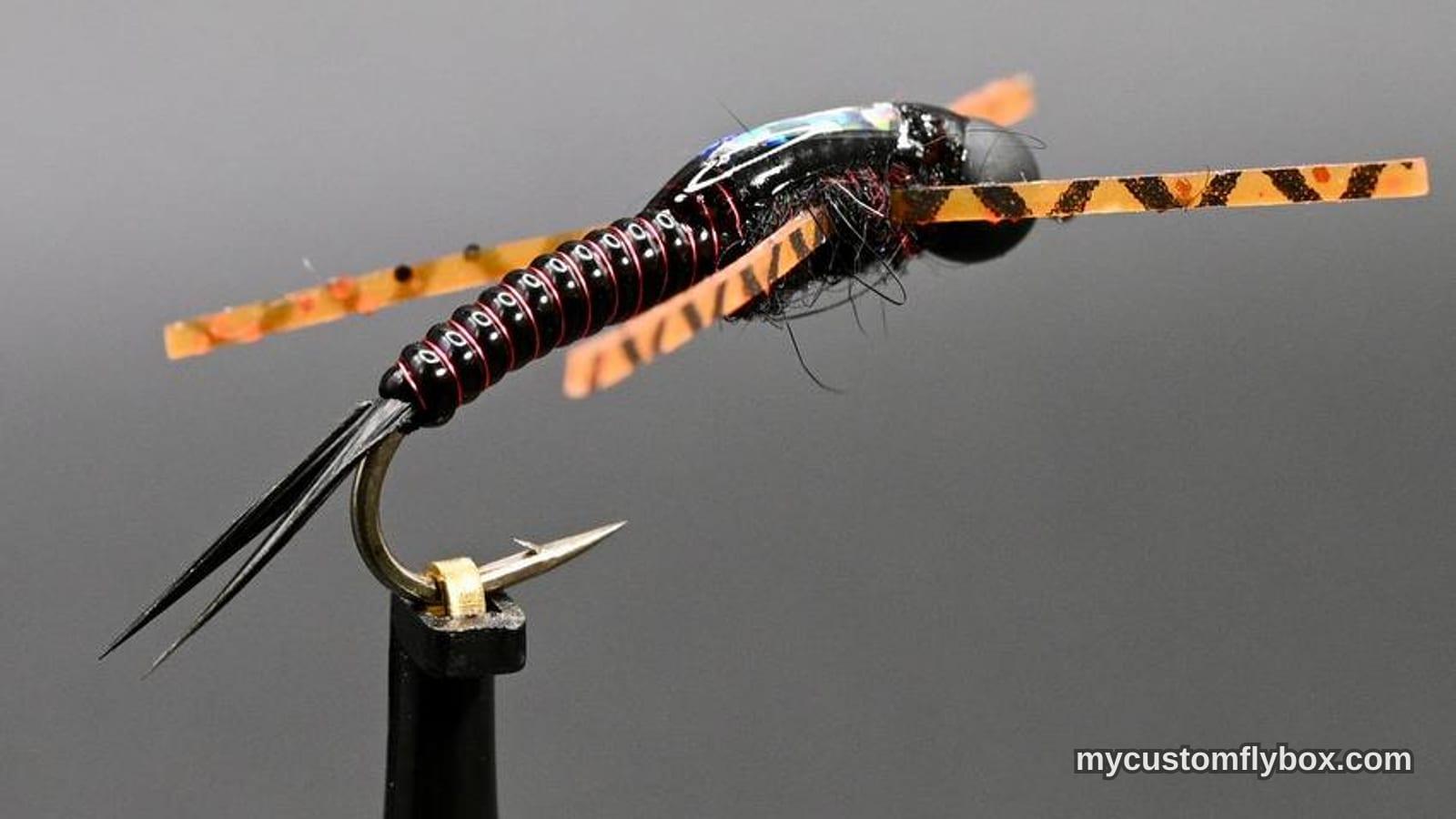
Good pocket-water nymphs include Pheasant Tails in 12-18, Hare's Ears in 12-16, Walt's Worms in 12-18, caddis pupa in 12-18, small stonefly nymphs in 8-14, slim jig nymphs in 14-18, and Isonychia nymphs in 10-14 where Iso activity is likely. In bigger water or higher flows, a Pat's Rubber Legs in 6-12 can be a good anchor.
A dry-dropper is often the cleanest way to cover summer pocket water. Use a buoyant dry that matches the water size and hang a small nymph eighteen to thirty inches below it. That rig lets you fish the surface and just under it without turning every cast into a dredging operation.
Streamers in Broken Water
Streamers are not only for big pools and undercut banks. In pocket water they can be useful when water is up, stained, cold, or when larger trout are using boulder cover to ambush food.
Keep the streamer manageable. A huge articulated fly can be hard to control in tight boulder water. Often a size 6 or 8 Woolly Bugger, small sculpin, Slumpbuster, or simple marabou streamer is enough. Cast across or slightly upstream, let the fly drop beside the rock or seam, then give it one or two short strips before the current sweeps it away.
Do not strip every streamer back to your feet. In pocket water, the best moment may be the first two feet after the fly lands, or the swing as it comes past the soft edge. Hit the target, move the fly, then pick up and go to the next lie.
Seasons, Temperature, and Safety
Spring pocket water can be excellent once flows settle into a safe range. Trout may hold tight to softer edges early in the season, then spread into faster seams as water warms and insect activity builds. Stonefly nymphs, caddis pupa, March Brown nymphs, Hendrickson nymphs, and general mayfly patterns all have a place depending on the river.
By early summer, pocket water can be prime because caddis, mayflies, and terrestrials overlap. A dry-dropper rig with an Elk Hair Caddis and a Hare's Ear or caddis pupa is a simple starting point. On Catskills freestones, watch water temperature. Broken water may be oxygenated, but oxygen does not erase warm-water stress. If trout water approaches unsafe temperatures, stop fishing for trout and find colder water or another species.
Midsummer pocket water fishes best early, late, or after cool nights. Shade matters. Springs, tributaries, and higher-gradient sections can hold cooler water, but do not assume. Carry a thermometer. If you are fishing near the Salmon River corridor, check current conditions for the Salmon River at Pulaski, especially when flows or seasonal pressure change the way anglers use the river.
Fall brings good pocket-water opportunities with Isonychias, olives, caddis, and streamers. Brown trout become more aggressive as the season turns, but avoid spawning fish and redds.
If thunder is close, get off the water. The National Weather Service guidance is plain: no place outside is safe when thunderstorms are in the area.
A Simple Pocket-Water Fly Box
You do not need a giant box for pocket water. You need durable flies that cover depth, speed, and visibility.
For dries, carry buoyant searching patterns: Elk Hair Caddis, Stimulators, Parachute Adams, beetles, Wulffs, and a couple larger foam flies for rough water or dry-dropper work. Add seasonal hatch flies when they matter, especially sulphurs, olives, March Browns, Light Cahills, and Isonychias.
For nymphs, carry slim and buggy patterns in several weights: Pheasant Tails, Hare's Ears, Walt's Worms, caddis pupa, small stoneflies, jig nymphs, and a few heavier anchor flies. Do not overlook soft hackles. A Partridge and Orange, Hare's Ear soft hackle, or caddis soft hackle swung below a pocket can catch trout feeding just under the surface.
For streamers, keep a few small, visible patterns in olive, black, and natural. In broken water, silhouette and movement often matter more than exact imitation.
If you use the My Custom FlyBox app to organize your own boxes, pocket water is a good candidate for a river-specific or condition-specific box. Build one around short drifts: buoyant dries, compact nymphs, a few heavier flies, and small streamers.
Common Mistakes
The first mistake is standing where the fish were. Soft edges are not just wading lanes. Fish them before you step through them.
The second mistake is casting too far. Long line across mixed current creates drag. Get closer when safe, shorten the cast, and fish one lane at a time.
The third mistake is changing flies before changing presentation. In pocket water, an excellent fly with a poor drift looks wrong immediately. Fix weight, angle, distance, and slack before blaming the pattern.
The fourth mistake is fishing only the back of the rock. Trout also hold in front of rocks, along side cushions, beneath foamy chutes, and on the soft lip below a drop.
Final Thoughts
Pocket water teaches good habits. It makes you look before you step. It makes you cast to targets instead of scenery. It makes you think about current speed, depth, cover, and food in small pieces.
That is useful everywhere. Once you learn to see the soft cushion beside a boulder, you start seeing smaller feeding lanes in pools, better edges in riffles, and safer approaches on big rivers. The water stops looking random.
Fish pocket water with short casts, careful feet, practical flies, and a willingness to move. Give the best lies your best first cast. Skip water that is unsafe or too warm. Keep the box simple and the drifts honest. Trout in broken water do not give you long to convince them, but they do not need much convincing when the fly arrives where the food already goes.
References
- U.S. Geological Survey, "How Streamflow is Measured," for background on stream stage, discharge, and streamgages: https://www.usgs.gov/water-science-school/science/how-streamflow-measured
- Lake Superior Streams, "Stream Anatomy: Riffles, runs, and pools," for general descriptions of riffles, runs, pools, and aquatic habitat: https://www.lakesuperiorstreams.org/understanding/riffle_run_pool.htm
- Ausable River Association, "Stream Features: Riffle to Glide," for stream-feature descriptions and habitat context in trout water: https://www.ausableriver.org/blog/stream-features-riffle-glide
- National Weather Service, "Lightning Tips," for thunderstorm safety guidance around water: https://www.weather.gov/safety/lightning-tips