How to Fish Isonychia Hatches for Trout
By My Custom FlyBox Team
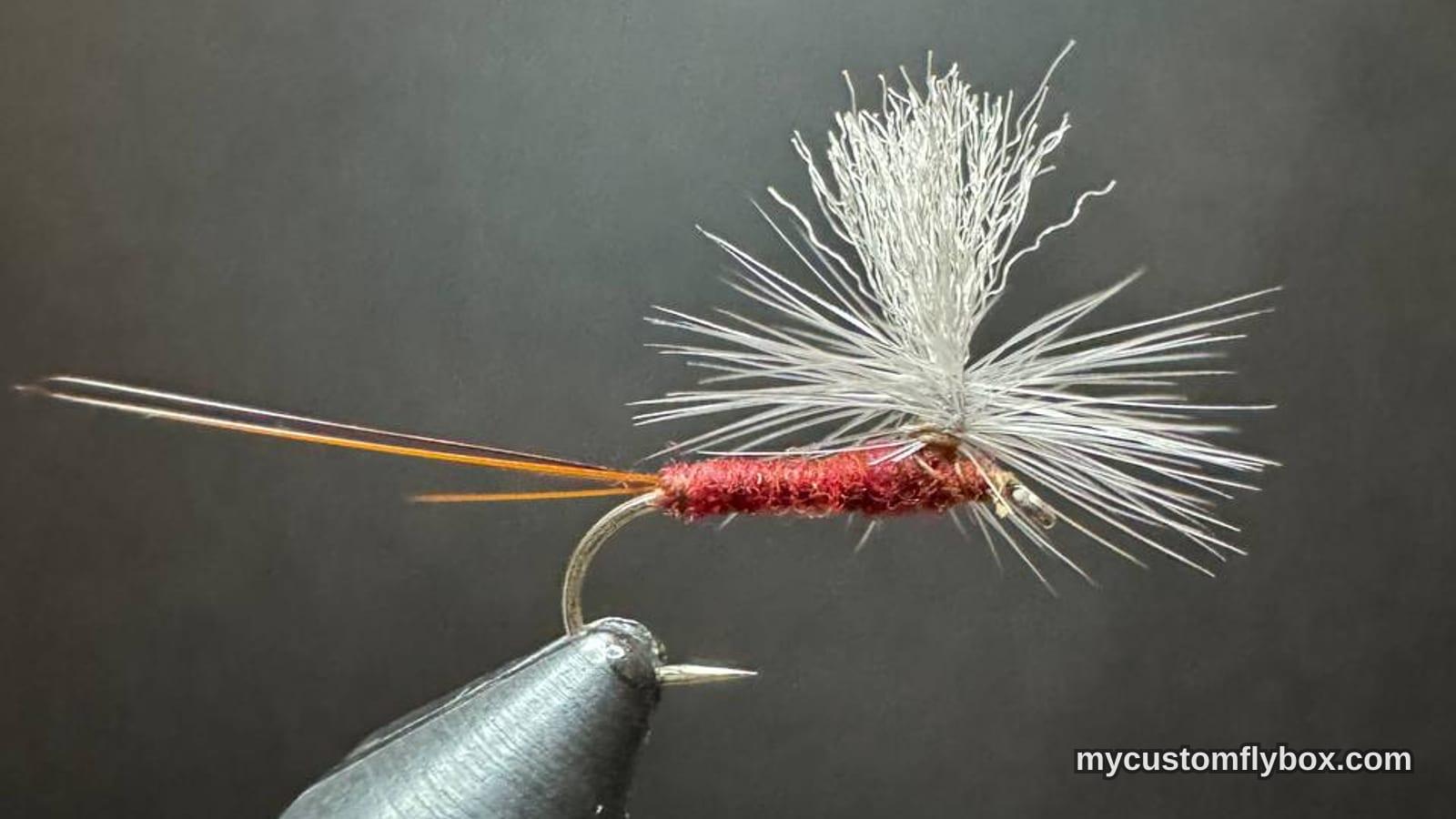
How to Fish Isonychia Hatches for Trout
Isonychia is one of those hatches that gets easier when you stop treating it like a normal mayfly hatch. On some rivers the bugs crawl out on rocks and streamside wood before they hatch. On other water they pop in the current, ride low, struggle, and give trout a good look at a big meal. Some evenings you see enough duns to make the river feel alive. Other days you never see a clean hatch, but a dark size 10 or 12 nymph swung through a riffle still gets eaten like the trout remember what it is.
Eastern anglers call them Isonychia, Isos, Slate Drakes, Mahogany Duns, Leadwing Coachmen, and a few other local names. The naming can get messy. The fishing does not have to. If you know where these mayflies live, how the nymphs move, and why trout notice them even when the hatch is thin, you can carry a small, useful Iso selection instead of a row of flies that only look good in the box.
This is not a hatch to save only for perfect rising fish. On Catskills freestones like the Beaverkill and Willowemoc, and on cold tailwater sections of the Upper Delaware, Isonychias belong in the working box from early summer into fall. Before you go, check the current Beaverkill and Willowemoc report or the West Branch Delaware report, then let the river tell you whether to start with a nymph, wet fly, dry, or spinner.
What Makes Isonychia Different
Most mayfly fishing is built around a simple picture: nymphs drift, duns hatch on the surface, trout rise, and spinners fall later. Isonychia can fit that picture, but not always. Troutnut notes that Isonychia bicolor may crawl out onto shore or streamside objects before emerging, and may also emerge on the surface in ordinary mayfly fashion. That matters because the same hatch can create two different fishing problems.
When the bugs crawl out, the surface may look quiet even though trout are still keyed to the nymphs. The food is moving toward shore, swimming and clinging through faster cobble water. A dry fly may be the wrong tool until later. When the bugs emerge midstream, the duns can ride low and struggle before they get off the water. That is when a low dry, emerger, skated pattern, or drowned-looking wet fly can beat a neat upright dun.
Isonychia nymphs are active swimmers. They live around cobble, riffles, and moderate to fast water. They can move, which is why a dead drift is only part of the presentation. A lift, swing, twitch, or short strip at the end of the drift often makes the fly look more alive.
For the angler, the practical rule is simple: fish Isonychia where the river has muscle. Look at riffles, pocket edges, broken seams, banks below fast water, and the heads of pools. If you are staring at a flat glassy tailout with no visible bugs, an Iso nymph is usually not my first choice. If you are looking at knee-deep chop pouring over cobble into a darker run, it belongs on the leader.
Timing: Early Summer, Fall, and the In-Between Days
Isonychia timing varies by river, elevation, weather, and year, but it is safe to think of them as a long-season mayfly with stronger windows rather than one neat two-week event. Troutnut describes Isonychia bicolor as appearing from late May through October, with stronger emergence peaks in late spring or early summer and again in fall. For Catskills anglers, mid-June into early July can matter, and September can bring the hatch back into focus.
That long window is one reason the pattern stays useful. A Hendrickson box can come and go quickly. A Green Drake box may sit untouched most of the year. Isonychia patterns earn their space because they cover real hatch activity, searching work in broken water, and trout that remember seeing big dark mayflies even when only a few naturals show.
Time of day matters too. Summer Iso activity often leans toward late afternoon and evening. On hot freestones, that creates a water-temperature problem. You may have the right bug at the wrong temperature. New York DEC warns that trout can become stressed as water approaches 70 degrees, and many trout anglers stop fishing when water is over 68 degrees. If a Beaverkill or Willowemoc evening looks buggy but your thermometer reads near that range, leave those trout alone or move to colder water. No hatch is worth poor handling conditions.
In fall, Iso activity can show earlier in the day, especially with clouds, cool water, and steady flows. A September afternoon with light stain and a river dropping after rain is one of the better times to fish a big Iso dry blind along broken seams. You still need to watch the water, but you do not always need pods of rising fish to justify the fly.
Start With the Nymph Before the Hatch Shows
If I am early for an Isonychia hatch, I usually want a nymph in the water before I want a dry fly. Use a specific Iso nymph, a dark Pheasant Tail, a Prince-style nymph, a Zug Bug, or a slim dark mayfly nymph in sizes 10 to 14. The fly should suggest a dark, swimming mayfly nymph, not a tiny generic Baetis. A little flash is fine in broken water. In clear, pressured pools, sparse usually beats gaudy.
Fish it where the naturals live. Cast upstream or up-and-across into riffled water, mend once, and let the fly come through with enough contact that you can feel or see the take. At the end of the drift, do not rip it out immediately. Let it rise and swing. Many good Iso eats come as the fly lifts below you.
Depth depends on the water. In pocket water or a fast riffle, a beadhead nymph or small split shot may be needed. In softer bank seams before emergence, an unweighted or lightly weighted nymph fished on a shorter line can look better. If trout are flashing but not taking, change the speed before you change the pattern. Cast a little more across. Raise the rod tip. Let the fly swim at the end. Then adjust size or weight.
A two-fly nymph rig can work, but keep it manageable. Pair an Iso nymph with a smaller Pheasant Tail, caddis pupa, or soft hackle. If the river is low and clear, a single nymph on lighter tippet may get more honest drifts. If the river has color, a bigger Iso nymph can be a good anchor above a smaller dropper.
Wet Flies
Isonychia is one of the best arguments for carrying wet flies. A dark soft hackle, Leadwing Coachman-style wet, March Brown wet, or sparse Iso emerger can cover the awkward space between nymph and dry. That is often where the fish are feeding.
Fish a wet fly through the same water where you would fish the nymph, but closer to the surface and with more swing. Cast across and slightly downstream, mend if needed, then let the fly come tight below you. In riffles and pocket seams, a trout may take it with a hard pull. In flat water below a riffle, the take may be only a pause or heavy feeling.
Soft hackles also help when you see rises that are not clean dry-fly rises. A bulge, boil, or quick slash in broken water often means fish are eating emergers or swimming nymphs just under the film. If you keep changing dry flies and the trout keep refusing, put a soft hackle behind a visible dry or fish it by itself on a greased leader. Let it hang at the end of the drift. That hanging fly looks vulnerable, and trout know it.
Dry Flies
When Isonychia duns are on the water, carry dries in sizes 10 to 14. A size 12 is a good starting point on many Eastern trout streams. Use parachutes, comparaduns, thorax ties, low-riding CDC styles, and a couple of bushier dries that can be skated or twitched in riffled water. The exact pattern matters less than the attitude of the fly. It should look like a dark mayfly that is either riding low or trying to leave.
The first dry-fly mistake is fishing an Iso like a tiny olive. You do not always need a motionless, perfect drift in broken water. If naturals are struggling, twitching, or failing to lift off, a little movement can help. Make the fly drift clean first. Then add one short twitch near the end of the drift or skate it lightly across a riffle seam. One good move beats five sloppy ones.
The second mistake is waiting for obvious heads. Trout may take Isos with confidence in riffled water where you cannot see every rise. If the river is cold, fishable, and the hatch is in season, blind-casting an Iso dry along likely seams can be worthwhile. Cover water. Hit the soft edge beside the main tongue, the cushion below a midstream rock, the inside seam below a riffle, and the first dark slot at the head of the pool.
On flat tailouts, slow down. There, the fish can inspect the fly. Use a lower pattern, longer leader, and better angle. If the trout refuses a high parachute, try a comparadun or emerger. If it eats beside the fly, check drag before blaming the pattern. A big Iso dry dragging six inches is still dragging.
Do Not Forget Spinners
The spinner side of Isonychia fishing is easy to miss because it often happens late and may not look dramatic until fish are already feeding. Troutnut's hatch essentials note late-evening egg-laying in moderately fast water. That lines up with what many river anglers see: low light, broken glides, and trout eating spent or egg-laying mayflies near the edge of faster current.
Carry rusty or mahogany spinners in sizes 10 to 14. A spent-wing pattern, rusty spinner, or low-profile Iso spinner can be enough. You do not need a dozen versions. You need a few flies that land softly, sit low, and are visible enough for you to track until the light goes.
Spinner fishing asks for patience. Watch before casting. If fish are rising in a lane, do not wade into it. Get below or to the side, lengthen the leader if needed, and make the first good cast count. Late in the evening, trout often slide into softer water beside the main current. The biggest fish in the pool may not be in the obvious foam line. It may be one seam inside, eating calmly where the current brings spent bugs without much effort.
The Small Isonychia Box
A useful Isonychia box does not need to be big. I would rather carry a tight dozen that covers behavior than thirty flies that only cover pattern names.
For nymphs, carry Iso nymphs, dark Pheasant Tails, Zug Bugs, or Prince-style nymphs in sizes 10 to 14. Include both weighted and lightly weighted versions. For wets and emergers, carry dark soft hackles, Leadwing Coachman-style wets, and low Iso emergers in sizes 10 to 14. For dries, carry a parachute Iso, comparadun, low CDC dun, and one bushier hackled pattern that can handle a twitch. For spinners, carry rusty or mahogany spent-wing patterns in 10 to 14.
If you are building a river-specific box in the My Custom FlyBox app, label the row by job rather than by insect stage only: Iso nymphs for riffles, Iso wets for the swing, Iso dries for broken water, Iso spinners for dusk. That makes the box easier to use when the light is bad and the river is changing.
On freestones, add thermometer discipline to the box. On tailwaters, add flow discipline. A cold release can make Iso fishing possible when nearby freestones are too warm, but flow changes can change wading and holding water fast. The fly selection is only useful after the safety decision is made.
A Simple On-Water Plan
Start by reading the water. If you are on the Beaverkill, Willowemoc, Neversink, Esopus, or a similar Eastern freestone, look for cobble riffles, broken runs, and pool heads. If you are on the West Branch Delaware or another tailwater, look for cold seams where bugs and trout can line up without too much angling pressure.
If there are no rises, fish an Iso nymph through the riffles and let it swing at the end. If you see flashes or bulges, move to a soft hackle or emerger. If duns appear and fish start showing on top, choose a low dry in the right size and decide whether the water calls for a dead drift or a controlled twitch. If the light drops and rises get steadier in softer seams, switch to a spinner.
That sequence will not be perfect every day, but it keeps you from forcing one stage of the hatch. Isonychia is a moving insect in moving water. Fish it that way.
References
- Troutnut: Isonychia bicolor, Mahogany Duns for taxonomy, emergence behavior, nymph habitat, timing, and hatch-matching notes.
- NYSDEC: Upper Esopus Creek Trout Fishing for Catskills trout water context, USGS gauge safety guidance, notable hatches, and warm-water trout stress guidance.