How to Fish Caddis Hatches for Trout Without Guessing
By My Custom FlyBox Team
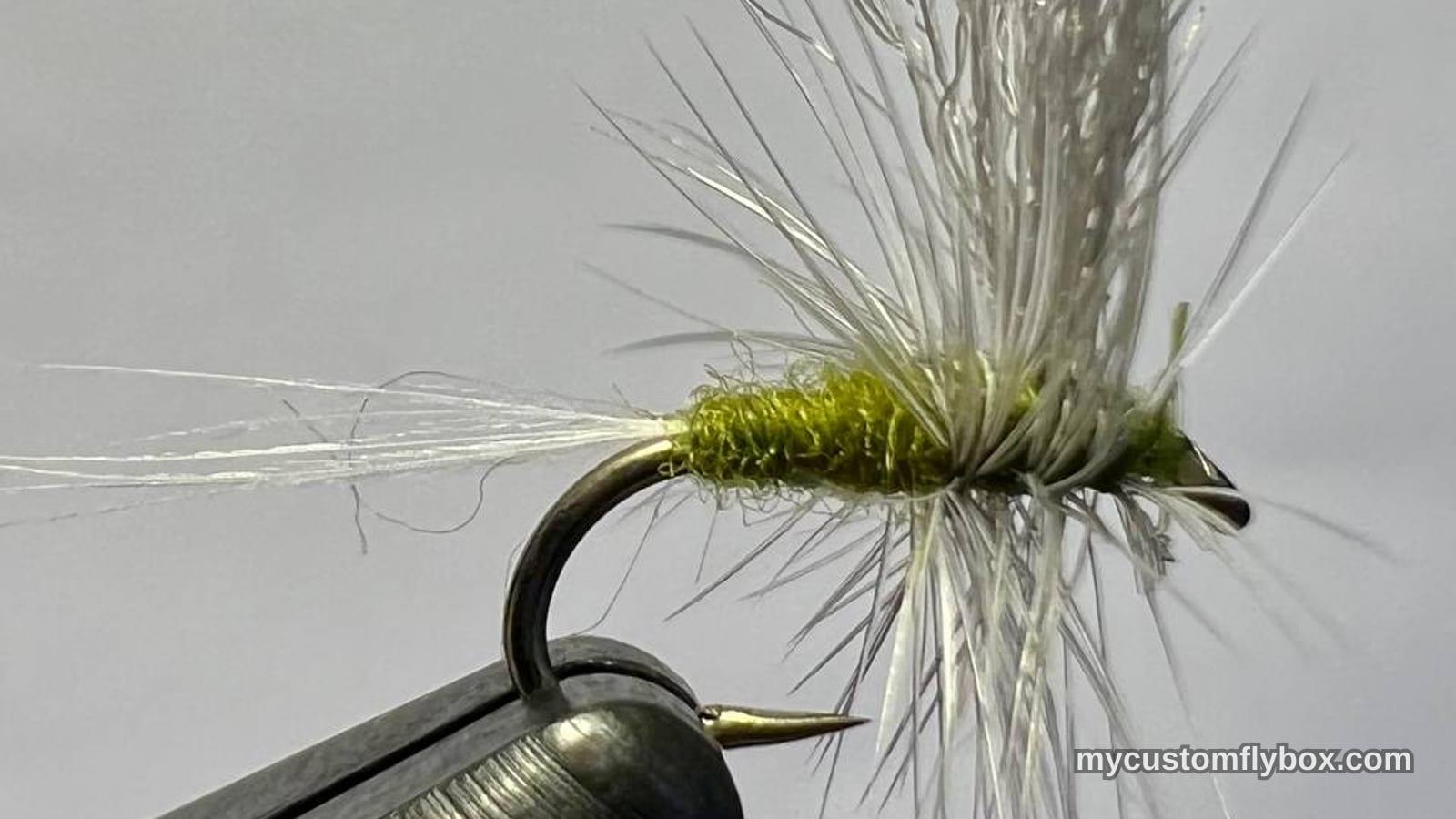
How to Fish Caddis Hatches for Trout Without Guessing
Caddis hatches fool a lot of good trout anglers because they do not behave like neat little mayfly events. A mayfly hatch often gives you a simple picture: nymphs move, duns ride the surface, spinners return. Caddis are messier. The larvae live on rocks and gravel. The pupae can swim hard. Adults flutter, skate, dive, or simply fly around without being eaten. Trout may slash at the surface one minute and ignore every dry fly the next because the real meal is moving just under the film.
That is why caddis fishing rewards anglers who watch the water before they change flies. If you see tan wings over a riffle, do not assume the answer is automatically an Elk Hair Caddis. The right answer might be a soft hackle swung through the rise, a sparkle pupa lifted at the end of a drift, a small larva near the bottom, or a skittered dry across broken water at last light.
This guide is written for trout rivers like the Beaverkill and Willowemoc, the West Branch Delaware, Penns Creek, and other eastern freestones, spring creeks, and tailwaters where caddis can carry a good part of the season. Use it with the current conditions, not instead of them. Check the daily Beaverkill and Willowemoc report, West Branch Delaware report, or Penns Creek report before you build a plan around any hatch.
Why Caddis Are Different
Caddisflies go through complete metamorphosis: egg, larva, pupa, adult. That one fact matters more than the name of every species in the riffle. A caddis larva is a year-round food source in many streams. Some live in cases made from sand, gravel, sticks, or leaf pieces. Some spin nets in current. Some roam the rocks without a case. Trout do not need a visible hatch to eat caddis larvae.
The pupa is the stage anglers miss most often. When caddis are ready to emerge, many pupae become active swimmers. Some move up through the water column quickly. Some drift near the bottom first. Some emerge at the surface. Some crawl to shore or onto rocks. That movement gives trout a strong trigger. A pupa rising through the current looks alive in a way a dead-drifted dry does not.
Adults matter too, but not every adult flying over the river is available to trout. Sometimes you are watching insects mate over the banks while fish are eating pupae below. Sometimes the evening rise is not an emergence at all but egg-laying females returning to the water. If you treat all caddis activity as one hatch, you will keep changing dry flies while the trout keep eating something else.
Start With the Water
Caddis are strongly tied to riffles, runs, pocket water, and broken edges where oxygen and current support aquatic insects. On a freestone like the Beaverkill or Willowemoc, look above riffle lips, along the broken tongue below a pool, and in soft seams beside faster water. Trout can sit under the broken surface and eat pupae without exposing themselves. In heavy hatch activity they may slide into shallow riffles because the food is moving there.
On the West Branch Delaware, cold release water can stretch insect activity later into the season than nearby warmer freestones, but it can also make trout selective. A fish sipping in a tailout may not want a bushy dry skated over its head. It may want a low-floating emerger or a pupa just under the film. Start quieter there, especially in flat water.
On a spring creek or limestone-influenced stream like Penns Creek, smaller flies, longer leaders, and better angles matter. A size 16 tan caddis pupa fished cleanly usually beats a size 12 dry dragged across a glassy seam.
Fish the Four Useful Stages
You do not need a graduate course in aquatic insects to fish caddis well. You need a working box that covers the stages trout actually see.
Larva: Fish larva patterns when there is no visible hatch, when you turn over rocks and see small green or tan grubs, or when higher water has trout feeding close to the bottom. Good patterns include green caddis larva, tan caddis larva, Walt's Worm-style flies, Hare's Ear nymphs, and slim jig nymphs in sizes 12 to 18. Put them where trout expect bottom-drifting food. Most anglers pull larva patterns too fast because they are watching bubbles on top rather than reading the current below.
Pupa: The pupa is the money stage during many caddis events. Carry sparkle pupa, soft hackle caddis, LaFontaine-style pupa, X-Caddis emerger, and CDC caddis emerger patterns in olive, tan, brown, and cream. Sizes 14 to 18 cover a lot of eastern fishing. Fish the pupa three ways: dead drift it before the hatch, swing it at the end of the drift so it lifts, or hang it just under the film when fish are bulging but not breaking the surface.
Adult: This is where the Elk Hair Caddis earns its place. It floats, it shows up, and it can be skittered on purpose. Carry tan, olive, brown, and black versions in sizes 12 to 18. Add X-Caddis or CDC caddis for flatter water. A caddis adult does not always need a dead drift. In riffles, skate it an inch or two. In smooth water, start with a dead drift and add movement only after the fish refuse or the naturals are clearly moving.
Egg-layer: Evening caddis fishing often comes back to egg-laying females. Some touch the surface. Some dive. Some crawl down rocks or your wader leg. If adults are bouncing over the river late and trout are taking splashy swipes, try a dry. If fish are flashing or bulging under the surface, fish a soft hackle or diving caddis pattern just below.
How to Read the Rise
Caddis rises are often less polite than mayfly rises. A trout sipping Blue Winged Olives in a flat pool may leave a neat ring. A trout eating caddis pupae or adults may slash, boil, bulge, or chase. Those rise forms tell you where to start.
If you see backs and noses in slow water, start with a dry or emerger and focus on a clean drift. If you see bulges without noses, fish a pupa under the surface. If you see splashy rises in broken water, try an adult dry with a little movement. If you see fish flashing below the surface but few rises, swing a soft hackle or pupa.
Also watch birds, rocks, and your own waders. Swallows working low over riffles can mean insects are coming off before trout show themselves. Fresh shucks, crawling adults, and egg-laying caddis on your waders all tell you more than a cloud of bugs high in the air.
Build a Simple Caddis Fly Box
A useful caddis box does not need fifty patterns. It needs stages, sizes, and tones.
For larvae, carry green and tan caddis larva in sizes 12 to 18, plus a few buggy Hare's Ear or Walt's Worm patterns. For pupae, carry sparkle pupa, soft hackles, and CDC emergers in olive, tan, brown, and cream, mostly sizes 14 to 18. For adults, carry Elk Hair Caddis, X-Caddis, CDC caddis, and a few darker little black caddis in sizes 16 to 18. Add a couple of larger orange or rusty October Caddis-style flies for fall rivers where they matter.
For the Catskills, the Dette Flies hatch chart lists Little Black Caddis as all season, Grannom Caddis from early to late May, Spotted Sedge Caddis from mid-May to mid-August, Green Caddis from early June to early August, and October Caddis in October. Those dates are a regional guide, not a stopwatch. A cold spring, hot June, or high-water week can move the fishing window.
If you use the My Custom FlyBox app to organize boxes, build one caddis box by stage rather than by every Latin name: larvae, pupae, adults, egg-layers. Then add notes by river: darker small caddis for early Catskills work, tan and olive pupae for summer riffles, bigger fall caddis where you actually see them.
Timing and Presentation
Caddis timing is usually tied to water temperature, light, and weather, but you still have to fish the river in front of you. Late afternoon and evening are classic, especially in warmer months, but overcast days can move activity earlier. A light rain can help. A hard thunderstorm can stain the river and turn a dry-fly evening into an edge-water nymph or streamer session.
Before the hatch, fish the larva or pupa near the bottom. As activity builds, bring the pupa higher in the column and add the lift at the end of the drift. When adults are on the surface and trout are chasing, switch to the dry. At dusk, be ready to go back under the surface if egg-layers are diving or fish are bulging instead of taking on top.
Presentation should match the stage. A larva should drift naturally near the bottom. A pupa should rise or swing like something trying to emerge. An adult should either drift, flutter, or skate in the same lane as the naturals. Random drag is not the same as a skitter.
Leader choice matters too. In broken riffles, a 9-foot leader to 4X or 5X may be plenty for a dry. In flat tailouts, you may need a longer leader and 5X or 6X, especially with smaller emergers. For swinging soft hackles, do not go so fine that every fish becomes a long fight. Match tippet to fly size, current, and water temperature.
Safety and Fish Care During Caddis Season
Caddis season overlaps with warm weather on many trout rivers. A good evening hatch does not make warm water safe. If the river is approaching 68 F, especially on freestones, start thinking about stopping, moving to colder water, or fishing for bass and panfish instead. If it is at or above that mark, do not make rising trout an excuse.
High water also deserves respect. Caddis can bring fish tight to the banks during stained or pushy flows, but wading out to reach midriver risers may be a poor trade. Fish the edges first. Use a wading staff. If the river is rising, give yourself an exit before dark.
Handle trout quickly. Keep them wet. Pinch barbs if you can do so cleanly. Use enough tippet to land fish without exhausting them. The right caddis fly is not worth much if the release is careless.
A Practical Caddis Game Plan
If I had one evening on a caddis river, I would start at the riffles, not the deepest pool. I would look under a few rocks, check the current seams, and watch for the first adults. Before the hatch, I would nymph a caddis larva and a pupa through the lower half of the riffle and the first soft water below it.
When I saw a few rises, I would not rush to the dry unless noses were clearly showing. I would fish a pupa or soft hackle across and down, letting it lift near the end. If trout started slashing on top, I would switch to an Elk Hair Caddis or X-Caddis and fish it with short controlled movement through broken lanes. In flat water, I would calm everything down: longer leader, smaller emerger, better drift.
At dusk, I would watch for egg-layers. Splashy takes near the surface call for an adult dry. Bulges and flashes call for a wet fly or diving caddis below the film. When I was done, I would write down the river, section, flow, water temperature if I took it, first insects seen, first rise, best fly, and what stage the trout seemed to prefer. That note is worth more than adding another dozen random caddis patterns to the box.
Caddis fishing does not have to be mysterious. Separate the stages. Read the rise. Match the presentation before you blame the fly. Carry a simple box that covers larvae, pupae, adults, and egg-layers. Then let the river tell you which one matters today.
References
- Dette Flies, "Hatch Chart." Used for regional Catskills caddis hatch timing, including Little Black Caddis, Grannom Caddis, Spotted Sedge, Green Caddis, and October Caddis. https://detteflies.com/pages/hatch-chart
- Troutnut, "Caddisfly Encyclopedia: Insect Order Trichoptera." Used for caddis life-cycle context, emergence behavior, and the distinction between airborne adults, pupae, and diving egg-layers. https://www.troutnut.com/hatch/12/Insect-Trichoptera-Caddisflies