How to Choose Tippet Size for Trout Fishing
By My Custom FlyBox Team
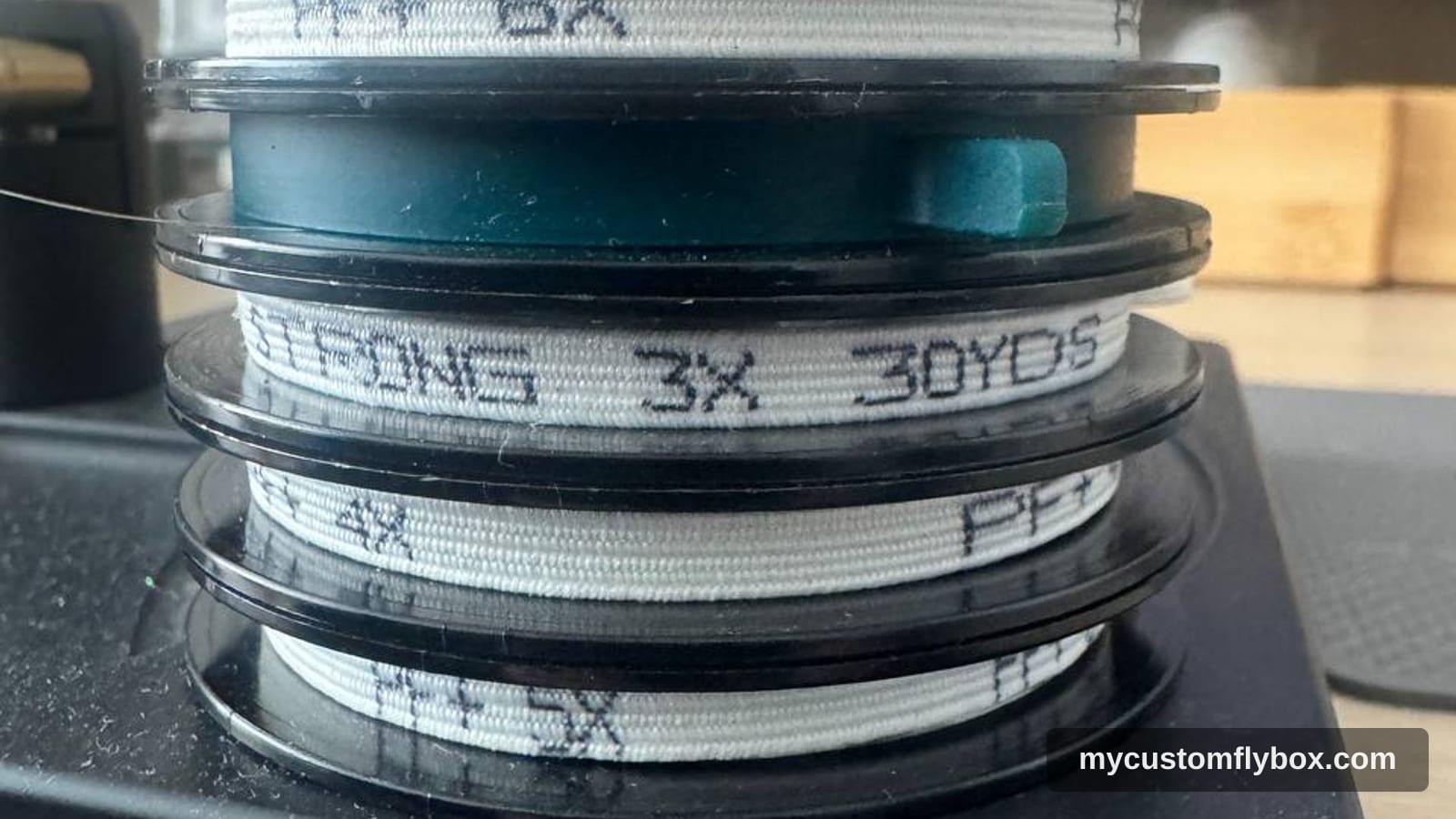
How to Choose Tippet Size for Trout Fishing
Tippet choice is a small decision that changes the whole day. It affects how a fly lands, how naturally it drifts, how hard you can pull on a trout, and how many flies you leave in the kind of cover where fish actually live. Most anglers learn the labels early: 3X is heavier, 6X is lighter, 7X is fine stuff for small flies and wary fish. The harder part is knowing when the river is asking for one size and not another.
There is no honest rule that says a size 16 fly always needs 5X or a size 20 fly always needs 6X. Those are useful starting points, not laws. A size 16 caddis skated across broken pocket water can fish fine on 4X. A size 16 olive emerger on a flat tailwater seam may need 6X because the fish are studying the drift and the tippet is affecting how the fly rides.
Start with the fly and method, then adjust for water. If you are checking conditions before a Catskills trip, pair that decision with the latest Beaverkill and Willowemoc fly fishing report. If you are planning a tailwater day, the West Branch Delaware report can help you think about flow, clarity, wind, and whether long dry fly leaders are worth the trouble.
What Tippet Size Really Means
The X rating is a diameter system. As the X number goes up, the tippet gets thinner. A 3X tippet is heavier and stronger than 5X. A 6X tippet is thinner than 5X and usually breaks at a lower pound test. Different brands vary in strength and stiffness, but the on-river idea stays the same: heavier tippet turns over bigger flies and gives you more control; lighter tippet creates less drag and is easier to thread through small hooks.
Diameter matters more than the printed breaking strength. Trout react to the fly, the drift, the shadow of the leader, the angle of the line, and sometimes the stiffness of the tippet near the fly. A thick piece of material can make a small dry fly land crooked, skate unnaturally, or refuse to sink when you need a nymph to get down. A piece that is too fine can collapse under a weighted nymph, twist around a dropper, or leave you under-gunned when a good brown trout heads for a root wad.
Think of tippet as the last piece of the presentation system. Rod, line, leader, tippet, fly, current, and angler all work together. If the fly is not behaving, do not blame the pattern first. Look at the tippet.
Start With Fly Size, Then Adjust
Fly size gives you the first answer. For big trout streamers, heavy stonefly nymphs, and high-water rigs, 2X, 3X, or 4X is usually more sensible than light material. For standard nymphs and most Catskills dries from size 12 to 16, 4X or 5X covers a lot of water. For small olives, midges, tiny spinners, and fussy flats, 6X or sometimes 7X may be needed.
A simple working range looks like this:
- Size 4 to 8 streamers: 0X to 3X, depending on water and fish size.
- Size 8 to 12 stoneflies, large dries, and attractors: 3X to 4X.
- Size 12 to 16 mayfly dries, caddis, soft hackles, and nymphs: 4X to 5X.
- Size 16 to 20 olives, sulphurs, small caddis, and spinners: 5X to 6X.
- Size 20 to 24 midges, tiny olives, and technical dries: 6X to 7X.
That chart will keep you close, but the river gets the final vote. A size 14 March Brown dry on the Beaverkill in broken water can handle 4X if the fly is big enough and the fish are not inspecting it forever. A size 14 Sulphur emerger on smooth tailwater can call for 5X or 6X because drag shows quickly and trout have time to refuse the fly.
Let Water Clarity Set the Fine Edge
Clear water makes tippet choice matter more. Not because trout always see the tippet and think like people, but because clear water usually comes with slower currents, longer looks, softer rises, and more careful presentations. In low clear summer water, a heavy tippet can pull a dry fly just enough to ruin the drift before the trout ever decides whether the fly is real.
If the water is clear and flat, start finer than you would in riffles. That might mean 5X instead of 4X for a size 14 dry, or 6X instead of 5X for a size 18 olive. Length matters too. Sometimes the answer is not dropping from 5X to 6X, but adding two feet of 5X so the fly lands farther from the heavier leader butt.
Stained water moves the other way. If rain has put a little color in the river and flows are dropping, trout may feed with more confidence and have less time to study every detail. Use enough tippet to control the fly and land fish quickly. In high but fishable water, 4X on nymphs or small streamers can be a better choice than 5X because you will be mending harder, ticking bottom, and fighting current.
Current Speed Changes the Answer
Fast water hides mistakes. It also punishes weak gear. In pocket water, plunge pools, and riffle corners, trout usually decide quickly. They see food, move a short distance, and either eat or let it go. That lets you fish heavier tippet than you might expect.
A bushy caddis, Stimulator, Chubby-style attractor, or dry-dropper indicator fly in rough water does not need spiderweb tippet. A stout 4X or 5X will turn it over, help keep the dropper from tangling, and give you enough pull to steer fish out of broken current.
Slow water exposes everything. On a flat pool, spring creek, or tailwater seam, drag shows early. The fly must land softly and then drift at the exact pace of the current it sits in. Light tippet helps because it is thinner, more supple, and less likely to pull the fly off course. But fine tippet is not a cure for a bad angle. Move your feet, change the cast, and use slack before assuming the spool is the problem.
Dry Fly Tippet: Presentation Comes First
With dry flies, tippet choice is about turnover and drag. Too heavy, and the fly may land hard or sit unnaturally. Too light, and the fly may not turn over, especially in wind. That balance changes all day.
For a Catskills mayfly dry in sizes 12 to 14, 4X or 5X is a good starting point. Hendricksons, March Browns, Gray Fox, and larger Isonychia patterns do not usually require 6X unless the water is unusually flat and fish are refusing good drifts. For Sulphurs, Blue-Winged Olives, small caddis, and spinners in sizes 16 to 20, 5X and 6X are the working sizes. For tiny midges or olives on technical tailwaters, 6X can be normal, and 7X has a place when the fish are sipping in slow water and the flies are very small.
Wind is the honest spoiler. On the West Branch Delaware, a steady wind can make long leaders and 6X hard to handle with small dries. If the fly will not turn over, the presentation is already poor. Sometimes stepping back to 5X, shortening the final tippet slightly, and changing the casting angle catches more fish than insisting on lighter material.
Spinners deserve special mention. During an evening spinner fall, trout often feed in smooth tailouts and take dead-drifted spent wings with a steady rhythm. For size 16 to 20 rusty spinners, 5X or 6X is usually right. If trout are refusing and your fly is skating even a little, lengthen the tippet before changing patterns five times.
Nymph and Streamer Tippet
Nymphing asks different questions. Can the fly get down. Can you maintain contact without dragging it. Can the tippet handle split shot, bottom ticks, and a trout hooked below the surface.
For most trout nymphing with size 12 to 18 flies, 4X and 5X do a lot of work. Use 4X when the water is pushy, flies are weighted, or you expect larger fish around cover. Use 5X when the water is moderate or clear and you need a better drift with smaller nymphs. Move to 6X for small midge or olive nymphs in clear slow water, but understand the tradeoff: you lose abrasion resistance and pulling power.
Tippet diameter affects sink rate. Thicker tippet creates more resistance in current and can hold a small nymph higher in the water column. Finer tippet cuts through current more easily and can help a light fly sink without adding too much weight. That is useful on clear water where a big split shot would spook fish or hang bottom every drift.
Streamer fishing is where many trout anglers fish too light. A streamer needs to turn over, sink or swim correctly, and survive hard takes, wood, rocks, and heavy current. If you are fishing size 4 to 8 streamers for brown trout, 0X to 3X is normal. For smaller buggers, leeches, and soft baitfish patterns, 3X or 4X can be fine. A nine-foot 5X dry fly leader is not a good streamer leader. A shorter stout leader wastes less energy and drives the hook home better.
Trout Size and Fish Handling Matter
Tippet is not just about hooking fish. It is about landing them responsibly. Fine tippet can make a good trout fight longer than it should. In cold spring water, that may be manageable. In summer, especially when water temperatures are high enough to stress trout, long fights are a problem.
New York DEC advises that trout and salmon experience physical stress when stream temperatures climb above 70 degrees Fahrenheit, and catch-and-release anglers should avoid fishing for heat-stressed trout. It also advises fishing early, having a backup plan, and not disturbing trout gathered in cold-water refuges. That guidance should influence tippet choice. If you are trout fishing in warm but still acceptable water, use the heaviest tippet that gives you a good drift, land fish quickly, keep them wet, and stop before temperatures become unsafe.
The same applies around heavy cover. If you know a pool has roots, ledges, or a fast chute below it, do not hook fish on tippet you cannot use. A trout broken off with a fly in its jaw is not a win, and a fish played to exhaustion because the tackle is too light is not good handling.
A Practical Trout Tippet Kit
You do not need every spool on the rack. For most trout fishing in the Northeast, a practical kit includes 3X, 4X, 5X, and 6X. Add 7X if you fish small midges, tiny olives, or technical tailwaters often. Add 2X or heavier if you fish larger streamers, bass flies, or high-water meat patterns.
Carry both nylon and fluorocarbon only if you have a reason. Nylon is common for dries because it is supple and tends to work well on the surface. Fluorocarbon is popular for nymphs and streamers because it is dense, abrasion resistant, and sinks readily. You can fish trout well with either if the diameter and presentation are right. Do not let material choice distract you from drift.
A simple river-specific fly box can include a tippet note. For example: Beaverkill May dries, mostly 4X and 5X with 6X for spinners. West Branch olives, 5X and 6X with extra long leaders for flats. High-water streamer box, 0X to 3X. If you use the My Custom FlyBox app to organize boxes by river, season, or method, those notes can help you pack the right terminal tackle with the flies instead of rebuilding the same kit every morning.
When to Change Tippet on the Water
Change tippet when the problem points to tippet. If fish are refusing a good fly on a good drift, and you are sure the fly is not dragging, try lengthening or going finer. If the fly is twisting, collapsing, or failing to turn over, go heavier or shorten the tippet. If you are breaking fish off, check knots first, then consider heavier material. If nymphs are not getting down and you do not want more weight, a finer tippet may help.
Do not change tippet after every refusal. Watch the fly. Watch the current beside it. Watch whether the leader is landing over the fish or pulling across conflicting seams. Many so-called tippet refusals are angle refusals. Move your feet before you rebuild the leader.
Final Thought
Fish the heaviest tippet that still lets the fly behave naturally. That is the line worth remembering. Light tippet has its place, but the goal is not to fish as fine as possible. The goal is to make the fly act right and then land the trout cleanly.
Most good tippet decisions are just honest river reading. Clear or stained. Fast or slow. Big fly or small fly. Careful risers or opportunistic feeders. Open water or snaggy cover. Cold water or warming trout. Answer those questions before you clip on the fly, and the spool you choose will usually make sense.
References
- USGS: How Streamflow is Measured: background on streamflow, discharge, stage, and why gauge readings are useful context before choosing water and methods.
- USGS: Streamgaging Basics: explanation of streamgages, gage height, discharge, and the stage-discharge relationship.
- NYSDEC: Fishing for Stream Trout: New York stream trout guidance, access notes, fish handling, and summer heat caution.
- NYSDEC: Help Trout & Salmon Beat the Summer Heat: DEC guidance noting trout and salmon experience physical stress when stream temperatures climb above 70 F.